Most Catholics I know don't seem to take this rule very seriously, and I don't remember my Catholic school (primary or secondary) only serving fish on Fridays (though I was a kid, so I don't really remember). But I live in the UK, where Catholics are a minority. So I wonder how seriously this rule was taken pre-Reformation, and how quickly the English and Scottish (or any other Protestants) gave it up. I'd also be interested in any Reformation-era theological discussions on the rule.
5 Answers 2018-11-30
I came across a mention of this earlier today, while reading a Facebook page about Peter Jacksons remake of the Dam Busters film, which quickly descended into a war of words about the name of his bloody dog.
But sifting through the mire, Jackson has claimed "New Information" about the raids, and a discussion about files that should have been released already, yet have been held back or even reclassified. It was here someone mentioned Shingle Street.
I have found one shining light of a website, now hosted by the guys son after his fairly recent passing.
Shingle Street
1 Answers 2018-11-30
A few years back I underwent a project on this invasion, and I struggled to see how Napoleon didn’t realise that it was doomed to fail, any info on reasons why he thought any other outcome was possible would be greatly appreciated!
1 Answers 2018-11-30
2 Answers 2018-11-30
Hi everyone, I hope I’m not bothering anyone on this subreddit, but I just recently realized what I want to do in life (am 24 with very little college experience) and I enrolled in a nearby university (uwm) and I have a few questions, mostly because my husband keeps telling me I’m just trying to discourage myself (which I apparently do all the time) So sparing most of the details of my life’s story I’ll get to the point. I’m starting with a bachelor’s in English with a minor in Japanese. (I’m a weeb and just really want to learn Japanese ignore that it’s pointless) I’m fascinated by anything prior to roughly 18th(ish) century Europe. And I know that I have to know multiple languages to obtain a doctorate, so first question;what languages would be the most useful? My next question is, when it comes to a doctorate in history (I really know very little about all of this and have a meeting with my advisor in the morning) do you have to pick a specialization? If so how would what I said earlier (prior to 17th century Europe) be specialized? I mean like Arthurian periods all the way to the colonization of the new world kind of things. And my last question like I said before I know tenured positions are very few and far between so if I were to want to do research on my own where would I even begin?
Okay, thank you for taking the time to read all of that. Just know that I know all of this is very far off and I have a lot of work to do. And please ignore the fact that my grammar and punctuation is atrocious I type the way I talk most of the time. I really am just trying to convince myself that I’m making the right decision. My husband is super supportive and wants me to chase my dreams. So I’m chasin’ Thanks again!
3 Answers 2018-11-30
His ideas of hyper sexualization seem dated and outlandish- and culturally irrelevant to modern society- why are his teachings as highly praised as compared to Jung or even Campbell?
1 Answers 2018-11-30
Shakespeare plays are written in a really "flowery" almost formal language. Did people from his time talk like that in their day to day lives?
1 Answers 2018-11-30
All I could find was this news article about a book telling the story of people having to euthanize their pets before the war began claiming that 750,000 pets had been lost.
"Kean tells the story of the reported minimum 750,000 cats, dogs and other pets that were tragically euthanised mostly upon the announcement of the Second World War in September 1939 in response to a hysteria created in anticipation of air raids and resource shortages. Following Neville Chamberlain’s declaration of war against Nazi Germany, a silent holocaust of pets was to take place."
But I was wondering what would happen if a Jewish household was seized and there were pets there. Would they just kill them there? Did they take the pets to a different location? What did they do with them?
1 Answers 2018-11-30
I saw a TTC recently which stated that resting his army after defeating the Scandinavians would have been the obvious thing to do. The implied selfishness (due to him wanting to protect his estates over resting his men) was hinted as being a reason his army may not have been as committed as they could otherwise have been, hence contributing to the reasons for the battle being lost.
1 Answers 2018-11-30
1 Answers 2018-11-30
1 Answers 2018-11-30
Not just tanks but aircraft, guns, small arms, whatever? Basically, did German tankies ever think "Oh Scheisse, it's a Firefly. Run away."
1 Answers 2018-11-30
Hi,
I've been reading a book on the silk road, which talked about the price of silk and how inflation caused the price to increase by 50x. The book provides the prices in the currency cash, which I am not familiar in. The only information I have is how much the currency is worth if you sold it to a coin collector, etc, while I am looking for what the coin was worth back then. Any help is appreciated.
Thanks!
1 Answers 2018-11-30
I've noticed that French colonies (e.g. Quebec, pop. 60k white french in 1750s) tended to have tiny populations compared to the British (13 colonies, 2.3 million in 1775) and Spanish ones especially, and later in the 19th century they still emigrated less than most Europeans.
English and Scottish colonists of course moved to Australia and Canada and the USA in massive numbers, even after initial colonization (iirc British emigration to Australia peaked in the 1950s even). The Italians, Germans, Irish and Polish also emigrated to the Americas in huge numbers. Italy's diaspora reaches more than 60+ million if you count Brazil, Argentina, USA and Canada. Meanwhile, no such French mass migration seems to exist, even though France in the 1800s suffered some stagnation and fell behind in industrialization. Why did they not immigrate?
1 Answers 2018-11-30
I was reading that John C Woods was a United States Army master sergeant during WWII who helped carry out the Nuremberg executions of ten leaders of the Third Reich on October 16, 1946, after they were sentenced to death at the Nuremberg Trials. He also acted as the primary executioner to hang 34 American soldiers. Can anyone shed some light on why American soldiers were hanged by an American? What crimes could they have committed? Thank you.
source:
1 Answers 2018-11-30
1 Answers 2018-11-30
Was it SOP for the Germans to maintain such extensive files on US officers down to Lieutenants?
2 Answers 2018-11-30
2 Answers 2018-11-30
All I know is that he was in the Australian military, and I’ve always seen him for examples of ptsd. Did anyone ever find out who he was? Or is he another anonymous testament to the horrors of war?
1 Answers 2018-11-29
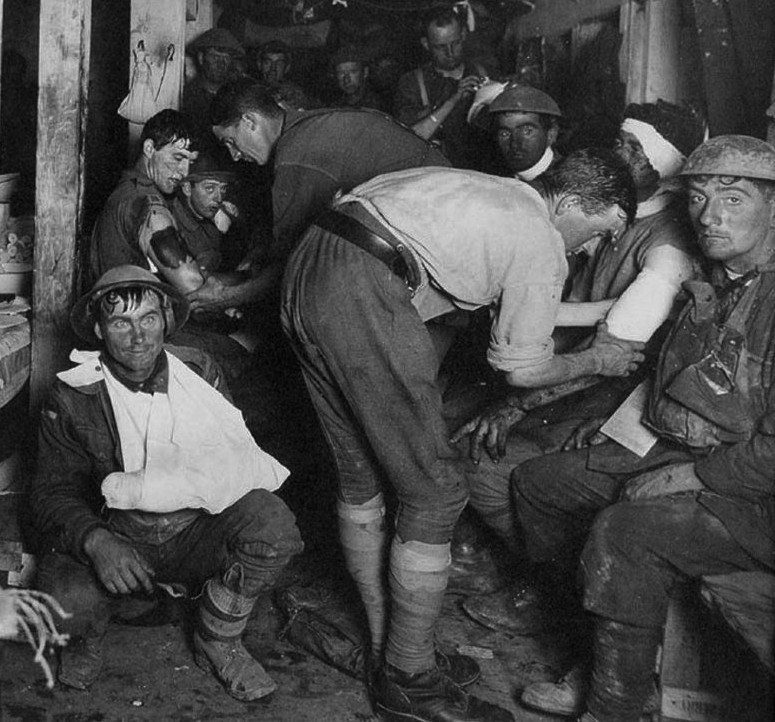
Is there anywhere that I can find first hand accounts that described the effects of combat on soldiers and PTSD caused by combat. The concept of PTSD or "shell-shock" didn't really become common until World War 1, and I was curious if there were cases of PTSD described before the first World War.
1 Answers 2018-11-29
I often hear people refer to a time in history (usually in the context of European history) when it was common knowledge that the earth was flat but I have also heard various people deny that there was ever a time when a truly significant portion of the population believed this. They acknowledge that maybe some significant church figures believed this claim but outside of that, not many people actually thought that. I’m interested to know what common knowledge on this subject would’ve actually been in that time period rather than what I’ve heard people say they believed without providing any credible sources or evidence. Thanks and links to any sources on this would be greatly appreciated!
1 Answers 2018-11-29
[deleted]
1 Answers 2018-11-29
Most of us nowadays can benefit from health insurance. The idea of paying some money monthly so that you can get almost free healthcare has been around for some time now. My question is, was there in medieval ages or even earlier than that something similar to today's health insurance?
1 Answers 2018-11-29