Why is it that nations today stopped using the word "Empire" to refer to itself officially?
2 Answers 2016-06-30
1 Answers 2016-06-30
I'm sure some of you are familiar with the books/show "Outlander," which is based on 18th century Scottish Highland culture. Was there an equivalent or something similar to the Scottish Highland clans in Ireland?
1 Answers 2016-06-30
Before multi-room homes became common, what was sex like and how was it different from today?
If everyone in the family slept in the same room, did parents just have sex with the children present? Did they go outside?
Sorry for the weird question, but I saw a movie set in the 1800s (no sex, but the family lived in a 1 bedroom home) today and it made me question it.
3 Answers 2016-06-30
While researching much about the Mongols, there is one common factor whenever it came to Chinggus. He would always decimate every living thing in a city that defied him. Kublai being Mongol as well, I would imagine that he would do the same. Kublai was still very different as far as the Khans went before him obviously adopting much of the Chinese life style. I would not be surprised if this portion is true. Thanks guys.
2 Answers 2016-06-30
Excuse my ignorance if this is well-known, but I was perusing this sub's FAQ and while there were some notes about life in the USSR and the whys of the break-up, I didn't think I saw anything that really gave an answer for why none of the post-USSR states tried to keep a communist or socialist government going. Apologies if this has been answered and I overlooked it.
1 Answers 2016-06-30
As also other big cities at the time, like Lutetia?
At its peak, Rome had 1 million inhabitants.
Did people had individual toilets and septic tanks at home?
I know that most, if not all, Roman citizens didn't have bathrooms and kitchen at home. So they relied at public bath and tavern/restaurants.
Were there public toilets too? Were poo floating in the city sewers?
How did garbage disposal work?
1 Answers 2016-06-30
The results displayed a clear rejection of the Soviet supported Socialist Unity Party, and after harsh treatments and forced emigration post World War 2, the Germans were rather hostile to the Soviets and anti-communist. Did the Soviets use the Berlin Blockade as a mean to control the population of Berlin? Besides the threat of a Western controlled West Germany and the new Deutschmark that was introduced, did USSR use the threat of mass starvation to coerce the people of Berlin to be pro-Soviet?
1 Answers 2016-06-30
For example, we have freedom of speech, but we can't yell "fire" in a theater. As well, the Supreme Court ruled in 2008 in District of Columbia v. Heller that while the Second Amendment grants individuals the right to own firearms, it does not extend to all firearms.
Were the amendments in the Bill of Rights meant to allow us to yell "fire" in a theater, to threaten the president, to own the biggest cannons of the day, etc.? Thank you.
2 Answers 2016-06-30
I read recently "Nazi Germany was fomented by American and British capitalism as a proxy with which to vanquish the Soviet Union" but it was an opinion piece on another subject and gave no context or backing for the statement. Can anyone on this sub elaborate or offer any informed and politically neutral opinion as to whether there's any evidence to support this statement? Certainly I know there were active fascist sentiments in America at the time, the most famous to my knowledge being Henry Ford and the Bush family, but is there any evidence to support the statement above? Thanks very much.
1 Answers 2016-06-30
1801 is when Philip Hamilton died in a duel.
1804 is when the Hamilton vs. Burr duel occurred.
In the musical, Hamilton, there is a conversation that goes like this:
Alexander: Where is this [the duel] happening?
Philip: Across the river in New Jersey, everything is legal in New Jersey.
My questions are as follows:
Were duels actually legal in NJ?
What about other places?
Were they considered socially acceptable?
What offenses were considered duel worthy (most of the Hamilton ones are over verbal disputes)?
1 Answers 2016-06-30
1 Answers 2016-06-30
Just been thinking about this recently- Was there some kind of motive behind this?
3 Answers 2016-06-30
Lady Bracknell. [Sternly.]... What are your politics?
Jack. Well, I am afraid I really have none. I am a Liberal Unionist.
Lady Bracknell. Oh, they count as Tories. They dine with us. Or come in the evening, at any rate.
page 35 at https://books.google.com/books?id=4HIWAAAAYAAJ&printsec=frontcover
1 Answers 2016-06-30
Disclaimer: My own historical 'training' is limited to high school courses in history and historiography, and a layman's interest - mostly though in modern history. What I recall from my courses is a fascinating variety of methods, perspectives and interpretations of even very recent events.
If you read the Wikipedia article on the Historical Jesus, it suggests a very strong consensus in favour of his existence:
The vast majority of scholars who write on the subject accept that Jesus existed
almost universal assent
In recent years, 'no serious scholar has ventured to postulate the non historicity of Jesus' or at any rate very few, and they have not succeeded in disposing of the much stronger, indeed very abundant, evidence to the contrary
Looking at the actual evidence though, it seems underwhelming. I appreciate that even relatively scant evidence may be sufficient to argue for his existence, especially as an ancient historical figure, but I would have thought the available evidence was flexible enough to support a variety of narratives, including those with arguments that he did not exist. Given the importance and controversy of the question, I would have thought there would be lively debate.
So, my questions are;
Is there a consensus as strong as Wikipedia suggests?; and
Why is the 'debate' so one-sided?
1 Answers 2016-06-30
1 Answers 2016-06-30
And how frequently are hunter-gatherers forced into agriculture because they themselves, together with other hunter-gatherers, have over-hunted and over-gathered the areas accessible to them?
Has any example of unforced, voluntary transition from hunter-gathering to farming ever been observed to happen when good conditions for hunter-gathering were present (abundant flora and fauna, favorable climate, etc.)
Thanks!
1 Answers 2016-06-30
By all appearances the Battle of Bouvines should be a defining moment of the middle ages, yet I never hear it referenced. It sounds like something from a fantasy novel: the English Angevins, the HRE Emperor Otto IV, the lowlands including Flanders, Brabant, Holland and Lorraine ally to neuter the French King Phillip Augustus. Phillip carries the Oriflamme battle standard, said to come from Charlemagne himself, to the field of battle, outnumbered and opposed by Otto IV clad in golden imperial armor.
The battle opened and was decided by a charge and melee of mounted knights, where Philip himself charged with his reserves, was unhorsed and after a long fight drove back the Flemings, took the center and captured Otto's imperial eagle standard.
Politically, Otto lost the emperorship to a Hohenstaufen, the Angevins lost most of their continental empire and were forced to sign the Magna Carta. We can imagine a very different course of history had the French knights lost that day.
Where does this event stand today in the history of Western Europe? If I hadn't stumbled across it in Wikipedia, I may never have learned of it at all.
1 Answers 2016-06-30
I am currently in the process of a career change, (from culinary arts to journalism) and I am looking to expand my understanding of our modern political landscape. Part of that, of course, is examining the trends, people, and critical events from the past which echo through the years and continue to affect, both directly and incidentally, our modern political climate.
I recently binge read All the Truth is Out: The Week Politics Went Tabloid by Matt Bai, which deals with the Gary Hart scandal of 1987 and how it irrevocably altered the role of the media in modern politics. While more journalistic than historical in its process and tone, I felt the book did an excellent job of explaining the reasons why the relationship today between politicians and the media is such a mess.
I suppose what I am looking for is sources with which I can begin to construct a broader (and deeper) understanding of our world today than what I already have from simply following these past few election cycles. I am particularly interested in such topics as foreign policy, campaign tactics, and the evolution of ideologies, though anything you wonderful, better-read human beings believe to be essential is welcomed.
Much thanks in advance!
2 Answers 2016-06-30
Was Nixon privy to the CIA's activities when he was Vice President? Did Eisenhower allow Nixon to control the CIA?
1 Answers 2016-06-30
I read on a certain blog that in the mid 1800's, lynching victims in the US were primarily black criminals. Is this true? Were the victims definite criminals?
1 Answers 2016-06-30
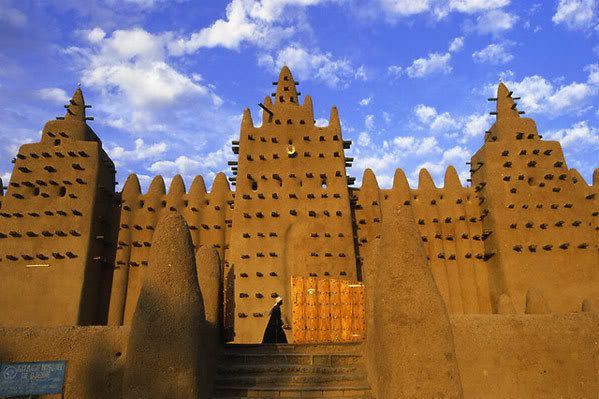
On the outside of the Timbuktu Mosque there are these strange spike things. What are they and what are there purpose? Is it to hang stuff on or to climb or what?
1 Answers 2016-06-30
And why doesn't the history part of the wiki article on bathing mention why they stopped bathing? Was it to do with the black plague?
You can see it here - https://en.wikipedia.org/wiki/Bathing
Clarity; There were public baths in the 13th century, but after that point, I've heard that it stopped. That's the period of history I'm wondering about. Sorry if I didn't make that clear.
EDIT: This got downvoted! Darn, I thought people could answer my question. =/
Is there really no one knowledgable about medieval bathing? I thought that would've been an interesting subject, in the context of how it later dissappeared, and in the pop-history misinformation about the 'dark ages' wherein no one was believed to have bathed at all.
1 Answers 2016-06-30