I am currently listening to a podcast about beginning of WWI and how the French attacked through Alsace-Lorraine to (initially) little resistance while the Germans were sweeping through Belgium. It made me think that if the Germans went straight for Paris and the French for Berlin they could have taken each other's capitals. Was there ever a battle in history where two armies outflanked each other in a similar way and just ended up swapping territories?
2 Answers 2016-02-17
[deleted]
1 Answers 2016-02-17
1 Answers 2016-02-17
I am guessing empire is a Roman concept that eventually was used for different kingdoms throughout Western history, and eventually applied to different states in the rest of the world. But I'm wondering if there have been different concepts of imperial governments, and specifically if the Caliphate is a different species of empire native to Arabic societies?
2 Answers 2016-02-17
1 Answers 2016-02-17
A documenatry on alexander the great that I found on youtube said that Alexander paused his campaign in the east for a year to go back to egypt, where he 'founded' alexandria. In like, a year, then he went back to campaigning in the east and later died of drunkeness or malaria (or whatever).
But what actually went on, or what do you suppose went on (if we don't really know for sure what went on)?
1 Answers 2016-02-17
We were discussing this in one of my political courses. What information was being gained from continuing to do tests? It seems like after a few tests we already knew what kind of designs worked and how much fallout/how large of an explosion we would get from the size of nuclear payload. Was it just an act of political posturing to show off to the Soviets/Chinese?
1 Answers 2016-02-17
I have read multiple books about this and the answers are ambiguous and vague. Jews made up less than one percent of The German population prior to the Nazi party's rise to power in 1933. Many countries such as Austria, Poland and Hungary had much higher Jewish populations. What caused anti semitism to grow at such a rampant rate in the Third Reich, and why did these ideologies not arise in a country which had higher proportion of Jews making up their populations?
3 Answers 2016-02-17
I believe I read this here a little while ago (maybe not) but apparently a major source of slaves for the Middle East during the Islamic Golden Age were the Slavs (particularly in the lands of what was Yugoslavia and through the Eastern Roman/Byzantine Empire). How true is this claim? If it is true, how many were enslaved and what happened to them?
1 Answers 2016-02-17
Also interested in the methods of transport that would have been used. Would travel by sea have been the most common method, if so, would they have been limited to certain times of the year? Any links to useful maps showing travel routes from that time period would be very interesting. Thanks!
2 Answers 2016-02-17
During my undergrad in the early 2000's I know it was a total no no, just wondering if that opinion has changed.
3 Answers 2016-02-17
Basically, three inter-related questions:
Could you weave a seamless garment in the 1st century? I know you can knit one, but that technology wasn't invented yet. Or how else would one be constructed?
Is there historical evidence of seamless garments dating back to this period? I don't mean supposed holy relics discovered hundreds of years later.
Why does the author of John mention this detail? Is there a tie-in to Judaism? Is this a trope common to other mythologies of the time, as is the virgin birth?
2 Answers 2016-02-17
I'm reading Anna Karenina right now and I was curious about how the characters were educated.
The story takes place in the 1870's so I was looking up the education system in the 1850's since a lot of the characters seemed to be well educated and I thought it was strange that almost everyone knows French.
After the emancipation of serfs I found an article describing the beginnings of agricultural education in Russia but I can't find anything about how the Aristocracy was educated. Can anyone enlighten me?
1 Answers 2016-02-17
The Sandwich Islands are modern day Hawaii, if this was unclear to you. The full text from Mark Twain in Hawaii: Roughing It in the Sandwich Islands is as follows:
"Forty years ago it was the custom in the Islands to suspend all law for a certain number of days after the death of a royal personage; and then a saturnalia ensued which one may picture to himself after a fashion, but not in the full horror of the reality. The people shaved their heads, knocked out a tooth or two, plucked out an eye sometimes, cut, bruised, mutilated or burned their flesh, got drunk, burned each other’s huts, maimed or murdered one another according to the caprice of the moment, and both sexes gave themselves up to brutal and unbridled licentiousness." ..."And after it all, came a torpor from which the nation slowly emerged bewildered and dazed, as if from a hideous half-remembered nightmare. They were not the salt of the earth, those “gentle children of the sun.”"
Is there any truth to this, or is it part of the Twain humor and comic historiography? or subtle white colonial mindset that treated those such as the Hawaiians as dark savages and hammed up this image of them at every turn? It seems hard to take as fact (to me).
1 Answers 2016-02-17
1 Answers 2016-02-17
1 Answers 2016-02-17
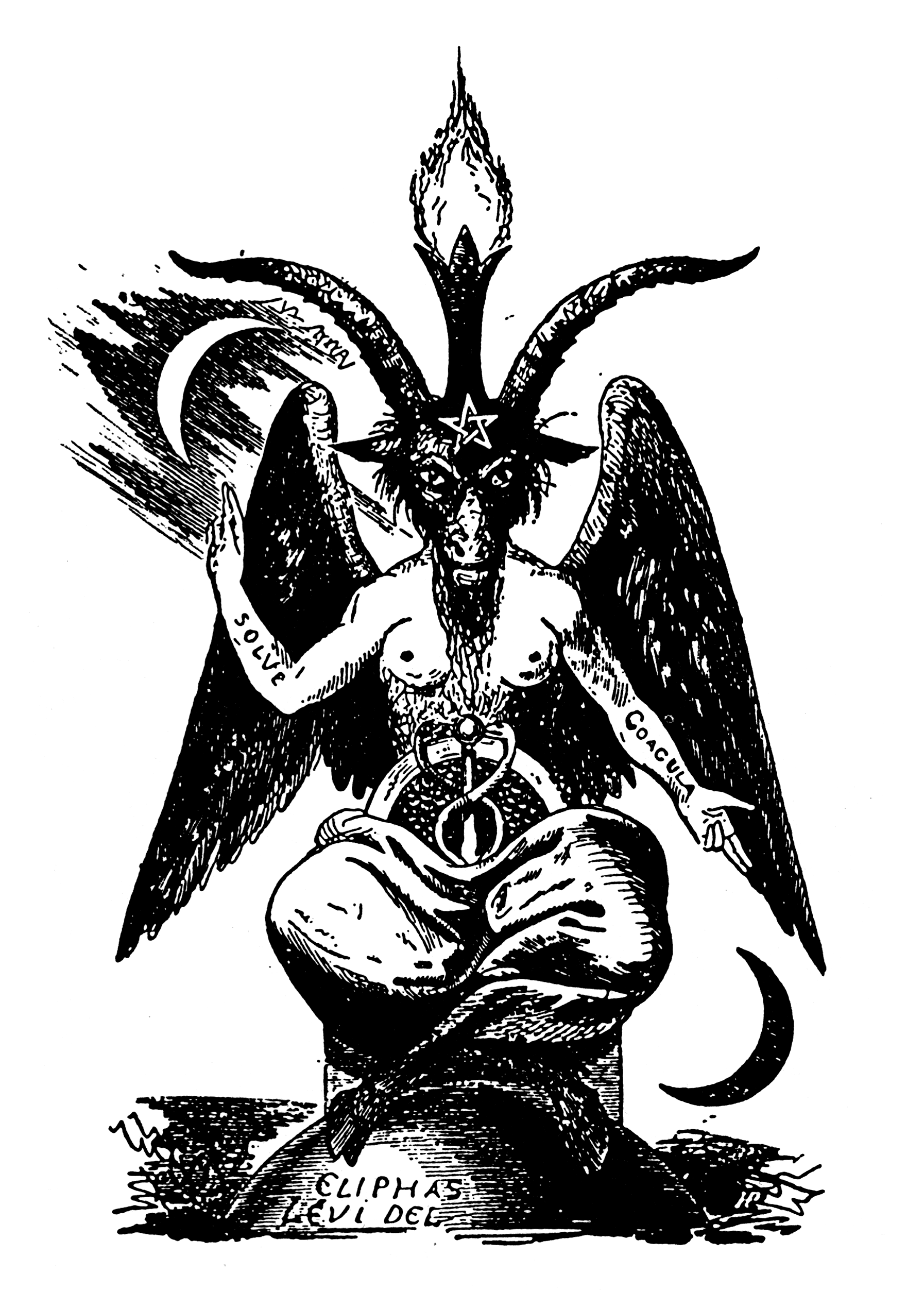
hey historians!
[the video showing the nazi's pledging at (11:30)] (https://www.youtube.com/watch?v=qh15X_DdRJU)
[a picture of baphomet doing a similar gesture] (http://www.thesectofthehornedgod.com/wp-content/uploads/2015/08/Baphomet.png)
Are these related in anyway? what do they mean?
1 Answers 2016-02-17
While browsing online, I saw a comment saying that PTSD has basically been around forever, just the name changes. I know on WWI it was often called shell-shock, but what else has it gone by? Are there documented cases of knights or ancient soldiers suffering from it?
1 Answers 2016-02-17
I remember reading somewhere that he didn't have the necessary implements to cross the Suez Canal, and that his supply lines would never have permitted a march on Iraq, even if he had smashed the Brits at El Alamein. How true are these claims?
1 Answers 2016-02-16
3 Answers 2016-02-16
When we hear politicians or religious people talk about the turbulent conditions in the Middle East, almost inevitably we hear talk of "Western Imperialism" where the West exerted its influence on many countries in Asia and Africa. Many point to modern conditions in these countries as a direct result of Western imperialism.
That got me thinking, was there a such thing as Eastern imperialism? Was there a period of time where countries/empires in the East were exerting their might on other countries? If so, what are those countries like post-imperialism?
Thanks for any replies!
1 Answers 2016-02-16
[deleted]
1 Answers 2016-02-16
I just came across this comment on a TIL post (quoted below). I was wondering whether there's any truth to it - or rather, whether this is a common interpretation of the passage, as I understand that it's hard if not impossible to make specific statements about events in Jesus' life, even if most historians believe him to have really existed in some form.
Joshua was actually a fairly popular/common name among the Jews (think Mohammed among Muslims). In order to distinguish one Joshua from another, they might adopt various honorifics like "Son of ____" after their name. For example, Simon Barjonas is actually Simon, Son of Jonas (bar = Hebrew for "son of")
Jesus was known by many honorifics in his time, but one of them was Son of the Father. Father in Hebrew is "abba" so Joshua, Son of the Father would be Joshua Barabbas.
Now when Pilate wanted to release Jesus because he thought he was innocent, he set him up before the crowd opposite a known criminal/terrorist. That man's name?
Albert EinsteinJoshua Barabbas.
In other words, Pilate hoped to perform a bait and switch by presenting the guy he wanted to release with a criminal known by the exact same name.
http://www.hebrew-streams.org/works/ntstudies/yeshua-bar-abba.html
2 Answers 2016-02-16
With season 4 starting in 2 days I was wondering which parts of the show are based on real history. Obviously there are many things done wrong (Ragnar seems to have the only chain-mail in all of Scandinavia), but I am hoping someone could shed some light on the things they get right.
1 Answers 2016-02-16
I am an American and I'm 58 yrs. old. It seems like I was not long out of high school (grad. 1976) when I heard the country, Persia would now be called Iran. Can someone tell me when this actually happened? I've read (online) where it happened in 1935, then it seemed it was not being recognized (as Iran) everywhere. I recall being shocked that they changed their name. I wasn't around in 1935 so is there a reason I found this out so much later? Was there a big deal made about it in the news in the late 70s or early 80s? I appreciate any enlightenment someone can afford me. Thank you!
1 Answers 2016-02-16