Everyone knows about how the Polish Home Army carried out the Warsaw Uprising and how the Polish Army in the West were the first to captured Monte Cassino. What about the Polish Army in the East?
1 Answers 2015-05-24
like weapons, recruiting policies, pay, and command structure?
1 Answers 2015-05-24
Wanted to know for a college paper i was assigned
2 Answers 2015-05-24
Working on a project and am having trouble finding this info. Also, what Empire would it have been a part of? Any help would be appreciated. Thanks.
1 Answers 2015-05-24
Slavery seems to have been around in different configurations for a lot of human history. I know that it often wasn't as brutal and dehumanizing as the form it often took in the American South or the Caribbean during the plantation era.
However, no matter what form it took, it was still around--a person who was property of another person, who had no right to refuse to do work, and who was not compensated for his or her work.
I know a little about the British and French abolition movements that sprang up in response to the Transatlantic slave trade. But what about earlier such movements? Who spoke up against the ownership of human beings prior to, say, 1650? Who spoke against slavery in places other than Europe?
Thank you.
2 Answers 2015-05-24
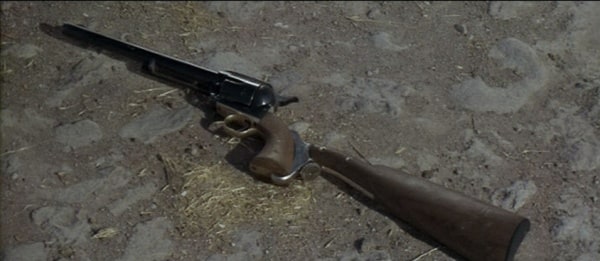
http://iv1.lisimg.com/image/1630773/600full-for-a-few-dollars-more-screenshot.jpg. This is what it looks like.
2 Answers 2015-05-24
I've read from several sources that enemies like the Romans were able to defeat the Greeks in battle taking place on rough and rocky environment didn't lend itself to phalanx warfare. Isn't Greece itself very hilly and uneven though? Why would the phalanx have developed there if the immediate environment appears to pretty much undermine it?
3 Answers 2015-05-24
1 Answers 2015-05-24
As with any other religious movements, there is always a background that gives context to the birth of them. For example, Christianity itself was born within the context of Jewish messianistic movement that was developed under the suffering and inequality of the Jews. Ahmadiyyah movement in Islam was born under similar context of suffering under British colonialist regime. Etc.
What was the context of the birth of asceticism in Christianity? What was the social context that motivated Origen, Gregory of Nyssa and other Desert Fathers to abandon worldly pleasure and pursuit the life of bodily discipline?
1 Answers 2015-05-24
I'm from Saskatchewan and always wondered what happened in the Prairies before horses and Europeans arrived.
If I understand right, the Great Plains were populated by dozens of cultures, most of whom were nomadic (or semi-nomadic) and followed the bison herds. I'm assuming they interacted, traded and fought with each other but did they also have contact with the other non-nomadic groups around them, like the Pueblo, Mesoamerican, Inuit or Mississippi cultures?
Bonus question: Did the role of the Great Plains resemble that of the Eurasian Steppe? Did the Great Plains have a tendency to produce nomadic cultures that would put pressure on their agricultural neighbours?
Thank you all so much!
1 Answers 2015-05-24
I'm not a history buff or a military strategist but why did the U.S. engage the VC the way they did. From what I understand the U.S. was just in a holding pattern for much of the war. What prevented the U.S. from rolling 500 tanks into Hanoi and just crushing the country with force?
1 Answers 2015-05-24
I've always heard about how great Napoleon was at utilizing artillery but I've never heard specifics. How would he use them in battles? What was so great about what he was doing?
2 Answers 2015-05-24
I was wondering if any classical musicians or any act earlier than the 20th century had ever merchandised their brand name for product/memorabilia sales.
1 Answers 2015-05-24
1 Answers 2015-05-24
Hungary, Romania, others separate the slavic-speaking south from the rest of the Slavic speaking world. How did that happen?
It's to hard to Google. I tried. http://www.utexas.edu/cola/centers/lrc/general/ie-lg/Balto-Slavic.html
Here is the synopsis: Hungarians were driven westward to conquest across modern Hungary which was previously Slavic speaking Moravia. It was conquered around 900 AD.
http://en.wikipedia.org/wiki/Hungarian_conquest_of_the_Carpathian_Basin#Consequences
3 Answers 2015-05-24
Today:
Welcome to this week's instalment of /r/AskHistorians' Sunday Digest (formerly the Day of Reflection). Nobody can read all the questions and answers that are posted here, so in this thread we invite you to share anything you'd like to highlight from the last week - an interesting discussion, an informative answer, an insightful question that was overlooked, or anything else.
5 Answers 2015-05-24
and gentry life?
1 Answers 2015-05-24
Hello historians, I am currently writing my term paper and have read on several sites as a contra argument for american revolution that the taxes in Britain were much higher than the taxes in the 13 colonies and thus the colonists had no right to use it as a reason for the american Revolution (so basically just as an excuse). I googled it a bit now and still havent found a reliable source which said that the taxes were lower than the ones of Britain.
Can some one please help me and enlighten me whether it is true or not that the colonists had lower or higher taxes? I would also really appreciate if you could give me a reliable source which states your answer.
Edit: Here is an example from a blog (I dont know if I am allowed to link it so here is the sequence):
"If the taxes the average colonist paid were put to comparison with the taxes the average Brit at home paid, the average was about 30-to-1, Britain and America respectively. The Americans weren’t overtaxed compared to the Brits; in fact, one might say the Brits paid more than the Americans. Of course, the Brits didn’t have the Stamp Act, or the Sugar Act, or other inflammatory tariffs such as those, but nevertheless, the Brits were not out to overtax the Americans."
Doesnt look like a reliable source at all so I need someone who has a lot of knowledge in this area.
3 Answers 2015-05-24
It reads as though it has a point to prove and that usually makes me doubtful, but I thought this sub might be a good place to start to find out if its claims hold any truth.
I was taught about indentured servitude in school, but this article seems to take it a bit further. What do the experts think?
1 Answers 2015-05-24
3 Answers 2015-05-24
This is a subject that has been bothering me over the past few weeks; Why didn't infantry men of WW2 have bayonets fixed at all times with a scabbard at the end instead? To me it seems as if this would only be an advantage.
2 Answers 2015-05-24