I'm a reader. I love reading, and most of my reading is fiction. There are a lot of stories about normal people living in modern times doing non-fantastical things. How will historians five hundred years from now know which writings are factual accounts and which are one of these fictional stories? In a thousand years? How can we tell the difference in writings from the past?
3 Answers 2014-07-08
I'm listening to the 'Norman Centuries' podcast by Lars Brownworth, and in one of the episodes it is mentioned that vassals of Normandy began to build unauthorized castles, weakening the central government of the Duchy. Why did this weaken the central government? Why was it such a big problem to have unapproved castles in the medieval era?
1 Answers 2014-07-08
Were they diseases indigenous to the Valley of Mexico, or did they arrive from elsewhere? How were they transmitted and what were their symptoms? How far beyond the Valley of Mexico did these epidemics spread? What impact did these diseases have on the indigenous and immigrant populations of New Spain?
2 Answers 2014-07-08
I know there are a few phrases and things that we still use which likely are hold overs from radio ("Stay tuned!"). But more so, I'm curious to know if there are more subtle remnants of the radio era - perhaps in how it shaped media companies, the entertainment businesses, entertainment law, cultural conventions like speech or pronunciation, or just how we communicate in general?
If radio was the first great electric mass media, are it's genes still evident in it's descendents?
1 Answers 2014-07-08
Hi all,
I am reading through Barbara Tuchman's The Guns of August currently, trying to follow the storyline as the 100-year centenary events unfold. As I was reading, I started realizing that my grasp of WWI historiography is very poor. Is Tuchman's analysis of WWI considered "outdated" in its interpretation these days? What are some major themes in the field of WWI historiography right now? Lastly, what are some good authors that I should check out that are prolific in the world of WWI studies these days? I am particularly interested in works that study the role of Britain and the Commonwealth during the war. Thanks!
2 Answers 2014-07-08
Basically, I was wondering does anyone know anything about this money? Is it just military currency? Why are some in English and Japanese?
Back-story: My uncle game me this money as a gift from a friend who fought on Iwo Jima and broke open a safe in a tunnel system there and found all this weird currency.
3 Answers 2014-07-08
Was it a matter of days? Weeks? How promptly were such important events and situations communicated back and forth over the Atlantic in those times? How were they transmitted? I assume by ship?
1 Answers 2014-07-08
Just how common was it? And how dangerous? Those who took part in it...who were they and how long could they reasonably expect to take part in it?
1 Answers 2014-07-08
Im sorry about this broad title, but ill get more specific here.
I was talking to a friend about the Spread of Islam in europe, and he was telling me about how Islam is only spreading via immigration in the last half century.
Now, I know this to be false obviously, but do you guys have anything about the spread of Islam in Europe Pre-Modern Immigration?
I've done some research and found that Islam has been in Macediona and other Eastern European countries for ages. How long has Islam been in Western Europe?
Im sorry for such a broad question, I can't seem to clearly get my questoin out. Ill be happy to expand anything.
Thanks
1 Answers 2014-07-08
2 Answers 2014-07-08
What kinds of food would the first restaurants serve? How did places to eat other than home or work evolve?
1 Answers 2014-07-08
Where did the idea arise from?
What happened to people's bodies internally and externally?
Did people survive it?
1 Answers 2014-07-08
I'm studying the cold war at the moment and one of the major questions is the inevitability of the Cold War and whether communism would always be opposed and feared in the west or whether the cold war began as result of post-WW2 disagreements over the settlement of Germany and other issues.
It certainly seems like the former is the "official" explanation whereas the latter is the practical reality of the situation.
1 Answers 2014-07-08
I'm not sure if this is the correct place to ask but it seems a reasonable place.
I'm under the impression that the western world uses the year Jesus was born as the starting point for our annual record system. (2014 A.D. 1400 B.C. etc) Why, for example, do the Chinese now use this system if their culture is more based around Buddhism?
For some reason it was a pain trying to word my question so perhaps more simply i'm looking for information on how non Christ based civilisations recorded each year. Obviously I've heard of the Mayan calendar, and i'm looking for other examples or more detailed information about these methods.
Cheers in advance for any and all info!
2 Answers 2014-07-08
There are some exceptions (the biggest one I found being cricket), but it seems like most major modern team sports* were developed or at least formalized in the mid-late 19th century. Why was this era such a golden age for new sports?
1 Answers 2014-07-08
As in are you better off studying Asian history rather than American history, for example?
3 Answers 2014-07-08
I'm fascinated by colonial soldiers, in particular the sheer ridiculousness of it all. The idea of people on the other side of the world being taken from a their small village or town and being forced to fight for a nation that has a culture entirely alien to their own against another, equally alien nation is fascinating to me. I hope you guys could give me some help in sating my hunger for info on this particular subject.
1 Answers 2014-07-08
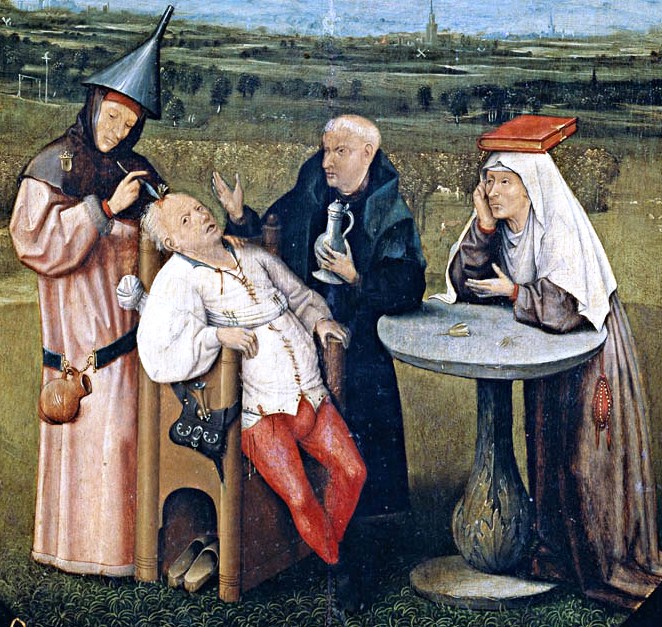
I noticed in a lot of cartoons (mostly older, and/or european stuff) when a character was supposed to be insane, they would have him wear an inverted funnel on his head.
A little research shows that the inverted funnel has been a symbol for insanity since medieval times.
The wiki on funnels also mentions this, but i couldn't find any explanation as to the symbolism anywhere.
1 Answers 2014-07-08
This might fall a little outside the purview of r/AskHistorians but it might be something fun! I am visiting Rome for the first time since I was a child and would really like to go to a few historically significant places while there.
I only have 2 or 3 days in the city. I was hoping to visit the Museum of Roman Civilization but it seems to be closed. I want to go to the Colosseum, the Arch of Constantine and the Circus Maximus but I was wondering if anyone had any really good suggestions for interesting places particularly related to Augustus or Ceasar!
Thanks a lot!
3 Answers 2014-07-08
2 Answers 2014-07-08