I'm not certain conspiracy theorists had the platform they have these days with the internet and all, but I'm sure they've always existed. What were the popular methods of raising these questions? Who were the people questioning the presented propaganda? Either German, US, or wherever, who was the. Chicken Little that has been proven right?
Thanks in advance
You didn't have a "conspiracy theorist" identity at that point. What you had were groups (some very fringe, some less so) that had world views that were essentially conspiratorial. On the far right these included basically the same points of view as the National Socialists — that the Jews, Blacks, and Communists were conspiring to run the world, destroy it, destroy culture, etc. (The Nazis were themselves "conspiracy theorists" in this sense — they believed that vast conspiracies were at work, that the German nation had been "stabbed in the back" by Jewish-controlled forces, and so forth.) On the far left you basically had the Communist Party and their ilk which saw Fascism, Imperialism, and corporate conspiracies everywhere.
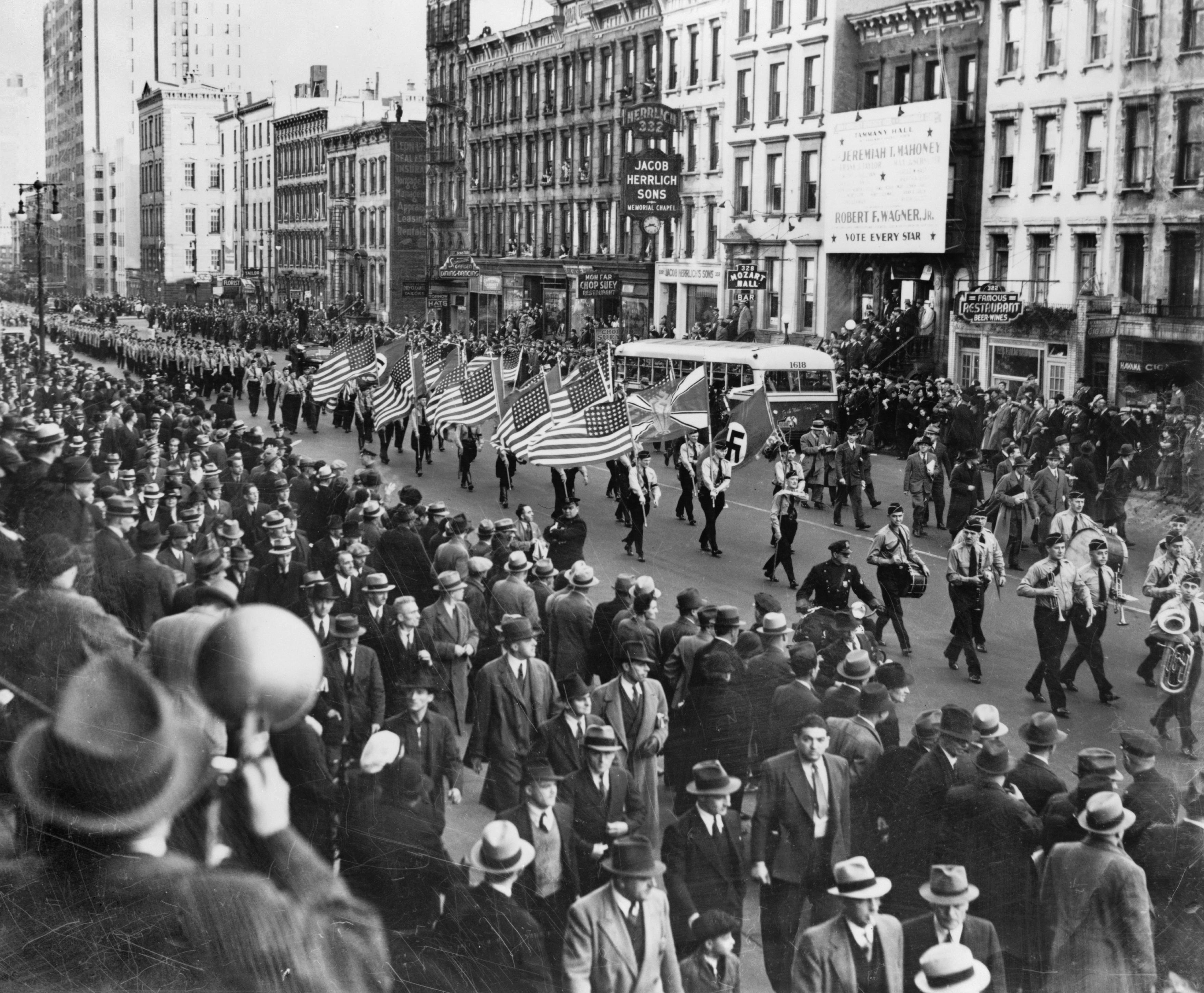
I don't think there's any easy way to generalize for all of them with regards to the war, at least not in an interesting way. It's relatively easy to track down pro-German propaganda in the US (e.g. the German American Bund) and UK (e.g. Oswald Mosley and folks like him). It's relatively easy to track down the influence of the Communist Party in the US and UK as well. There were also, in the US anyway (and probably elsewhere) smaller, fringier groups that weren't really pro-Nazi per se but were definitely anti-Roosevelt, anti-Communist, anti-Jewish.
As for getting their message out, they had meetings, they had rallies, they had parades, they wrote letters to the editor, they wrote books, they mailed pamphlets. Sometimes they were allowed to do what they wanted with impunity, sometimes they faced official or non-official sanction.
Are these people "conspiracy theorists" in the sense meant in the term today? Sort of yes, but sort of no. They weren't universally opposing all "mainstream" interpretations like the dedicated conspiracy theorists do today, and these groups were more organized than the lose networks of people we have today. In many cases we are talking about formal political parties with their own versions of the past and present which were, essentially, conspiracy theories. But they didn't see themselves as conspiracy theorists — they saw themselves as Fascists, or Communists, or whatever they thought was right.
http://en.m.wikipedia.org/wiki/Pearl_Harbor_advance-knowledge_conspiracy_theory
My great grandfather was a believer of the Pearl Harbor conspiracy linked above. The Pearl Harbor advance knowledge conspiracy is about how FDR and other US officials had advance knowledge of the Japanese attack and allowed it to happen in order to enter the war.
He would talk about it a lot and protest in certain ways like not standing up in a theater when the national anthem was played. He also lost a lot of respect from his family and was hostile to my grandfather, an infantryman who was courting his daughter in the early fourties.