I'm studying ancient roman history and I was a little confused as to how laws and litigation worked. I realize that the Praetors were directly involved in the formation of Roman Law. Tribunes of the plebs were also influential law makers and bring in prosecution against an individual. The comitia tribute can approve laws of the Roman people. This is where I do not understand. If there are 2 governing bodies with the same function, how are laws formed and approved? Does it go from Praetors, Consul + senate, then to the tribunes for final approval? If so, what is the point for the imperium if the tribunes have that much power?
Roman law was split between two areas: inside the city of Rome itself, and outside. Imperium gave power over people outside of the city of Rome and this power was given to the Consuls, two per year. Inside of the city, the tribunes held the power of the veto, which allowed them to block any law passed by the senate (they held this because they were considered sacrosanct and could not be touched). The senate held power over the courts and judiciary system.
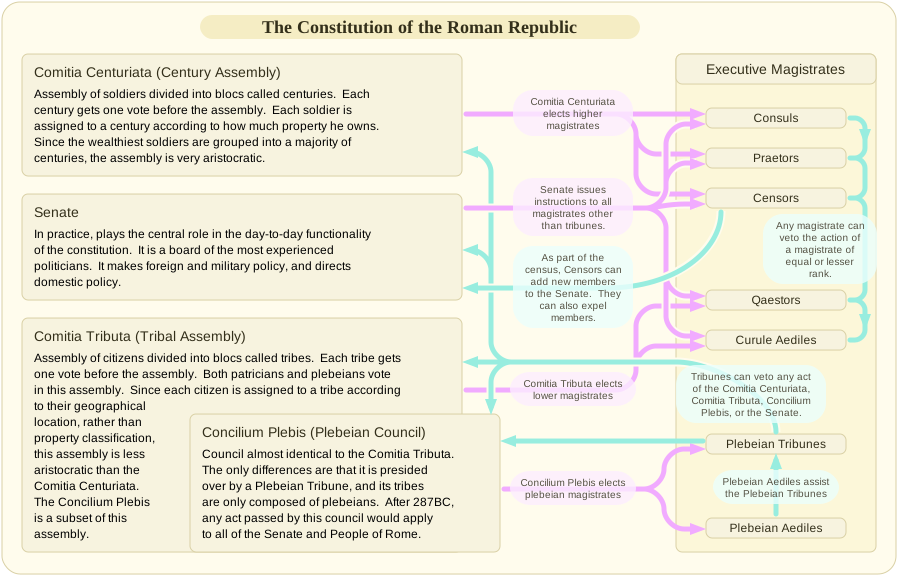
There were actually several comitias. This chart helps summarize what each comitia did. This is valid only for inside the city of Rome.
Sources for our knowledge of the Roman Constitution are Polybius, who analyzes it and notes how it has the three forms of government: democracy in the comitia centuriara, monarchy in the consuls (outside of the city), and oligarchy in the senate. In addition, the power of the tribunes is quite evident in Plutarch's lives of the Gracchi, the younger of which closes down the government by shutting down the treasury (similar to how the US government closure happened with the treasury).
Edit. It helps if you think of the Senate as the legislative branch, the consuls/praetors as the executive branch, and the tribunes hold special veto power over all. The judiciary branch was generally senators, though later equities filled their ranks as well.