I know that throughout its history China was a valuable trading partner for a lot of other places. I understand why the tea, the porcelain, the silk and so on that came from China was valuable. But what did the Chinese get in return? What did the non-Chinese world produce that the Chinese wanted?
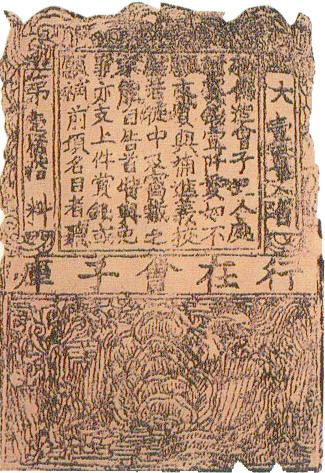
In the case of the Song dynasty and on, silver for the most part. First off, the Southern Song had to pay quantities of silver and silk to the northern Liao dynasty (who preceded the Jin) as efforts to reclaim this land by the Song had proven ineffective. Additionally, there was lots of economic growth throughout the Southern Song period (with Jingdezhen ceramics, for example, traveling both west and east to Japan). As the growth progressed, certain economic reforms came about. For starters, the increased issuance of paper money 会子 from the imperial government itself. Copper coins were still used in the lower levels, but as the merchant class and the economy grew, there was a growing amount of silver in circulation.
Because of this, there was a changing of the tax system: whereas before, an amount of grain or such was to be payed as tax, taxes could now be payed in silver. In those areas that exhibited strong economic growth, this was favorable and preferred, so both the tax payers and the government was happy. In less developed lands, especially in the western regions, this did not go over well: there was not as much silver in circulation, therefore goods first had to be sold for copper coins, and then the copper was to be traded for silver. The problem is that the copper-silver exchange rate was heavily skewed in favor of silver, so those who had to purchase silver with copper spent more than if they had directly given a proportion of their grain.
This silver standard system worked well for a time though, especially with European New World silver coming in. As the amounts of European silver dropped though, and after Japan barred all silver from leaving their borders, new tax reforms took place (~1710 in the Qing Dynasty).
Other than silver, there was also quite a bit of spice trading
Sources:
John King Fairbank China: A New History
as always, Kenneth J. Hammond From Yao to Mao
In addition to silver there was also opium. In the nineteenth century, the Ching dynasty outlawed the trade but small companies smuggled it to China from British-administered Bengal where it was grown. When an incorruptible Chinese civil servant confiscated and burned a bunch of it, there followed the First Opium War.
In the 18th and 19th centuries, furs. Each year, the trade fair at Kyakhta brought thousands of people to a remote point at the Sino-Russian border, one of the few places where cross-border trade was allowed.
This trade was supplanted by British and American merchantmen calling at Chinese ports. As the 19th century progressed, it became cheaper to ship around the world by sea than to ship overland through Siberia. This retarded Siberia's growth, and much of the trade at Kyakhta became local to Siberian needs.
Back to the furs. In the 18th and 19th centuries, Siberian and Alaskan furs (particularly sea otter furs) were valued in China for their warmth and for their stylishness.
This led to the development of a triangular trade between China, Russia and Alaska. Later, American ports supplanted Russian ones in this trade.
Alaskan furs would go to China to be sold for porcelain and Chinese products, which were sold in European Russia. Hard goods for Alaska were purchased in European Russian and transported overland through Siberia to Alaska. American traders rapidly replaced Russian suppliers, and one edge of the triangle was fully replaced by 1830/1840.
Toward the end of the Russian period in Alaska, the deteriorating situation in China and the burgeoning economy in the United States led increasing amounts of furs to flow to the US East Coast.