Could I prevent this? Would they just kill me and take my possessions?
It's pretty important to understand that a "common man," that is, a commoner, in Renaissance Rome (or Florence, with which I'm more familiar) was fairly unlikely to be robbed walking down the street by street thugs for the simple reason that he was unlikely to be carrying anything worth stealing. This same reason is why the average favela dweller in Rio today is not all that likely to be mugged (compared to, say, a tourist), either -- the people around know that he doesn't have much to steal. Picking a mark is an important part of being a thief.
Now, if a relatively wealthy person, say a squire or middle-class merchant, or someone delivering or transporting goods were walking down the street, this would be another matter. People likely to be transporting valuable goods were certainly likely to be targets for muggings -- which is why in this era there was a proliferation of highwaymen in between cities, more than there were gangs of roving thugs in the cities themselves.
That said, violence was not uncommon in Rome and other Italian and European cities in this period, and certainly lawlessness could spring up following all sorts of causes. The infamous bonfire of the vanities in Florence was a semi-legal (church-sponsored), semi-illegal (the monk behind it was eventually executed) festival of violent thuggery that took place in 1497 during a period of lawlessness, in which roving gangs of thought-police set about burning objects d'art they felt were affronts to common decency -- and killing or wounding those in possession of said objects. Many were simply absconded with in acts of common robbery.
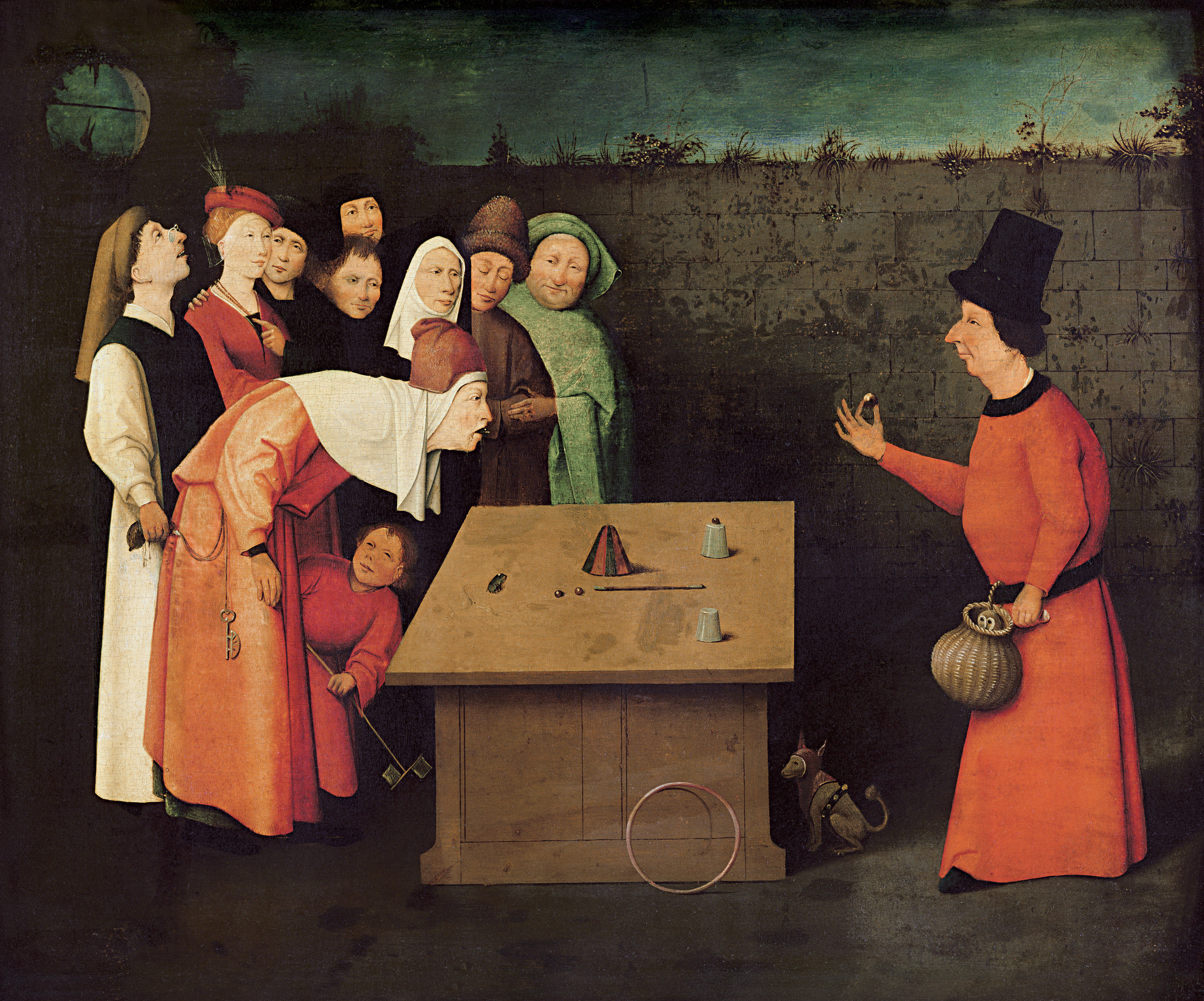
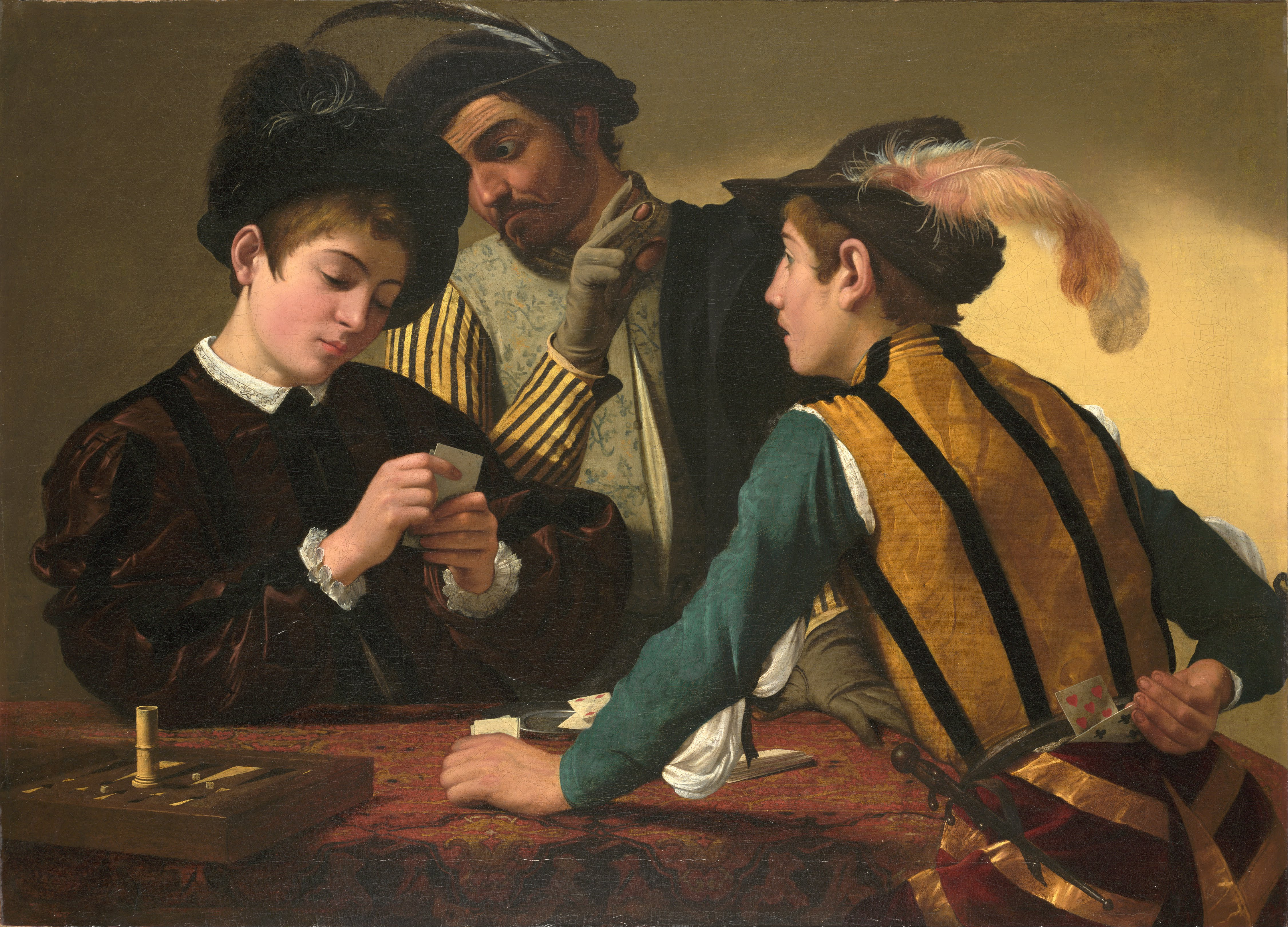
Pickpockets (or at this time, cutpurses) were more likely to be a threat to folks with money than thugs, especially at gatherings where they would, again, be likely to gather with money, such as fairs, public executions, outdoor masses, and other areas where money would be spent. Pickpockets would often work in teams, much as robbers using physical force would, except instead of threats, they would employ distraction and subterfuge. This wouldn't qualify as "robbery" in the traditional definition, but would fall under the category of larceny, and was quite common around this time, as this c. 1480 painting by Bosch shows. And here's a similar painting by Caravaggio, showing that things had only gotten slightly more sophisticated about 100 years later.
Also keep in mind that cities did have soldiers or other armed forces, they were very crowded, thieves were hated, punishments were brutal and swift, and many of the wealthier citizens (even moderately wealthy) were armed or were themselves guarded by armed bodyguards. Medicine was also very bad, so a sword or knife wound that would be moderate or serious by today's standards could easily have been fatal at that time, and potential muggers knew this. Again, this all militated towards ambushes on the open highway or, at the very least, against targets that had been pre-scoped out for high value, following a regular path, that were known not to have the kinds of connection and protection that could get the thieves killed or worse. Randomly jumping poor schmucks on their way home from the tannery was probably not worth the risk, if you were in it for the money. If you were in it just because you liked beating people up, that's a different story, but we're talking about robbery here.
A study of the infamous Renaissance Florentine prison Le Stinche showed that it didn't have many, relatively speaking, robbers and thieves of personal property incarcerated or punished there. More often, it had horse or sheep rustlers, highwaymen, and criminals being punished for crimes against the state, the church, or for pissing off this or that wrong official. That's not to say street muggings weren't common, but we have no evidence to suggest they were, and much of the anecdotal and circumstantial evidence and deduction (laid out above) would seem to suggest they wouldn't be.
So, as long as you're poor and not stupid about it, you should make it home to your life of destitution, hunger, and rather low prospects safely!
Between the death of Pope Innocent VIII (25 July 1492) and election of Pope Alexander VI at the papal conclave (11 August 1492) the "murderous unruliness of the crowds of Rome" lead to many scores of deaths, probably in the hundreds. There was little rule of law in the power vacuum, and Neither Pope stood out as a paragon of virtue.
Pope Innocent VIII is one of my all time favorite bad popes, because it was during his Papacy that Rome published The Hammer of the Witches. And Alexander VI was a legendarily corrupt Pope, a Borgia, which made him very unpopular for people who were not paid off or killed by him. Francesco Guicciardini called Rome during Alexander VI's papacy a "den of thieves and murderers."
I could not recommend a trip to 1492 Rome more, just make sure you also have your Typhus shots, because that's approximately the time Italy gets hit with its first cases, which means that very soon Typhus will be killing more people than other people will be killing people.
It's probably fair to mention that you are just as likely to be armed as any other person who might have the intent to rob. You aren't dealing with an army, you are dealing with thugs looking for an easy meal. Walking sticks were common, knives were of regular accessibility and your thugs are not likely to be any better trained (maybe experienced) than you.
Source (Thanks to u/Aethelric): Julius Ruff, Violence in Early Modern Europe 1500-1800