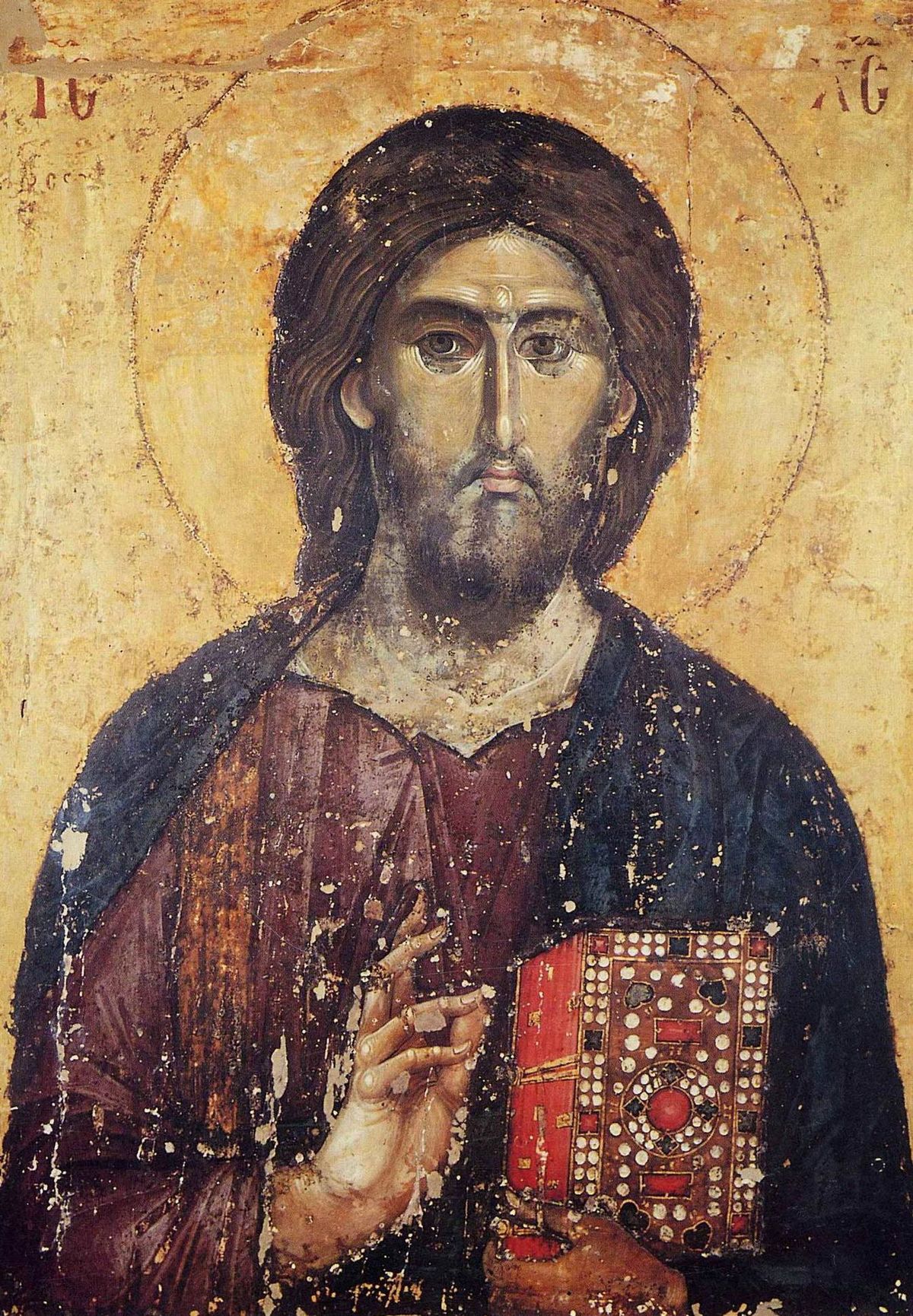
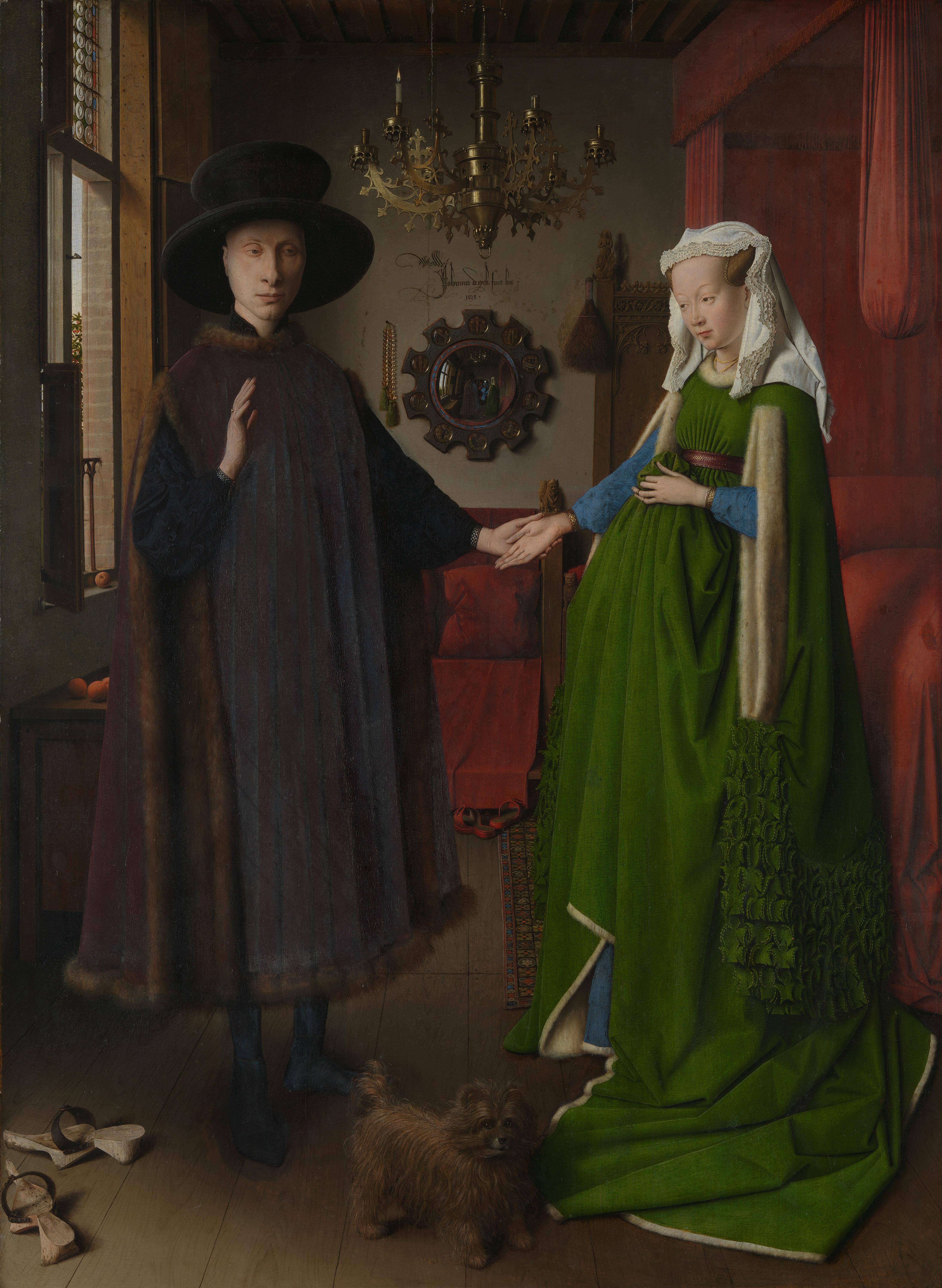
Most Medieval paintings I've seen are iconographical; do we have any examples that attempt to portray their subjects with realism? In the tradition of earlier Classical paintings and modern/contemporary art.
The short answer to this is basically no. The longer answer to this is; sort of, though it depends what you mean by 'realism'. Some icons, of course, have fairly naturalistic depictions of their subjects, but I don't think that is what you're talking about.
Generally, when we think of 'realistic' paintings, what we are actually thinking of is perspective paintings. The development of perspective in western art was basically a watershed moment, and owes as much to scientific as to artistic advances. The key breakthrough was made by the architect Filippo Bruneleschi, who based his ideas on advances made by contemporary thinkers such as Paolo dal Pozzo Toscanelli, who had studied the work of the Arab scientist Alhazen on the subject of optics. Alhazen had analysed the various theories on how vision works left over from the ancient Greeks and other sources, and argued that the only logical way that vision could work is that light entered your eye from a conical field of vision (previously, some people had argued that the eyes sent out beams of light to illuminate the scene, among other things). This model of vision allowed for the development of linear perspective; a picture that uses linear perspective is basically an imaginary slice through this cone, that allows a painter to create an illusion that the picture surface is a window into a space beyond. This was part of a larger philosophical shift in how paintings were composed in Europe, that's generally linked to the emergence of humanism, for example by the art historian Kenneth Clarke. The difference is in a shift of perspective from a more Aristotlean view of the cosmos, where pictures where composed as if they were seen by the eye of God, with the sizes and positions of subjects based essentially on their importance, and with each element within a scene treated as a symbol or icon, to a more human-centric view. This didn't happen overnight of course; a good example of the transition is the works of the Limbourg Brothers. These are some of the first examples of European art still extant since ancient Greece that feature anything approaching a naturalistic landscape, and there is some use of pseudo-perspective, for example, in the towers, but the figures are obviously still hugely out of proportion. The Limbourg Brothers were doing these book illustrations in what is now Holland at around the same time Brunelleschi was doing his first perspective paintings; less than twenty years after the Limbourg Brothers died together of the plague, Jan Van Eyck was using the Italian mathematical invention (though not applied with quite as scientific an eye) to create works such as the celebrated Arnolfini Portrait . The other major technological innovation that Van Eyck is using which makes his work much more naturalistic is oil painting, which was rediscovered about this time (we know from Theophilus Presbyter's De Diversibus Artibus that oil paint was known of in at least the 12th century). Oil paint is important because it opens up a whole bag of tricks for artists when it comes to imitating nature. Tempera paint (which had been used previously in the majority of European painting) goes down fairly opaque and dries quite quickly. Oil paint has a longer drying time and can be laid down in thin, almost translucent layers, which makes it an excellent medium for creating naturalistic depictions of things like water, metal, cloth, hair, skin, etc.