World War I had some pretty big consequences for Eastern Europe in all sectors of life, including the economy, culture, and politics. I'll focus on the most obvious consequence: the redrawing of borders in Eastern Europe. The dissolution of the of the Austro-Hungarian, German, and Russian Empires allowed the Allies to pursue a policy of self-determination for national minorities as laid out in Woodrow Wilson's Fourteen Points.
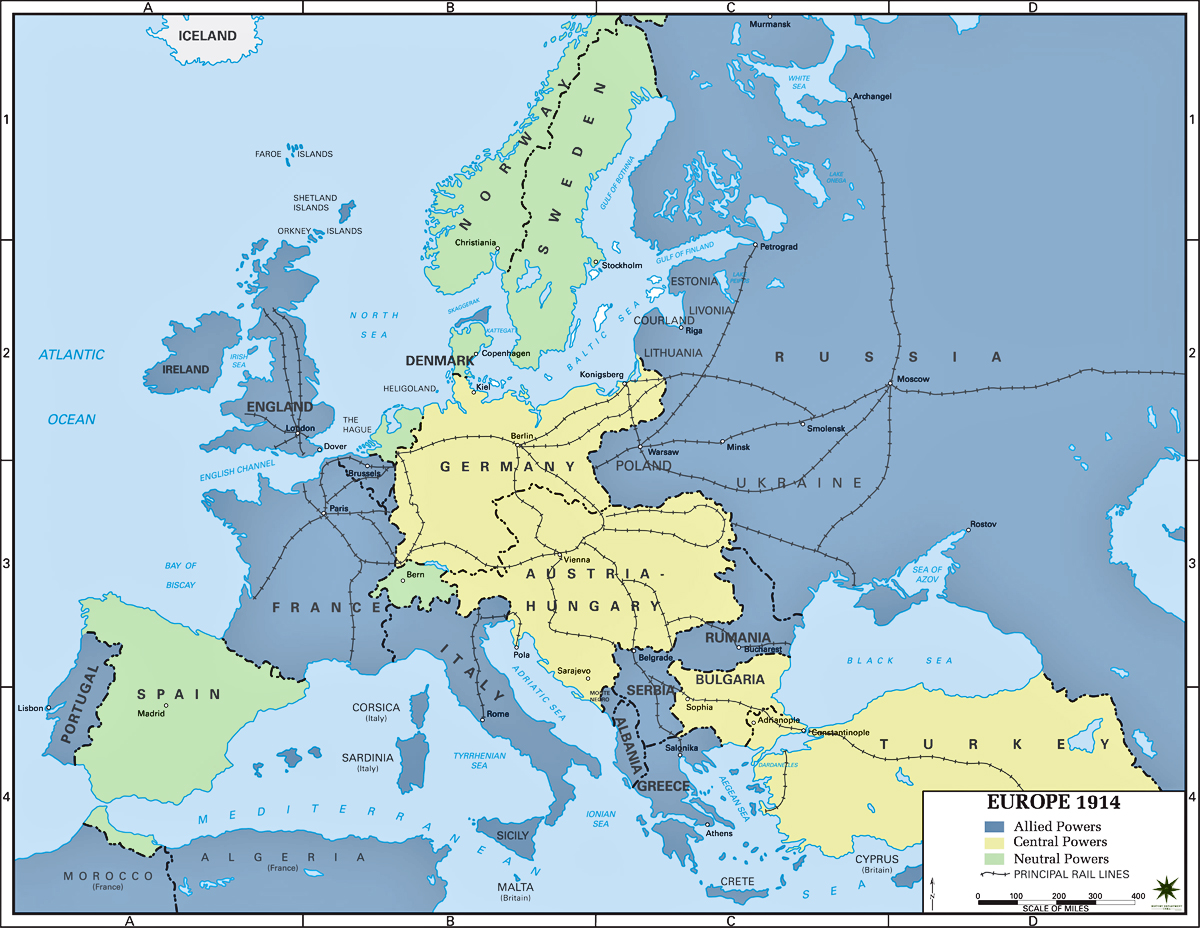
Here is a map of Europe in 1914.
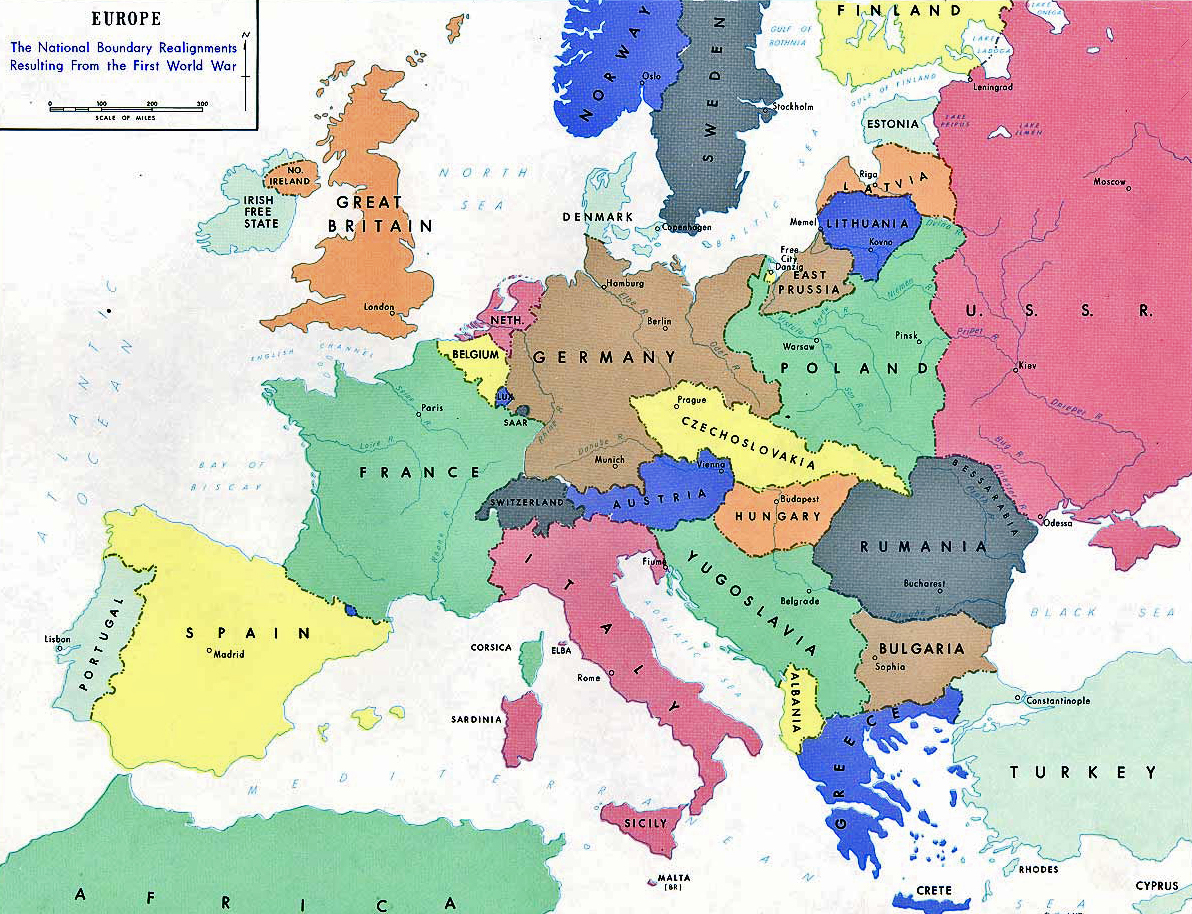
And here is Europe five years later, after the war was concluded.
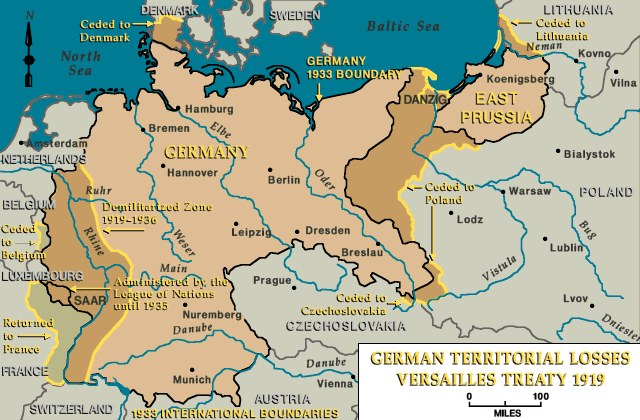
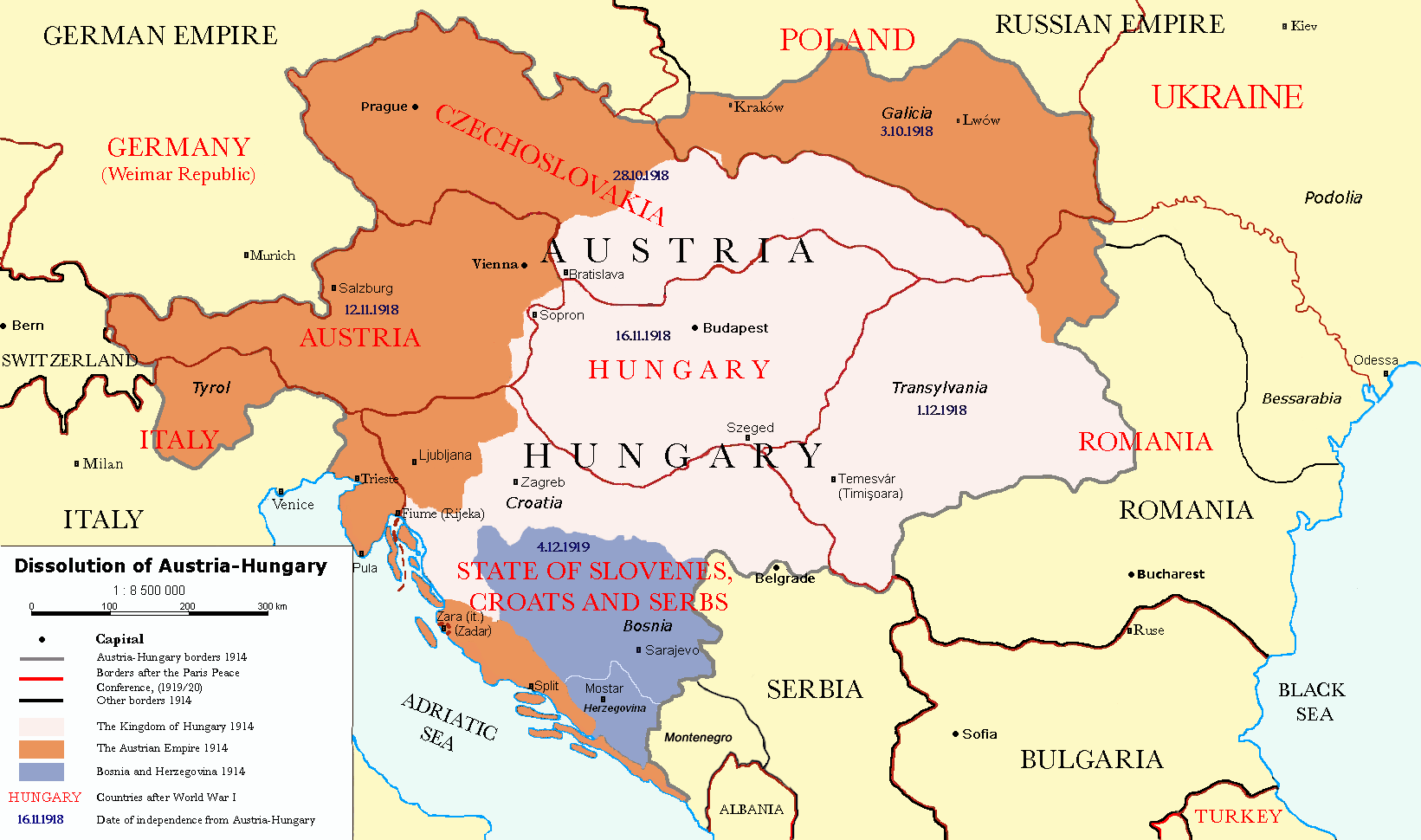
The three main treaties we're going to be looking at here are Versailles, Saint-Germain-en-Laye, and Trianon, which redrew the borders of Germany, Austria, and Hungary, respectively.
In the new map, we can see the emergence of several new nations, including: Austria, Hungary, Czechoslovakia, Yugoslavia, Poland, Lithuania, Latvia, Estonia, Finland, and the Free City of Danzig. Additionally, we see a greatly enlarged Romania and a slightly smaller Bulgaria, whose path to the Aegean now firmly in the hands of Greece. This map is, however, a little bit misleading as it implies that the USSR at this time is firmly established, when in reality it was in the midst of the Russian Civil War (which is its own big can of worms). I'll try to give those countries a quick mention too. I think the easiest way to go about this is to examine each country really quickly, looking at where its territory came from and because of what treaties. Obviously people can go into more detail about specific countries; this is just a brief(ish) overview.
Estonia, Latvia, and Lithuania: Formed from territory of Russia and Germany
Russia formally pulled out of World War I under Bolshevik leadership with the Treaty of Brest-Litovsk in early 1918. Originally the Germans had planned to establish puppet governments under the control of Baltic Germans (who owned most of the land), but obviously Versailles halted those plans. With the retreat of most German forces from the region, the Bolsheviks moved in in an attempted to reassert their claim to the lands that they had so recently surrendered, and thus the Baltic states became a part of the Russian Civil War. In general, the nationalists of these countries sided with the Whites (anti-communist forces), through not without some issues. Eventually, the Bolsheviks came to realize that holding on to the region was simply too difficult, thanks in large part to Estonian, Latvian, and Lithuanian troops using supplies from the Western Allies.
Poland: Formed from territory of Germany, Russia, Austria, Hungary
Poland emerged from the war with territory from all the major empires. Like its counterparts in the Balkans, it too was drawn into the Russian Civil War, during which Poland allied with the Whites. After initial success in Ukraine, the Poles were eventually beaten back by the Soviets, all the way to Warsaw. Fortunately for Poland, the Red Army was decisively defeated at Warsaw in August of 1920. The Polish government also got into a squabble with Lithuania over Vilnius, which it held throughout the inter-war period. The question would not be settled until 1939 when the Soviets returned Vilnius to Lithuania after they invaded Poland. Germany's borders with Poland were set in Article 27 of Versailles. It should be noted that the creation of the “Polish Corridor” between Germany and East Prussia was one of the main problems the Nazis had with the treaty.
Czechoslovakia: Formed from territory of Austria, Hungary, and a little bit of Germany
The Czechs and Slovaks are two distinct ethnic groups, but after the Pittsburgh Agreement (yay, hometown!) leaders from both communities agreed on the formation of an independent Czechoslovakia from the Austro-Hungarian Empire. Unlike the previous countries, Czechoslovakia was not involved in the Russian Civil War and its independence did not involve significant conflict beyond the First World War itself. Czechoslovakia was officially recognized with Saint-Germain.
Romania: Romania's loyalty to the Allies earned them a sizable chunk from Hungary, as a result of Trianon. This eventually led to problems due to ethnic Hungarians being stuck in Romania. Hungary swiped some of their old territory back during WW2, but that was eventually returned, and it remains that way today.
Yugoslavia: I'm unfortunately not all that well-versed in what went on in Yugoslavia at the time. I can tell you that it was the culmination of the efforts of the Pan-Slavic movement, and that it included former territories of Austria-Hungary and Serbia, but that's about it. It was a monarchy, with a Serbian king.
I just want to point out, that for all the crap Versailles gets for being harsh on the Germans, everyone seems to forget that Austria and Hungary were gutted by their treaties. Following WW1, both Austria and Hungary ceased to be major powers, and the industrial heartland of the empire, Bohemia, was now part of Czechoslovakia.
I'm sorry if I've forgotten anything, but I think I got most of the points.
Davies, Norman. Europe: A History. Oxford: Oxford University Press, 1996.
Dziewanowski, M. K.. Russia in the Twentieth Century. 6th ed. Upper Saddle River, N.J.: Prentice Hall, 2003.