Today:
You know the drill: this is the thread for all your history-related outpourings that are not necessarily questions. Minor questions that you feel don't need or merit their own threads are welcome too. Discovered a great new book, documentary, article or blog? Has your Ph.D. application been successful? Have you made an archaeological discovery in your back yard? Did you find an anecdote about the Doge of Venice telling a joke to Michel Foucault? Tell us all about it.
As usual, moderation in this thread will be relatively non-existent -- jokes, anecdotes and light-hearted banter are welcome.
I had a piece up on Slate's Vault blog yesterday, which has been pretty fun. It got picked up by io9.com not long after. So since last Wednesday the visualization has gotten some 8,500 people playing with it, which is not bad for academic work, though not quite what I'd classify as "viral." (18,000 people used the NUKEMAP in the same amount of time, just for traffic comparison.)
If you have found something visually cool that would be of interest, you should get in touch with the editor of the Vault. They're always looking for cool things; either you can write it up (300 words or so) and get a Slate.com by-line, or you can have them write it up instead. It generally has to involve some kind of high-resolution visual image — people like their pictures.
Relatedly, if you are interested in doing digital humanities work with maps, I have enjoyed playing around with D3.js while making the interactive portion of the above links. The documentation is somewhat maddening, and many of the examples are gnomic and hard to make sense of, but once you get it set up, it's easy to do something like what I did with the data there, basically taking a table (CSV format) of latitude/longitude values plus meta-data (city names, city populations, percents destroyed, etc.) and have it plot it in a variety of ways. The fact that you can specify how the data is plotted means you can do much more data-rich (e.g. multivariate) visualizations than you can do with, say, the Google Maps API. And specifying different projections is easy, unlike most map programs/libraries (that is, you specify the projection information, and then can just say, "now apply that to this country's borders, and to all the lat/lon data, please" and it just does it, which is kind of wonderful if you hate trigonometry as much as I do). It requires some knowledge of Javascript or a strong willingness to learn (the coding is not intuitive even if you know basic JS, because you are combining that with basic SVG, and none of this is very pretty in my opinion). I am pretty fluent in Javascript and it took me about four days on-and-off playing with it to get that visualization working the way you see it now (which to me is not very much time considering the exposure payoff, but I know that calculation will differ for others, especially if they are not fluent in this stuff).
There might or might not be a Vietnam War centered episode of the AskHistorians podcast coming up in the near future. Because of this, I want to ask you all: Is there anything about the Vietnam War that you would like to know more about? Is there a question that you'd really like to know the answer to? Your question could be featured in the podcast if that is the case.
Don't know how many of you use Google Drive, but I am really loving the Save to Google Drive plugin when I'm scraping academic PDFs off of the webnets. Plop, right into your Drive. Very nice, thought some of you could use it too.
Posting this from the side of a mountain in the Republic of Georgia:
Got accepted for grad school the other day, and just formally accepted the offer. Going to be attending Carleton University in Ottawa starting this fall, as part of their European, Russian and Eurasian Studies program. Comes complete with a two-year TA/RA grant, as well as a small scholarship. Fairly excited to start this, and while its not history per se, I think that will play a large part in my studies. Already had started to formulate a basic idea for a paper (which I'm sure can and will change): the future of Ukraine, and whether it will go east or west. Note that I had already thought of that before the Euromaidan protests and seemingly impending civil war broke out.
All told, I'm really looking forward to this; I have long looked towards a career with the Canadian foreign service, and they heavily recruit out of Carleton (as do many other government departments and multinational agencies, seeing how its located in the capital). And the chance to write a decent-sized paper about a topic I have a huge interest in makes it all the better.
So, in my recent reading, I came across another absolutely brilliant, classic article: "The Moral Economy of the English Crowd," by the great E. P. Thompson, from Past and Present, 1971.
This was a piece that I'd always heard about, and knew that it was out there and that people cited it fairly frequently. It wasn't until I actually sat down and read it that I realized just how incredible it actually is. Wow. This piece is amazing. Thompson is operating in that grey area between what we now think of as social and cultural history that he spent so much of his research. Here, he's arguing against an older tradition that saw the poor as basically without any kind of culture or rationality, that regarded things like bread riots as just people who were hungry and stupid and just lashing out at the world around them.
He shows really well how totally wrong that notion is; the eighteenth-century poor had a robust system of cultural values, and in the case of food, these values were one component of the whole medieval and early modern food production and distribution system, supported by a set of customs, common laws, and statutes. This system prioritized as direct as possible a relationship between food's producers and food's consumers. Ideally, you would produce your own food, but if you didn't then anyone between you and your food--the merchant, say, or the miller or baker--were supposed to operate according to very strict rules that ensured that no one could exploit others.
The commercialization of the English economy in general, and the grain trade in particular, really disrupted this in the eighteenth century. So, for example, in the eighteenth century, farmers were supposed to sell small parcels directly to the local consumers; you weren't allowed to sell by sample (since you could manipulate that), grain merchants weren't supposed to buy up everyone's stocks before the poor had their chance, they weren't supposed to ship it from one place to another, or to hold back from sale anything. There were actual statutes against all these things, but because the food supply was relatively plentiful, they were often ignored. Indeed, the growth of Britain's cities in the eighteenth century would have been impossible if everyone had followed the food laws to the letter.
But, at moments of crisis, the poor would reassert their customary rights. Traditionally, historians would look at the riots and disruptions that occurred, and basically say, "These dumb poor people, didn't they know how the economy worked? They're just rising up to steal and be unruly." Thompson shows how their riots were actually totally different. They would attack grain merchants and their supplies--but they almost never just stole the grain. Instead, once they had a merchant and his stock in their possession, they would enforce a sale at a "fair" or customary price. Indeed, in many cases, the local landlords and squires would actively support the poor in doing this! So these weren't just riots, they were expressions and reassertions of cultural values.
There's a sort of genealogical link between Thompson's work and subaltern studies. This article would make a great pair with Ranajit Guha's Elementary Aspects of Peasant Insurgency.
There's a lot more to it, but really, it's a brilliant article. Anyone interested should read it, it's absolutely worth your time.
Clio's Current recently wrote a post about how wonderful this place is and why we're here. It definitely goes out to the flaired users! It has one of my favourite titles to date: Anyone Can Cook: AskHistorians and Engaging with History.
I had the pleasure of being interviewed recently for BBC Radio 4's new documentary program, 1914-1918: The Cultural Front. This series looks at the (mainly British) cultural and artistic response to the First World War, and I was asked to speak about some of the work of the War Propaganda Bureau at Wellington House, with particular emphasis upon the remarkable Authors' Declaration of September, 1914.
Those wishing to hear a pleasant stream of English academics disrupted by a discordant colonial twang have only to click the link above.
In 1990, Billy Joel released what would become one of his more famous songs, "The Downeaster 'Alexa'". The song talks about the increasing struggle of a Long Island fisherman in the wake of declining fish stocks and increasing government regulations hurting his trade. Commercial fishing is almost culturally synonymous with a lot of Northeast states, particularly in the nineteenth and early twentieth centuries, however, since then it appears that the industry has taken a hard fall, as recognized in the aforementioned song and even so much as recently being declared a disaster in need of relief 22 years later. Perhaps I'm incorrect, but I would certainly like to know more.
Can anyone here, perhaps our economic and environmental historians in particular, discuss the history and decline of the Northeastern/East Coast United States fishing trade?
It's been too long since I've visited the National Museum of the United States Air Force. It is located near Dayton, Ohio. Admission is free, though you do have to sign up for the R&D/Presidential section (and the busses for that hangar are not handicapped accessible). I would be happy to organize a group/meetup to go visit the museum and maybe hit a restaurant/bar afterwards.
Anyone in the area or going to be visiting soonish that would like to go?
I'm in need of some historical riddles. Any body got some to share?
I'm aware that it's been asked 1,000 times before, but I was wondering if anyone with experience working in British academia specifically had advice on the trials and tribulations of taking a PhD. It's an option I'm tossing around at the moment (2nd year undergraduate).
Realistically, what attributes do I need to attract the necessary funding?
Is it feasible to take a PhD at the same time that one's partner is also undertaking a (scientific research) PhD?
Have you found it a rewarding process? How was it different to what you expected it to be like?
Anyone else come across some humorous place names in their field of research? In the Carolinas I've come across names like Hangover Creek, Shitbritches Creek, Cuckold's Creek, and more.
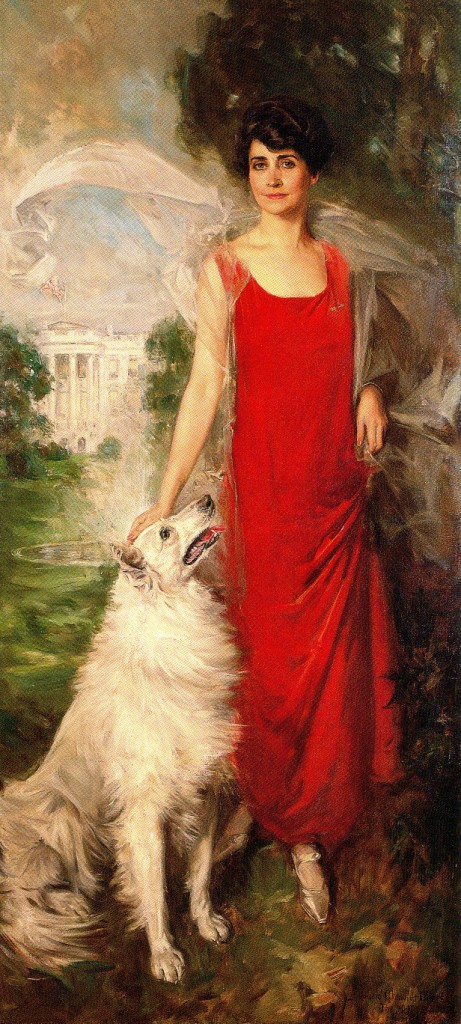
Who was the hottest first lady?
Do we know how common obesity was in medieval England? Would it have been feasible for a 15th century peasant to get fat? What were cultural associations with obesity?
Anyone know any good books on the history of political campaigns?
Late and a long shot, but I'm looking for a couple of excellent explanations of medieval siege tactics and the strategic purpose of besieging rather than just marching around. They would have been from the past 4-5 months, and I think one was from one of our Asian (maybe Japanese?) history experts. Anything anyone can turn up related to these topics would be much appreciated.
Is a world lit only by fire really porny to anyone else?
Where is a good place to look for journals and diaries? I'm specifically looking for record of privateers. Are there places like Lexis Nexis for historical information?
I learned that P.M. Fraser, a Hellenistic scholar, conducted special operations in Greece during The War.
GRRR! Watching a documentary called 'Queen Victoria's children'. In Part 1, they made a big deal out of the fact that Victoria and Albert liked having a strong connection to Germany - to the point that German was used as the second language in their household. It was reported that many of their children spoke with strong German accents till the day they died.
In Part 2, they have some readings from the now-grown-up childrens' letters... using actors with very proper upper-class English accents!
Where's the consistency? The historical accuracy? No wonder noone knows anything about history when they watch documentaries like this!