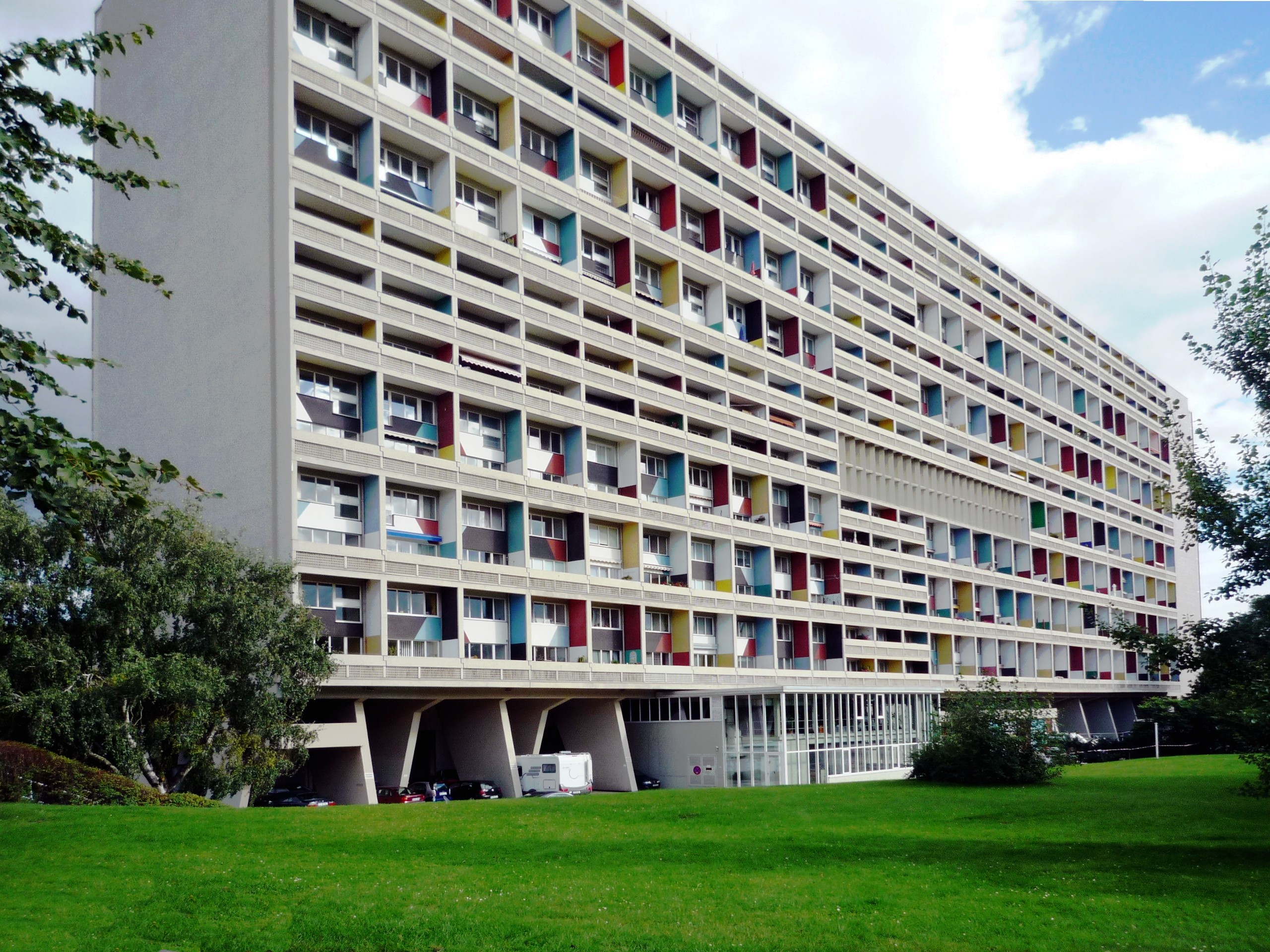
A few years ago, I read Sudhir Venkatesh's book on the fate of Chicago's Robert Taylor Homes housing project, entitled "American Project: The Rise and Fall of a Modern Ghetto." Recently, I also saw a documentary on the Pruitt-Igoe in St. Louis, entitled "The Pruitt-Igoe Myth". In both instances, the housing projects succumbed to decay, rampant crime and eventual demolition.
Having grown up in a large urban housing project in Eastern Europe, my experience could not have been any more different from the abovementioned American examples. Most of the stereotypical pre-fab concrete tower blocks that were a housing staple in urban Eastern Europe continue to function into the present day as vibrant communities. Over the years, these certainly had their share of crime and vandalism, but nothing like what I read about in Venkatesh's sociological study.
Why was the final outcome for urban housing projects so different in the US as opposed to much of Europe? (I'm aware of some of the exceptions in Britain, such as the Aylesbury Estate in London or the Red Road Flats in Glasgow.) Did it come down to differences in funding, maintenance, government urban/anti-poverty policy or demographics? A combination of these factors? I'm eager to see both general explanations as well as comparisons of location-specific examples.
Typically, the argument against postwar public housing in the US centers on the sociological side of it, commonly referring to the idea of warehousing the poor. Put that many poor people in one small area and what do you expect? The architecture lends itself to this narrative. Commonly referred to as the International Modern style, public housing from that period is easily identifiable with it's long, equally spaced horizontal windows, repeated for several hundred feet along the block, and 10 or more stories. They're also usually surrounded by a green lawn, earning the name a tower-in-park design. Brutalist is another term. Corbusier is one of the lead architects of the time behind this style. To sum up his vision for what housing in the 20th century should be, Corbusier said, "The home is a machine for living in."
As you note, the problem with this narrative is that public housing works elsewhere. It's used in Eastern Europe. It works in the United Kingdom. China is even using this style today as towns turn into million person cities in only a few short years. Why the difference with the US?
It comes down to management. Take a look at the case of Girl X in Chicago. Girl X was a 9 year old girl living in Cabrini Green, a public housing development on Chicago's north side. A janitor found her in a stairwell. (Warning: Graphic) She had been raped, poisoned, drawn on, and left for dead. Building resident Patrick Sykes was later convicted of the crime, based on his own confession. Before moving into Cabrini Green, Sykes had spent previous time in prison for attempted rape. The Chicago Housing Authority (CHA) was sued for allowing conditions to deteriorate to the point where Sykes was able to hide the insecticide he used as poison in an elevator shaft. By 2012, Cabrini Green and many other high rises in Chicago were demolished, and the CHA continued with a policy of moving to low rise, mixed income housing. It did keep some high rise structures, but restricted eligibility for these units to seniors and people with disabilities.
Sykes is just a smaller example of one type of tenant that stayed in public housing, indicative of problems with management as a whole. In the US, one of the policies behind public housing was that the federal government would pay for construction and then tenants would pay for maintenance through rent. Without any sort of screening, or minimum income requirements, public housing was used only by the poorest of the poor. Their rent, if they paid it, wasn't enough to cover basic maintenance. The green lawn surrounding the building was covered with asphalt. The windows were covered with chain link fences. If their was a fire, the CHA would simply board up the unit and move tenants elsewhere. After some sniper fire incidents during the MLK riots, police were reluctant to patrol the building. Police supervisors would use assignment to Cabrini-Green as a threat of punishment. Drug dealers and ex-convicts took advantage of Cabrini-Green's lack of law enforcement, and would either move into empty units or be accepted due to poor screening requirements. Eviction in the City of Chicago was already a lengthy, expensive process. While there were periodic attempts at reform, problem tenants were left to their own devices, and would simply move in with friends or relatives if faced with any sort of administrative action. Arrest was the only way problem tenants were taken out of the system.
That's not to say all residents were criminals. Many residents enjoyed the sense of community, and sued the CHA in 2001 for its plans to demolish Cabrini Green, launching another lawsuit recently since the CHA hasn't replaced Cabrini Green units one for one in the replacement development, and is instead trying to attract more middle income tenants. The rationale behind this new policy is that the success of public housing elsewhere came from the understanding that residents with no income, residents with low income, and residents with criminal history have different needs, and shouldn't be lumped into the same program. Instead, public housing should be there to support people capable of living independently, and those with the greatest need should be taken care of by other, more resource intensive social programs.
Keep in mind that I do not have much authority to really speak on this topic authoritatively. But I think a lot of it may have to do with a difference in culture as well as who was actually occupying the projects.
A huge part of the failure of such projects in the United States had to do with that it was used solely as housing for improverished people. It was intended to provide a higher standard of housing for people who were too poor to afford decent living conditions. But this led to a ton of problems. First among which, is that when you start to concentrate people of very low incomes into a single location, crime tends to go up. These projects, at least in the USA, were often placed in ethnically monotonous areas, like majority black, majority hispanic etc... You also had a huge factor of racism, especially during and after civil rights. There was a lot of blockbusting during the period, where businesses tried to get their white employees to move out of neighborhoods (telling them it was unsafe due to racial minorities, etc...), the businesses too started moving out of the city and into the suburbs. This sapped all the good jobs out of the area, and because many minorities were already caught up in a culture of poverty and crime, it was almost impossible for them to get jobs. Once you start concentrating them even more, it just encourages more criminal activity among people who cannot find gainful, legal employment.
It also became dangerous for police to come into these areas, and gangs gained control of these buildings, protecting the people living in the buildings, but also further encouraging criminal activity.
The entire problem, was that it was used as a "solution" to provide living space to the poor, and in the hopes of some, helping to control them (since they were often gated as well). But it just didn't work.
In Eastern Europe, on the other hand, it seems that this type of housing was universal, and at least outside of the old towns, it was widespread. It didn't matter how "rich" or "poor" you were, you lived in this type of housing (unless, of course, you were some high ranking official in an SSR), often next to people of a very different income level. Even today this housing type is widespread, but because these countries are no longer communist, people are free to live wherever and however they want. Yet these projects still get built. The one problem I see that is upcoming, is that from what I've heard, in Eastern Europe, many of these projects have started to be segregated. You'll build a tower project and it will be for the "rich", and will be next door to nice office towers. It won't be an integrated situation anymore.
I can see these projects starting to "fail" in Eastern Europe if they don't maintain a standard of integration (of income levels, as well as races) instead of segregation. But it seems that a huge part of their success, at least initially, was communism and the various Soviet Republics, and being forced to live there with people of different income levels.
Just to add some gristle to the mill, France did the post-war high-concentration housing thing too and it had not-so-good results. They're still standing, mostly, but a lot of them have become ghettos. This is mostly because they tend to concentrate lower-income populations, and everyone who can afford to leave does as soon as they can.