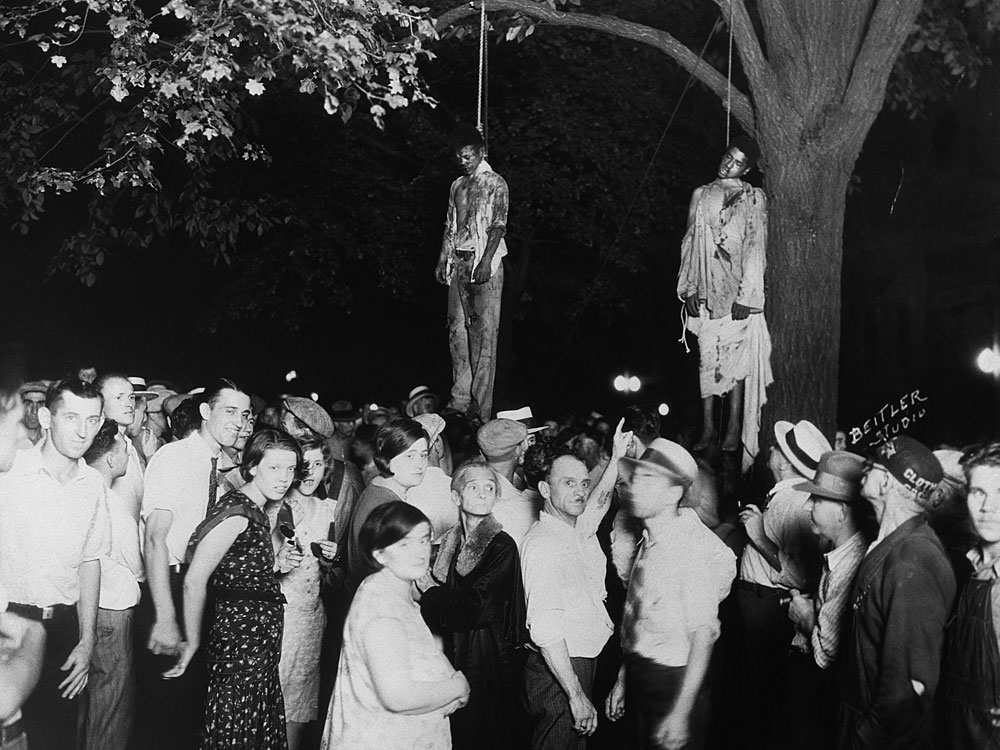
Not specifically those intervals, but significantly after the event.
Yes, contemporary interviews exist documenting the perspectives of those who participated, witnessed, in rare cases even those that survived lynchings. Interviews taking place some decades later are more difficult to find, but can be found in a few cases.
A powerful example comes from the lynching of two men in Marion, Indiana, in August 1930 [link NSFW]. The two men were accused of raping a white woman, the typical crime associated with lynching. A third man also accused of the crime was to be hung alongside them, but the crowd spared him at the last minute. The survivor told his story in an interview sometime in the 2000's. It makes for a powerful account - you can find it here.
Interviews from perpetrators of these crimes are more difficult to find, especially in the decades after the passage of the major civil rights acts authorizing federal prosecution even decades after the crimes were committed. One major and famous exception involved perhaps America's most infamous lynching - the murder of Emmett Till in 1955. After an all-white jury found Roy Bryant and J. W. Milam innocent, they told their story to Look Magazine and in the interview the two essentially admitted to the murder. Double jeopardy prevented future prosecution.