/r/AskScience aerodynamicist here. Like anything in aircraft design, delta wings have trade-offs. The details are really technical in nature, and only a function of history as aerodynamicists learned more about design.
Some advantages:
Wing loading is the weight of an aircraft divided by the area of its wing. Low wing loading permits higher maneuverability. Delta wings have a relatively large area and thus can provide maneuverability benefits (in practice this doesn't exactly work at extremes).
At a high angle of attack, the leading edge creates strong vortices that allow a delta wing to maintain lift at very high angle, which is advantageous in combat.
The high sweep angle reduces aerodynamic drag in supersonic flight.
Disadvantages:
High drag and generally poor performance in subsonic flight.
High drag in hard turns.
Stability and control problems in tailless design -- this is why canards are used.
Over time, engineers realized how to achieve a lot of the benefits from delta wings without getting the disadvantages; an example would be the leading edge strakes on an F18 that provide the same vorticity generation at high angles. In general, the early cold war (1945-1960) saw a massive improvement in understanding of supersonic flight, and designs changed pretty dramatically in many ways.
The history of aircraft design as it was influenced by the available knowledge of the time is a very interesting topic. My personal favorite example is the Supermarine Spitfire, which represented the absolute pinnacle of aerodynamics knowledge in its era.
During the cold war the conventional wisdom was that we needed fighters that could go fire missiles and fly supersonic in order to catch bombers. Most of the pure delta wing jets such as the MiG21 and the English Electric Lighting were designed to take of and climb 50,000 ft in less than 10 minutes, hit supersonic speed (Mach 2+), and catch the bombers they had been sent to intercept. During the vietnam war it became apparent that pure delta wings cause turning to become very straining on the airframe and for tons of energy to bled off. A jet with a pure delta wing can travel amazingly fast for a given thrust, and is stable at supersonic speeds but when you turn a delta wing you end up losing tons of energy and speed. It also slows turning in general and although it allows a high AoA (Angle of Attack) it does not make for the most maneuverable aircraft, which can be a problem in dogfights with much more agile aircraft. Military Aircraft today are designed to travel FAST ENOUGH, not as fast as possible and they are made as well rounded as possible. There is also the factor of the industries switch from turbojets to high bypass turbofans in the 70s and 80s, which are wider for a given thrust and so make a delta wing airframe less aerodynamic and more difficult to build. Today speed is a lower priority than observability and maneuverability. The only real applications for pure deltas are supersonic transports and bombers that aren't meant to maneuver at all, and for these applications it works well. The addition of canards to newer delta wing aircraft has resulted in more of them being produced, although radar cross section is adversely affected by the addition of canards they do allow for much greater AoA and general maneuverability characteristics. Most fighters today are designed either with relaxed stability or unstable, and computers are the only things that keep them from falling out of the sky. The delta wing naturally wants to fly straight so it's not an optimal configuration if you want an aerodynamically unstable aircraft that can turn amazingly quick.
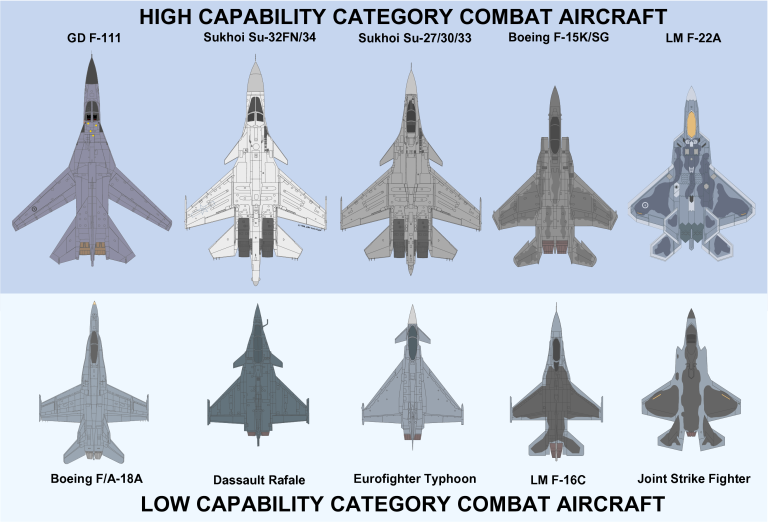
Delta wing designs are very common in modern military aviation, I'm not sure where you are getting this idea. Not all are perfect deltas like the Eurofighter Typhoon, but tailed and otherwise altered variations of the delta like the F-16, F-15, or F-22 are among the most well-known fighters of the last few decades. Here's an image of a range of modern fighters, most of which are either regular or tailed deltas. And no, a tail does not preclude a wing from being considered a delta.
What makes you think their numbers have dropped off? I am not aware of a single modern fighter aircraft that doesn't employ a delta wing design.