I am not referring to American plantation slaves or anything post enlightenment. I am wondering just how bad a slave's lot in the Roman or Grecian empires was, or any old world states famous for their slaves.
On a side note, it seems to me freeing a lifelong slave would be doing them a unkindness, suddenly they have to make their own way with no resources, a slave always had food to eat, a freed lsave would be little more than a beggar.
I'm gonna go ahead and pull a chunk of this from one of the answers I wrote up a little bit ago on this very thing :)
So. Roman slavery. You know how the Civil War was fought over slavery? Well ...in Rome, they were an integral part of society. However....strangely enough as it might seem, "slave" was a VERY general term. There was a MASSIVE difference between a "house slave," or even a "city slave" and a slave who worked the fields, the mines, or the ships. The former were seen as soft and pampered by the rest, the hard-working, hard-bitten, short-lived slaves. The city slaves lived a relatively cushy life for slaves. They earned money, they could eventually buy their freedom, they were teachers, maids, butlers, messengers, bodyservants, cooks, etc. Essentially...for an analogy and perspective. They were the equivalent to people who are paid minimum wage today. Now, some slaves got more (such as the bodyservants to the aristocracy, the teachers, etc), while some got less (the bath slaves), but they all lived relatively cushy lives.
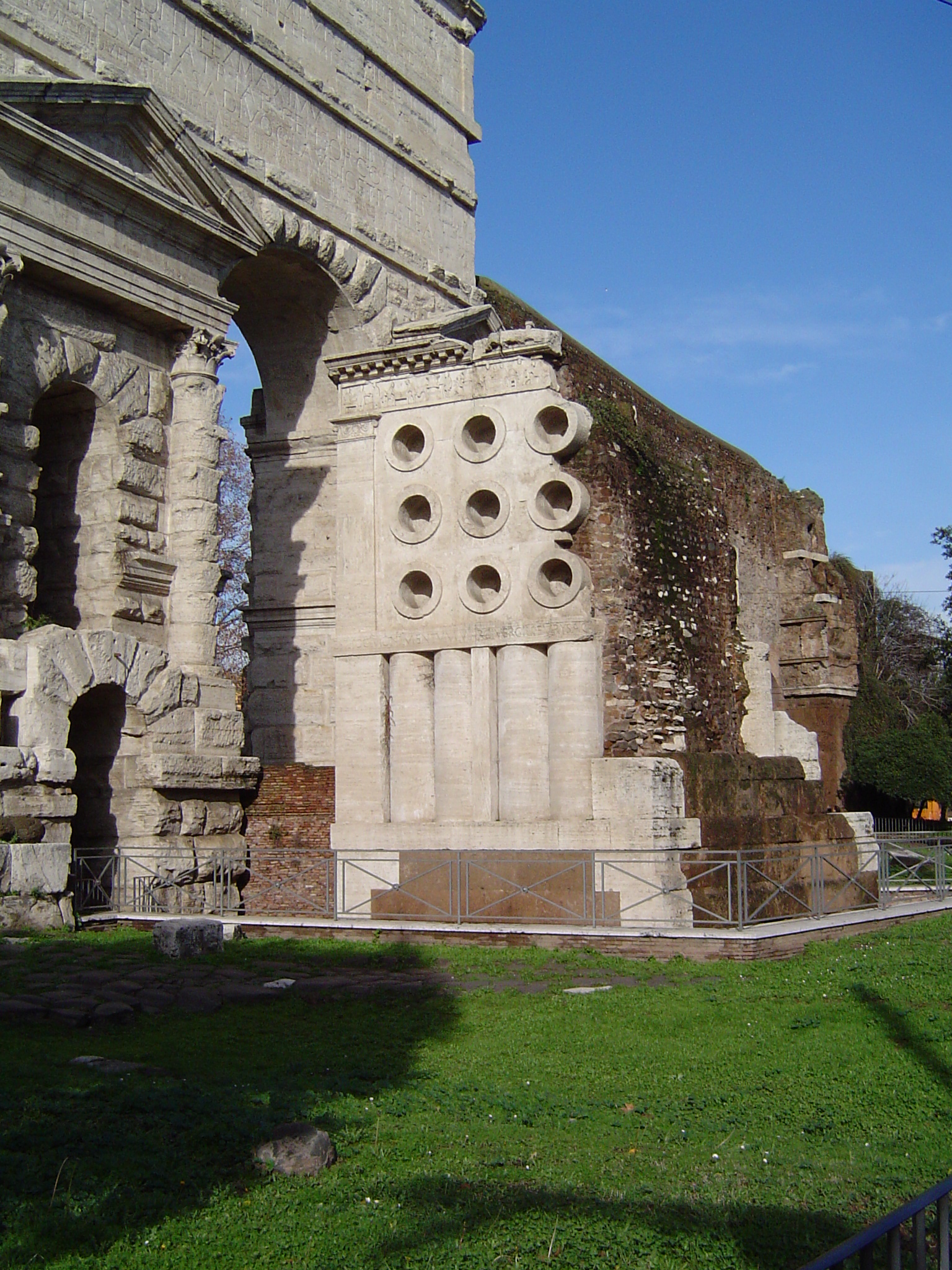
These are the examples that people give when they want to convince you that Roman slavery was cushy and that the Romans were wonderful people who wore togas everywhere and were the bestest and most culturedest people. To answer the second part of your question, if/when these people were released, they became the clients of their former owner - their former owner would continue to take care of them with money and influence, and they would essentially be a part of that man's extended family. They kept the money that they had earned through their servitude, and often times they would have a pretty good base to go off of. For an example, here's a picture of the tomb of a particularly successful freedman. Freedmen didn't get the rights of ordinary citizens, but their children certainly did - even if the fact that their ancestor was a former slave always stayed with them.
Well....THEN you look at the flip side. The other slaves. The ones who kept fucking revolting for a reason.
These were the farm slaves. The slaves in the mines (Perspective on the mines of the Roman world. I say mines, you think....maybe a little mineshaft in the ground, etc? Well you're SEVERELY underestimating the Romans when it came to industry. And when I say severely....their mining projects in Spain (for example) were unbelievable. Here's a quote from Richard Miles' Carthage Must Be Destroyed:
Furthermore, in order to increase efficiency and production, new techniques were brought in from the eastern Mediterranean. Large numbers of slaves, controlled by overseers [Who were also slaves], did the manual labour. Underground rivers were redirected through tunnels and shafts, and new technology was used to pump water out of shafts. The process by which the metal ore was extracted was laborious. First the rock containing the silver ore, usually mixed with lead, was crushed in running water. It was then sieved, before going through the same process twice more. The ore was then put in a kiln so that the silver could be separated out from the stone and lead before being transported, often by river, to the main cities on the coast. [...] in the Roman period from the second century BC to the fifth century AD it was calculated that at any one time some 40,000 slaves toiled in the Spanish mines, producing 25,000 drachmas [approximately 107,000 grams of silver] of profit a day. Indeed, the colossal scale of both the Punic and the Roman mining operations can be ascertained by the 6,700,000 tonnes of mainly silver slag found at Rio Tinto that can be dated to those periods.
I used that quote just to give you an idea of exactly how extensive that one mining operation was. Spain was not the only place that Rome mined, but it was certainly one of the biggest. Those 40,000 slaves that had to work those mines? Yeah, they didn't live long. Here's an ancient writer named Posidonius' take on that:
Originally any private person without mining experience could come and find a place to work in these mines, and since the silver-bearing seams in the earth were conveniently sited and plentiful, they would go away with great fortunes. But later the Romans gained control of Spain, and now a large number of Italians have taken over the mines and accumulated vast riches as a result of their desire to make profits; what they did was buy a great number of slaves and hand them over to the men in charge of the mining operations...
The men engaged in these mining operations produce unbelievably large revenues for their masters, but as a result of their underground excavations day and night they become physical wrecks, and because of their extremely bad conditions, the mortality rate is high; they are not allowed to give up working or have a rest, but are forced by the beatings of their supervisors to stay at their places and throw away their wretched lives as a result of these horrible hardships. Some of them survive to endure their misery for a long time because of their physical stamina or sheer will-power; but because of the extent of their suffering, they prefer dying to surviving.
Yeeeeeeeeah. Note that the vast majority of Roman slaves were not household, or even city slaves. They were mostly field slaves, under conditions like these. Here's one about work in a flour mill - This is from Apuleius' Metamorphoses, which is a novel. However, it's also one of our best sources for the "plebeian life" of Ancient Rome:
The men there were indescribable - their entire skin was coloured black and blue with the weals left by whippings, and their scarred backs were shaded rather than covered by tunics which were patched and torn. Some of them wore no more than a tiny covering around their loins, but all were dressed in such a way that you could see through their rags. They had letters branded on their foreheads, their hair had been partially shaved off, and they had fetters on their feet. They were sallow and discoloured, and the smoky and steamy atmosphere had affected their eyelids and inflamed their eyes. Their bodies were a dirty white because of the dusty flour - like athletes who get covered with fine sand when they fight.
Masters could essentially do whatever they wanted to slaves - some were more lenient (Seneca has writings on this in particular), while some (obviously) were more brutal. Interestingly enough, a middle ground would be the slaves who we find most interesting today...the infamous Roman gladiator. Like all other slaves, they were...well...slaves. They were subject to their master's whims, they could...well...this piece of graffiti from the time period says it all:
Take hold of your servant girl whenever you want to; it’s your right.
^ That. Know what that means? Yeah, you can fuck your slave whenever you want - they're a slave, it's what slaves are for. Whether you were a male or female slave, if your owner wanted you, you were his, and you had no legal recourse. Having sex with slaves was extremely common in the era, so common as to be unremarkable. It's assumed that most Roman aristocrats lost their virginity to a slave they took a particular liking to.
Gladiators were used just like all the other slaves - except their use was also a blood sport. They (like other slaves) weren't allowed to get married, however they kept the winnings from their fights. They were relatively pampered (fame and fortune - think sports superstars combined with Hollywood icons), however they were forced to fight for the entertainment of the Roman citizenry. The man sitting across from them over supper could be the man who killed them the next day. (NOTE: One misconception that I see ALLLL the time. See this bullshit? This would NEVER HAVE HAPPENED. Rather, this one would be what you would see. And you know what the thumbs up means? It means death for the loser. MINE = BLOOOOWN. Back to the story.) Also - the gladiators were housed in what amounted to prison complexes. They were detached from cities, walled, with guard towers, walls, you name it. They were schools in a sense - but they were a huge symbol that one of the greatest fears of the Roman people was what would happen if the slaves rose up against them in a co-ordinated revolt. Hence why Spartacus' war caused so much terror amongst the populace, and one reason that it was dealt with so brutally.
One thing to remember about the gladiators - the fights rarely ended with one of the gladiators dying. We've got plenty of records of gladiators who lost multiple battles, and it would be too ridiculously expensive to replace a well-trained gladiator who just so happened to get killed. Accidents happened, of course, but the fights were there primarily for entertainment - while it was a blood sport, and while there certainly were fatalities, those fatalities are incredibly skewed by Hollywood and modern depictions of a gladiatorial contest.
If you've got any more questions, please feel free to ask them! :)