A lot of the statues and pictures of statues Ive seen depict quite well defined / muscular men or well endowed quite feminine women.
Would these body types be accurate of their inspirations, or would it be more akin to the air brushing / photoshopping of our models in magazines today?
hi! there's always room for more info, but meanwhile check out this related thread, which includes links to several more
Were the heroes of old as muscular as they are portrayed in their statues?
These statues were probably entirely inaccurate in terms of representing the real body type and even facial features of their subjects. Portraits of individuals were very important to wealthy Romans, who kept wax death masks of their ancestors, called imagines, displayed in their homes as a sort of family tree of their distinguished heritage. This was a tradition dating back to the early days of Rome. None of these are known to survive to the modern day because of the delicate nature of wax in the archaeological record. What we do have are portraits carved in stone, which have links to the imagines tradition, but do not capture the likeness of their subject as reliably as a wax mask taken from the individual.
Early portrait sculpture from the Republican period was done only of the head and tended to emphasize and probably exaggerate the age of the individual by including many signs of age, such as wrinkles and warts. This was a sort of idealization, but in the opposite way than we tend to think of making someone appear more perfect. In this period, the wisdom that accompanied old age was revered, so those that got their portraits done by an artist, where there was a bit of room for alteration to their actual face unlike the imagines, would opt for extra signs of old age. Here is an example of one of these Republican portrait sculptures and here is another one.
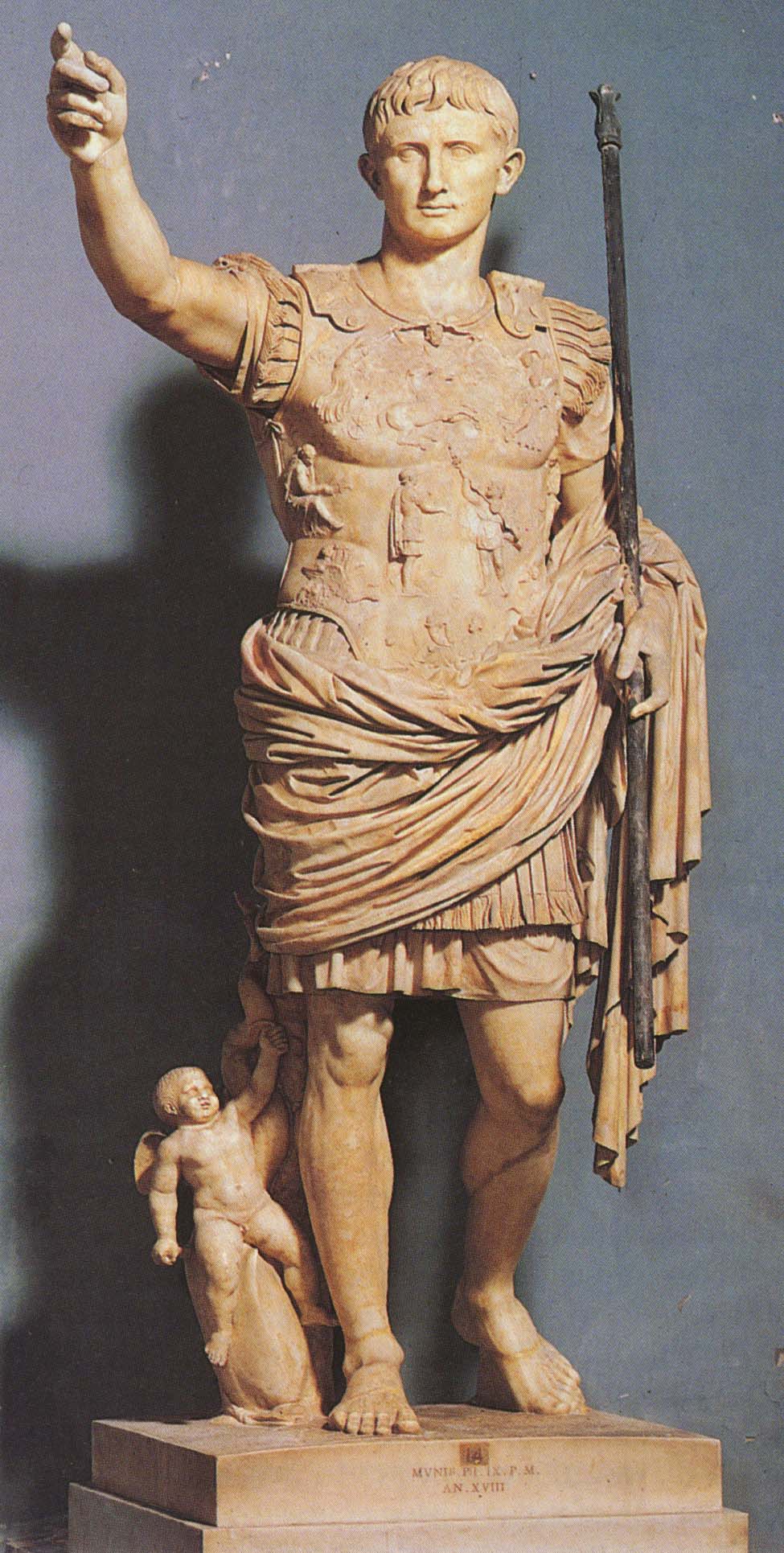
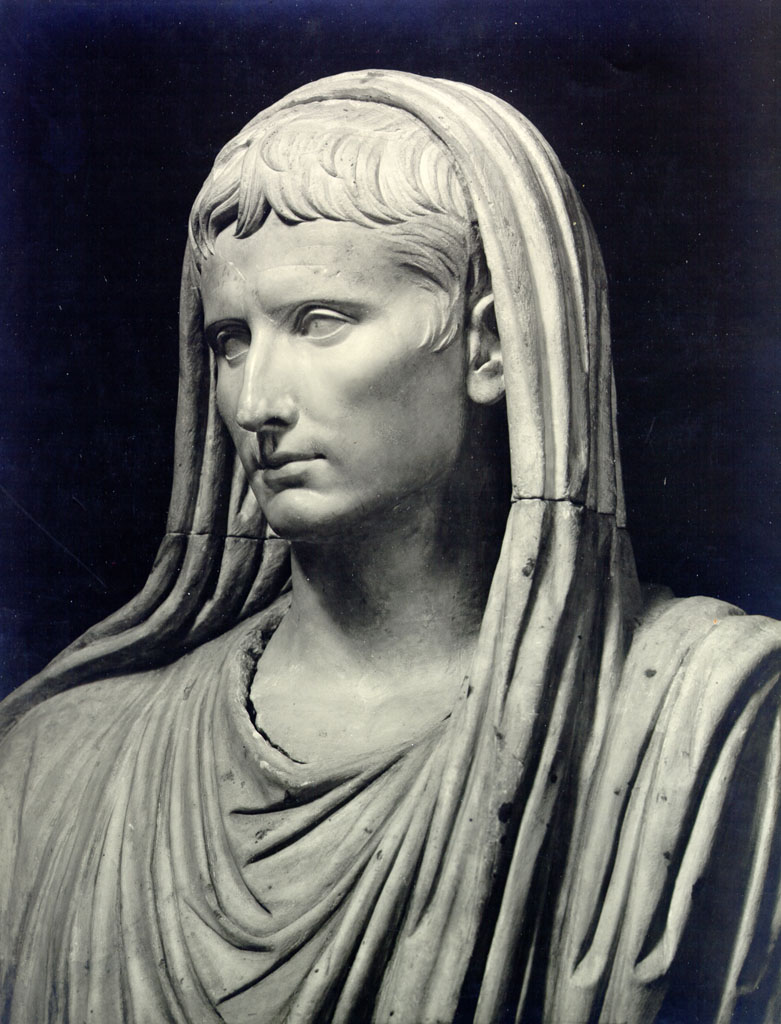
This all changed with Augustus. Augustus was a master of propaganda and used images of himself that would be distributed throughout the empire to manipulate the way people thought of him. Rather than appearing as a wise old man, he appeared as a young, virile, strong leader. No matter what his age when he had an imperial portrait commissioned, he always appeared the same age. By doing this, he appeared to be someone that the people would be confident in his ability to rule the empire. He also had himself depicted in a variety of outfits- as a military leader, a priest, a hero- to emphasize his role as a leader in all aspects of Roman life. Here is the famous Augustus of Prima Porta, a copy of an original though to date to around 20 BCE, when Augustus would have been in his forties. Here is a portrait of Augustus with the civic crown, a type of esteemed military decoration, and here is a portrait of Augustus as Pontifex Maximus, the head priest. As you can seen, Augustus maintains the characteristics of a young man in all of these portraits, regardless of his age in real life. He died in 14 AD at the age of 77, but no portraits of him exist that show him any older than these examples. Artistic fashion tends to emulate the leader of the country, so wealthy Romans began to request that their sculpture be idealized in the other direction- that is, they wanted to appear younger, stronger, and more attractive than they really were.
Edited to add examples!