Countless movies and videogames such as Indiana Jones present Aztec, Mayan and other South American civilizations as having lethal burial grounds. There are dart traps in every corridor, pressure plates to trigger pitfalls and some other advanced mechanisms. Is any of this based in reality? Was there an actual tradition of using these or other kinds of traps to dissuade (grave)robbers?
Here's a thread that links to some other discussions on the topic. In summary: some early tombs in Egypt had shafts that might have been used to trick robbers, and the first Chinese Emperor Qin Shi Huang has a few legends about him.
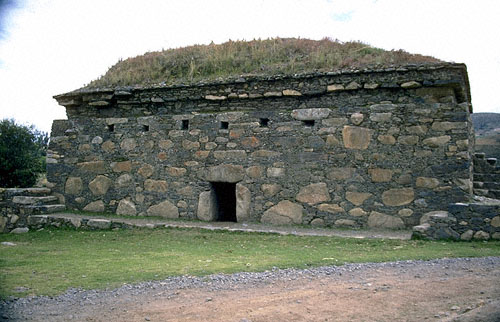
South America though? Can't think of any examples. In fact, I just wrote a 25-page paper about how important it is that tombs were the exact opposite of booby-trapped labyrinths. The Recuay and later Huari in the north-central Andes built what we call "chullpas." (Eventually the chullpa spread south through most of the Andes.) They are chambered buildings anywhere from 3m x 3m family tombs to three story edifices to, in the south, tall round towers. The bodies of the deceased were tied in bundles in the fetal position, and the altitude and cave-like environment inside would naturally preserve them, hence "mummy bundles." Evidence suggests that these were moved in and out of the tomb for ceremonies. This tradition can also be seen in the ethnographic accounts of the Inca displaying ancestor mummies in public space and continuing to interact with them. The tombs were created specifically to be accessed.
For more info:
George Lau "Feasting and Ancestor Veneration at Chinchawas" (2002) in Latin American Antiquity
Gabriela Ramos Death and Conversion in the Andes: Lima and Cuzco, 1532-1670 (2010)
William Isbell Mummies and mortuary monuments: a postprocessual prehistory of central Andean social organization (1997)
I'm also happy to answer any more questions.