Like the title said, is there any archaeological evidence suggesting the existence of pyramids or other structures (like those of the Mayans and other peoples indigenous to South America) in the United States?
I've been really interested in Native American history recently and was wondering if they only ever built the classical 'wigwams' and 'tepees' in the US.
There's a very diverse indigenous architectural heritage throughout the territory that is now the United States. I'll just hit some highlights here in the Eastern Woodlands, with a few illustrations tossed in as we go.
In the Northeast, there were wigwams as you mentioned. This is a broad class of houses that are generally dome-shaped and covered with tightly woven mats or (usually elm) bark paneling. Some were small and temporary; others could be large permanent structures. There were also longhouses, which could be a couple hundred feet long. There'd usually be a dozen or a more of these in a typically Iroquoian town, each one housing several families related matrilineally.
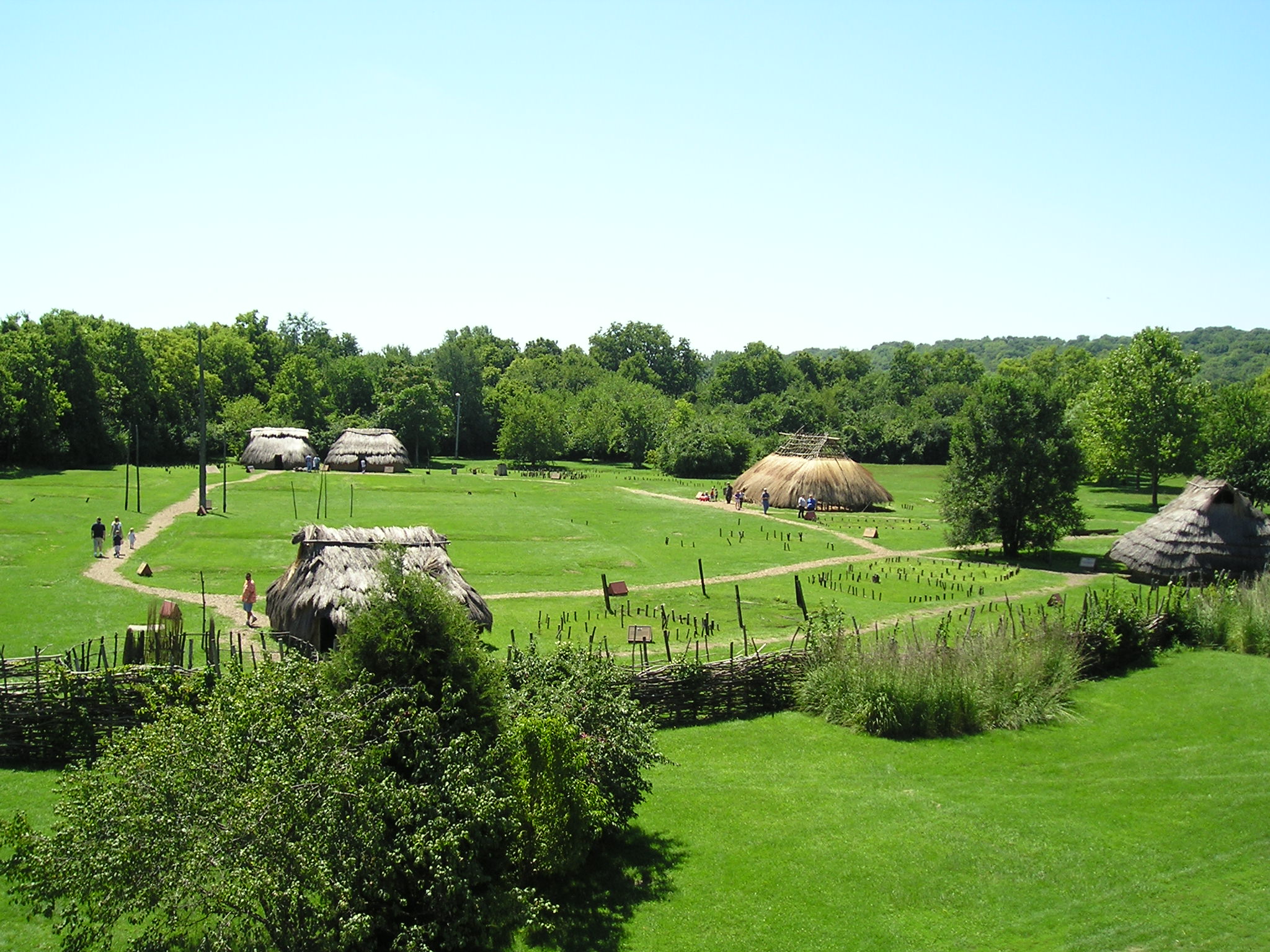
Looking south, but still staying east of the Mississippi. Starting a little further north than the Ohio River wattle-and-daub houses became popular. In early colonial times, the Miami in Indiana used houses like this in the summer and wigwam-style houses in the winter; by the 18th Century though they were shifting over to something more like the cabins used by Euro-American settlers as well. They were also popular with Mississippian and neighboring peoples in pre-contact times. You can see some reconstructions of them at places like Sunwatch, which is reconstructed Fort Ancient (Ancestral Shawnee) village in southwestern Ohio. While they weren't Mississippians themselves, they definitely had some influences from their Mississippian neighbors.
Since I mentioned the Mississippians, this seems like as good a place as any to mention the monumental works of the "mound builders." There's no one group of mound building people and unlike what early Euro-American archaeologists thought the 'mound builders' didn't mysteriously vanish. Mound and earthwork construction continued well into historic times.
The oldest known earthwork is Watson Brake, a ring of mounds in Louisiana dating back to the time of the Egypt's Great Pyramids. Moundbuilding continued off and on for about another two thousand years when those early traditions culminated in the Poverty Point culture. Construction began on Poverty Point itself around 1700 BCE. The Bird Mound that looms over the community is both older and larger than the Olmec's efforts at pyramid building. While their Mesoamerican counterparts eventually shifted to using stone in their construction, for the mound-building cultures in the Eastern Woodlands, earth remained the preferred medium for such monuments.
During the Woodland period that followed the Archaic period in which Poverty Point flourished, a new mound and earthwork tradition spread out of the American Bottoms and the Ohio Valley. This cultural tradition is now known as the Hopewell (plus its more localize predecessors like the Adena). These cultures built burial mounds of various shapes and sizes, as well as complex geometric earthworks. My personal favorite and the largest of its kind (in terms of overall area, not height) is the Newark Earthwork. But there are many others. For example here is a map depicting the diversity of Hopewell Earthworks from Ross County, OH, the epicenter of the Scioto Hopewell (one of the two dominant Hopewell groups, the other, the Havanna Hopewell, were along the Mississippi in Illinois and Missouri, for the most part; and there were other Hopewell-affiliated groups all over the Mississippi-Ohio valleys).
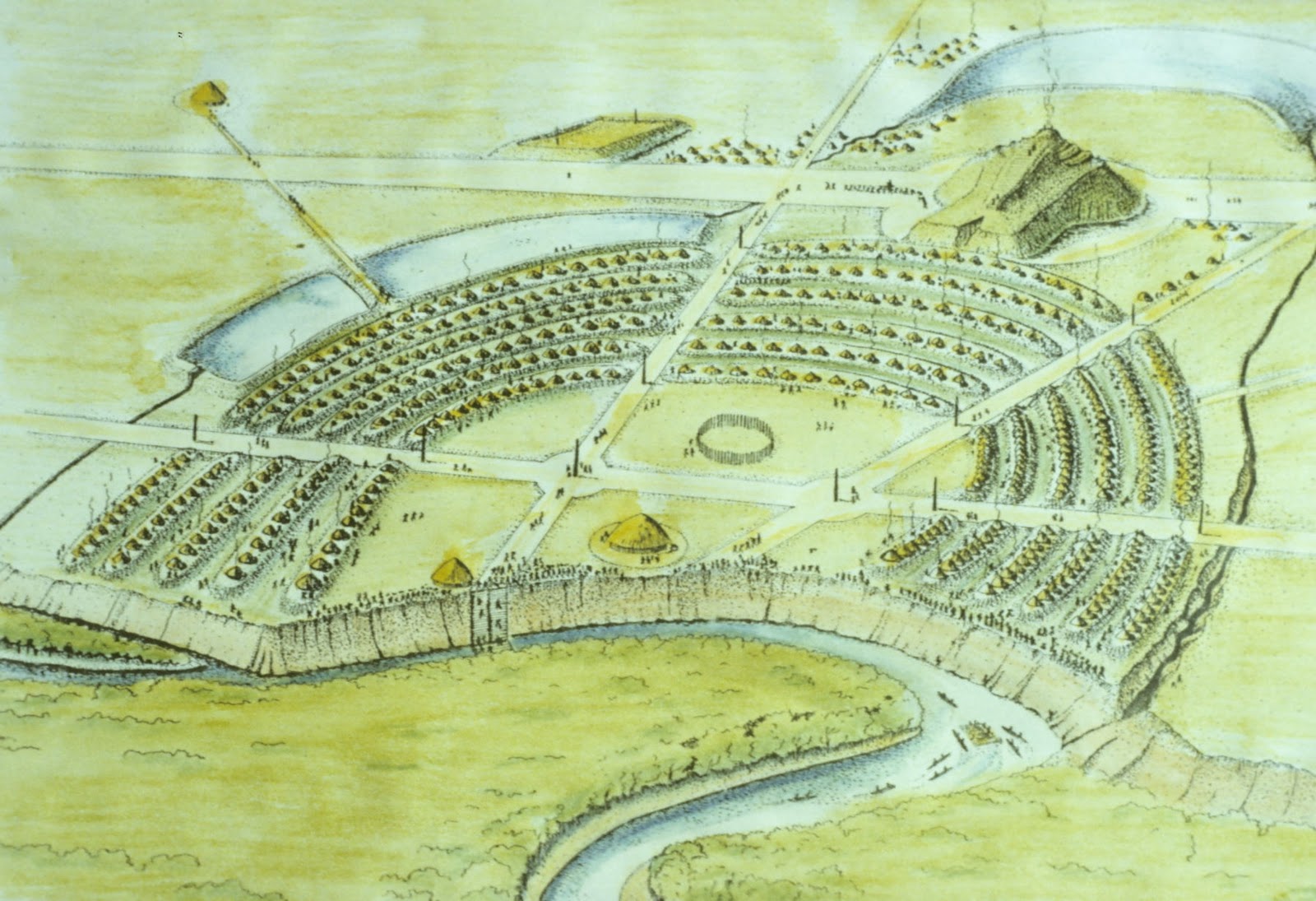
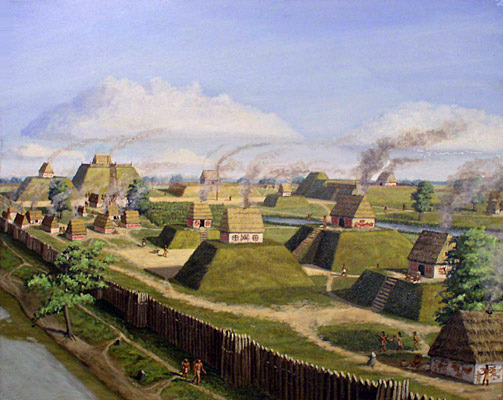
After the decline of the Hopewellian cultures around 400-500 CE, there's a period of a couple centers were mound and earthwork construction tapers off. Some people kept at it here and there, and those efforts eventually took root in the Mississippian cultures, which dominated the Mississippi River, the lower portions of its tributaries, and much of the Southeast. The most famous Mississippian site is Cahokia near East St. Louis, Illinois. Monks Mound is the largest of its many earthworks; its an earthen pyramid with a footprint about the same size as Egypt's Great Pyramid, though its shorter since its truncated at the top to serve as a platform for another building. Though Cahokia gets top billing, it certainly wasn't the only site of its kind. A similar complex in St. Louis proper is now destroyed, but you can still visit the sites of Moundville (Alabama), Etowah (Georgia), Kincaid (Illinois) and others. Monks Mound is the largest earthen pyramid on the continent. Another Mississippian Mound, Emerald Mound in Mississippi, is in competition with Poverty Point's Bird Mound for second place, depending on how you measure "largest."
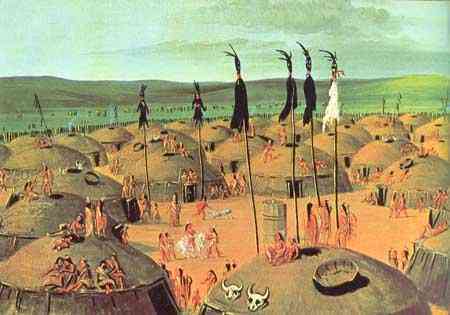
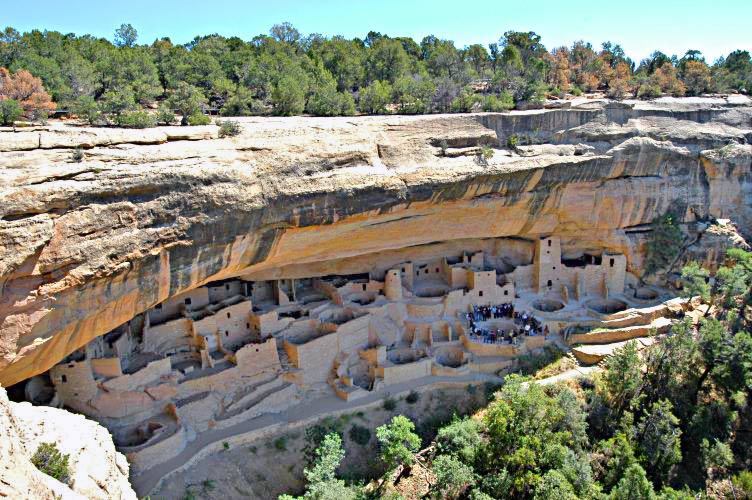
Now, looking briefly across the Mississippi, there are additional earthworks there too, but also unique architectural traditions including earth lodges; grass houses; a wide assortment of stone structures built in the Southwest such as Cliff Palace, Pueblo Bonito, the pueblitos, along with Pueblo communities that continue to this day; and a unique style of longhouse from the Pacific Northwest.
Defintely! The city of Cahokia near St. Louis was a massive Native American city that housed anywhere between 6,000 and 40,000 people at its height. The city had numerous earth mounds, the largest of which, Monks Mound, is the largest earth mound north of Mexico.
Edit: Grammar
Yep, the Anasazi sites in the Mesa Verde national park in New Mexico contain the tallest buildings built in the USA before the early skyscrapers in the 1880's. The sites themselves are much smaller than the Mesoamerican ones, with populations in the thousands as opposed to the millions down in the Mayan Empire.
Some of the sites were inhabited from 600 up until around 1500, though the most famous site, Mesa Verde, fell out of use around 1300.
I'm afraid I'm no expert on this subject, but Jared Diamond has written an interesting chapter on this culture in his book Collapse: How Societies Choose to Fall or Survive, where I got this information from.**
Two that spring to mind have already been identified (Mississipian mounds and Mesa Verde), but I would also throw in Chaco Canyon and really any of the existing Pueblo villages.
Really interesting stuff, thanks for the informative responses! I've got some reading to do.
The Serpent Mound is a 1300 foot long effigy of a snake, likely a hognose. It was built between 1000 and 1150 CE, likely by the early Fort Ancient culture.
I want to add these 2 examples from the Middle Woodland Period in Tennessee. They stand out as being some of the more complex structures built in the South during that Period.
http://en.wikipedia.org/wiki/Old_Stone_Fort_(Tennessee)
"It is the most complex hilltop enclosure found in the South and was likely used for ceremonial purposes rather than defense."
http://en.wikipedia.org/wiki/Pinson_Mounds
"The complex is the largest group of Middle Woodland mounds in the United States. Sauls' Mound, at 72 feet, is the second-highest surviving mound in the United States."
Yes, there are ruins of Vikings having landed in new England up to a thousand years before Columbus. While they are basically just low walls and foundation lines, they still existed. Also, further West there are the remains of nomads that came over the Alaskan land bridge thousands of years ago. Tools for flint napping, and hammer stones have been found from Oregon to New Mexico. My understanding is that pottery shards have been discovered as well.