Many are. Here are just a few examples from Ohio (plus some bonus examples in neighboring states).
The Seneca village of Shenanjee is most likely the modern town of Mingo Junction ("Mingo" being the name applied to Iroquoian settlers in the Ohio Valley). It's main claim to fame is that it was where Mary Jemison lived for the first few years after her adoption by the Seneca during the French and Indian War. Alternatively, it is another smaller town a little further south (my hometown!), which was also home to a much, much older Adena settlement.
The city of Marietta, Ohio was built on the remains of an ancient Hopewell community at the mouth of the Muskingum River.
Further up the Muskingum River, there are collection of cities and towns that are built on top of old Lenape towns. Newcomerstown is named for Netawatwees ("Chief Newcomer") who founded the towns predecessor: Gekelmukpechunk. He also founded Koshaxktun, which became the Lenape capital until the Revolutionary War when it was destroyed. The modern city of Coshocton was built on the site.
Newark, Ohio was built on another old Hopewell site.
Crossing from the Muskingum River to the Scioto River (the portage is conveniently close to Newark), we'd eventually reach the city of Chillicothe, Ohio, which was the state's first capital. At the time of the Roman empire, it was also the epicenter of the Hopewell culture in the region. There are also some earlier Adena sites in the area too. Much more recently, it was also the site of the Shawnee town of Chalakatha (variously spelled in historic records), from which the city gets its name.
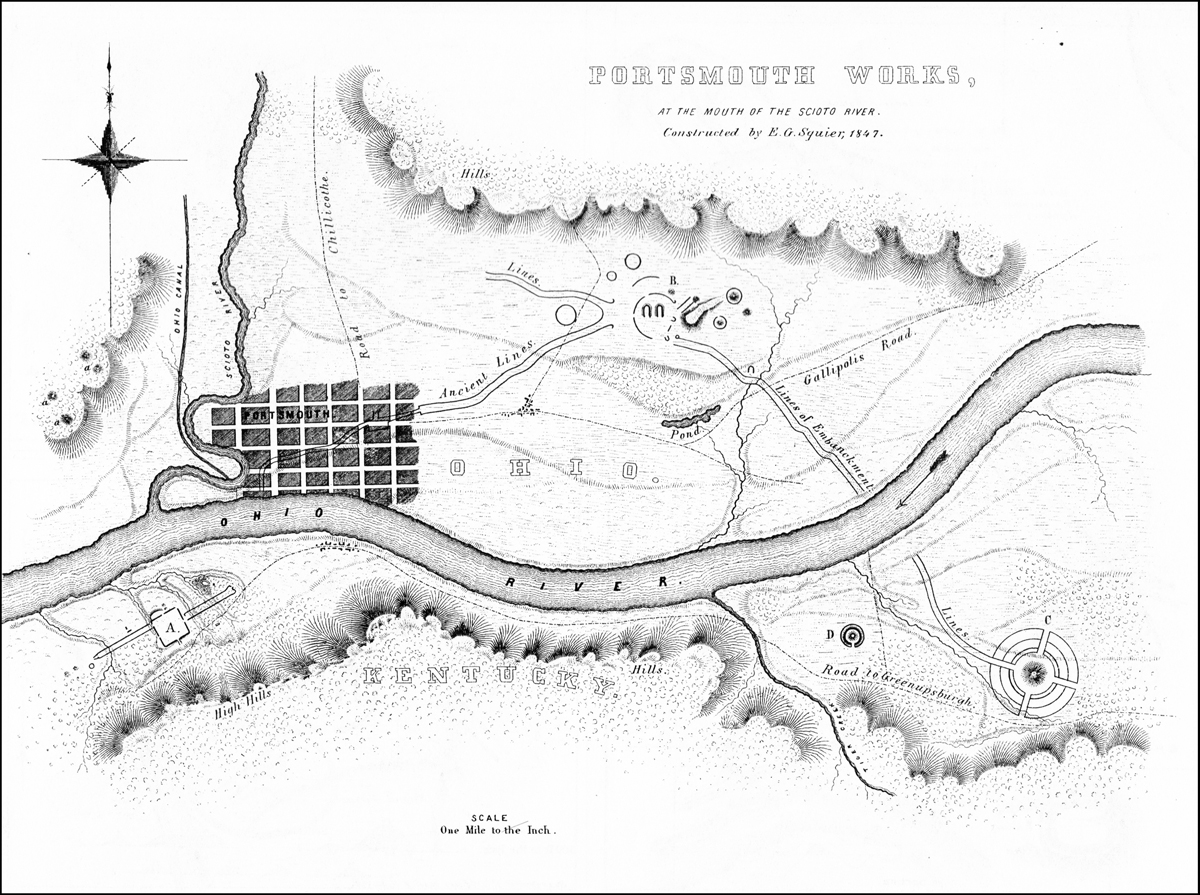
At the mouth of the Scioto River, where Portsmouth is today, was yet another Hopewell site. As with Chillicothe, there are Adena sites here too. Later, Lower Shawneetown (its Shawnee name has been lost) was on both sides of the river until just prior to the French and Indian War.
While I'm on the subject of Shawnee towns, I should also mention the modern city of Wapakoneta, which was once Wapokanite, home of Catecahassa (Black Hoof), who was the official leader of the Shawnee during the time of Tecumseh.
The city of Piqua was once the Miami boomtown of Pickawillany. It was a short lived town however, founded in 1748 to extend Miami influence eastward and secure trade connections with the English but destroyed in 1752 by an expedition led by the Ottawa-French Charles Langade. The destruction of Pickawillany started the region down the path to the French and Indian War.
Fort Wayne, Indiana was once Kekionga, the capital of the Miami after ~1700 and, in the latter half of the 18th century, home to Mishikinakwa (Little Turtle). Mishikinakwa is famous as the preeminent war chief of the Western Confederacy, who dealt two crushing blows to the young United States at the Battle of Pumpkin Fields and St Clair's Defeat. The site of Kekionga was chosen to secure trade between Detroit and St. Louis, as it stood at the portage between the Maumee and Wabash Rivers.
As for the Western Confederacy itself, it was formed in response to the United States winning the revolution. An alliance of various nations in the Ohio country came together in a Wyandot town on the Sandusky River. It was known by several names, including Half-King's Town, after the nickname of its leader, Dunquat. Another common name for it was Upper Sandusky, which is the name it passed on to its modern counterpart.
The site of Louisville, Kentucky was chosen because it sits at the Falls of the Ohio. This has been a natural stopping point for people travelling up and down the river for thousands of years ago. It's been the site of large settlements since at least the time of the Adena, over 2000 years ago.
A large number of them, but Natchez, Mississippi stands out because the 13th- to 18th-century Grand Village of the Natchez has been preserved and protected, including Mound B, the site of the house of Great Sun (hereditary civic leader of the Natchez). Well worth the visit!
Santa Fe, New Mexico, the oldest capital city in the United States was once O'gha Po'oge, "The Place of White Shells by the Water" (Sanchez 21). It was a 12th-century Ancestral Tewa Pueblo village. When they renovated the Santa Fe Convention Center's parking lot a few years back, they discovered an ancient pueblo site with human remains, which they reinterred.
Saint Louis, MO is built on the site of what many archaeologists believe was the largest pre-columbian city in North America. Most of the mounds in the city itself were systematically destroyed in the 19th and 20th centuries, but you can still see some at Cahokia national monument, across the river in Illinois (about 8 miles away from St. Louis).
Many scholars think that the settlement in St. Louis and the settlement in Cahokia were two different cities, but others think they were parts of the same community. In any case there were mounds all over the area that was now St. Louis before they dug them up to build the city.
Phoenix, Arizona takes its name from the fact that the city was built on the ruins of an old Hohokam settlement. Some of the irrigation canals that go through the city follow the original Hohokam plan.