I'm interested to know how did Aztec/Mayan/Inca etc.. armies compare to their European counterparts? I have read the these ancient civilizations fielded huge armies. However, considering they lacked any form of cavalry how did they go about conducting battles. Did they use sophisticated tactics (like the Carthaginian, Macedonian or Roman armies for example) or did they rely on sheer numbers to win battles?
In the case of the Inca, it seems that many soldiers began their duties by being conscripted into the army by the Inca nobility. At the outset, this meant that Inca soldiers were really farmers and herders pressed into duty, into units and led by their local lord. The Inca army at its height were ranks of these soldiers slowly professionalized through the many campaigns of expansion - yet still they came from disparate corners of the empire and rarely shared a common language between units. Even with the slow management and building of a distinctly professional army, this precluded the Inca from some tactical planning.
At the outset of their expansion from the Cuzco Valley, the Inca were likely engaging in the same style of warfare their contemporaries were utilizing: raids and looting on neighbors for goods and status. Facing up to complex polities like the Chimu of the north coast or the Qolla of the Titicaca Basin demanded a shift in strategy - and so it's believed that these early conquests relied on a clever mixture of local alliance, defusing/annexing territory by marriage, and occasional uses of crushing force wherein all the military capital of the fledgling empire was utilized. The shift to annexation has been variably credited with Pachacuti (the go-to Inca and in some minds the only one worth knowing about eyeroll), Wiraqocha Inca (his father), or a few of the earlier Inca rulers who may have been attempting this strategy to gain a hold over most of the Cuzco Valley. Juan Polo de Ondegardo noted in one of his chronicles that the overwhelming force summoned by the Inca was always trained on targets that could not muster adequate forces on their own - giving them the choice of obliteration or surrender. Given that the Inca always rewarded those who surrendered with gifts and increased status, that initial offer was rarely refused. The great Inca strategy of expansion was to generously reward loyal subjects, and to harshly punish the resistant. This helped to build a perception of power and control that the Inca themselves likely didn't actually have.
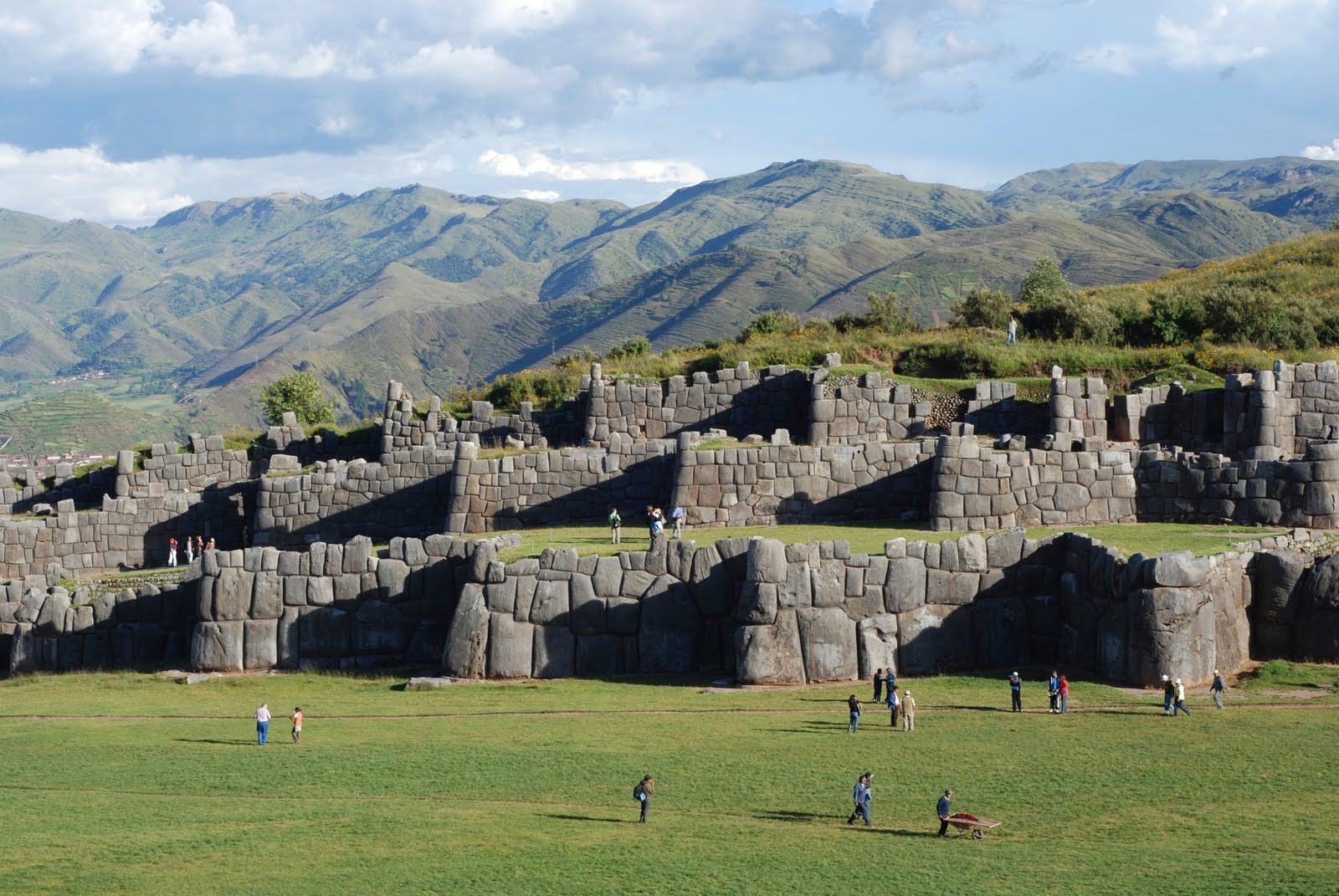
In the case of resistance or rebellion to the Borg-like expansion and annexation of Inca statecraft, Inca punishment was swift. Cieza, another chronicler, mentions Siquillapukara, somewhere in Xauxa, where the locals put up a bloody battle against Inca forces. After narrowly winning the battle, the Inca evacuated the town entirely and resettled them elsewhere. One group from Ecuador (the Cayambe, I think? I'll check), a continual thorn in Inca northern expansions, was massacred and forced to bring stones from their heartland up through the Andes to Cuzco to form part of the battlements of Saksaywaman. I'll have to seek out the study but some folks did geochemical analysis of the stones and confirmed that some of the boulders really are from Ecuador.
Later, under the reign of Wayna Qhapaq, the imperial strategy seems to have shifted from expansion to consolidation of the empire's gains. Garrisons were built mostly to defend the frontiers of the empire, and the Qhapaq Ñan (the highways of the Inca) helped to move troops as needed. Supporting these troops on the road utilized storehouses placed throughout the empire, stocked by local groups to be employed when feeding troops, labor conscriptions, or in times of famine. With such an offensively-stacked mentality for the Inca, garrisons had little use in maintaining control in the established empire (as one would see in the Old World); they functioned more as front-line redoubts for expansionary campaigns that could be well-supported from behind. These gave an irregular, if somewhat stable frontier for Tawantinsuyu. Indeed, most of the problems for Tawantinsuyu came from continual rebellions from certain stubborn foes, like the Chachapoyas, who seemed to rebel at any opportunity. Taking clever actions like installing loyal colonists in their midst helped to mollify such continual issues for the Inca.
Warfare was quite common among the different nations in the Pacific Northwest. Defensive structures, such as palisades, trenches and embankments dating far before European contact can be found all over the area. I know more about the Hiada than any other group in the area, so I'll focus on them.
A great quote explaining the Hiada style of warfare comes from anthropologist Diamond Jenness who described them as the "Indian Vikings of the Northwest Coast." They would craft massive dugout canoes carrying about 60 people each.
The Haida would first destroy any enemy ships by using large stone discs affixed to rope, thrown into enemy vessels in the hopes of destroying and sinking them. Once the raiding parties reached ashore, their paddles actually doubled as a sort of pole arm club that was quite effective in group combat. They also carried small daggers, bows and spears. Atl Atl were also used.
You can see a small collection of weapon examples from various Pacific Northwest Nations here and here.
I would also like to point out that with the coming of Europoeans, the Pacific Northwest peoples adapted quickly. The Haida actually began to mount swivel-guns to their canoes and traded their bows and clubs for guns quite quickly and efficiently.
Sources: Troubled Times: Violence and Warfare in the Past - Chapter 10, Herbert D.g. Maschner
Canadian Museum of History
If you are willing to invest in the purchase of some history books, I can recommend some titles that would great expand your understanding of the subject:
Aztec Warfare: Imperial Expansion and Political Control, by Roy Hassig.
I own this books and it covers the weapons, training and tactics of the Aztecs in close detail:
http://www.amazon.com/Aztec-Warfare-Expansion-Political-Civilization/dp/0806127732
The Incas, by Terrence D'Altroy.
I also own this book, and it contains an excellent chapter on Incan warfare and fortifications:
On the subject of popular history, there are also the following Osprey title:
Aztec Warrior, by John Pohl: