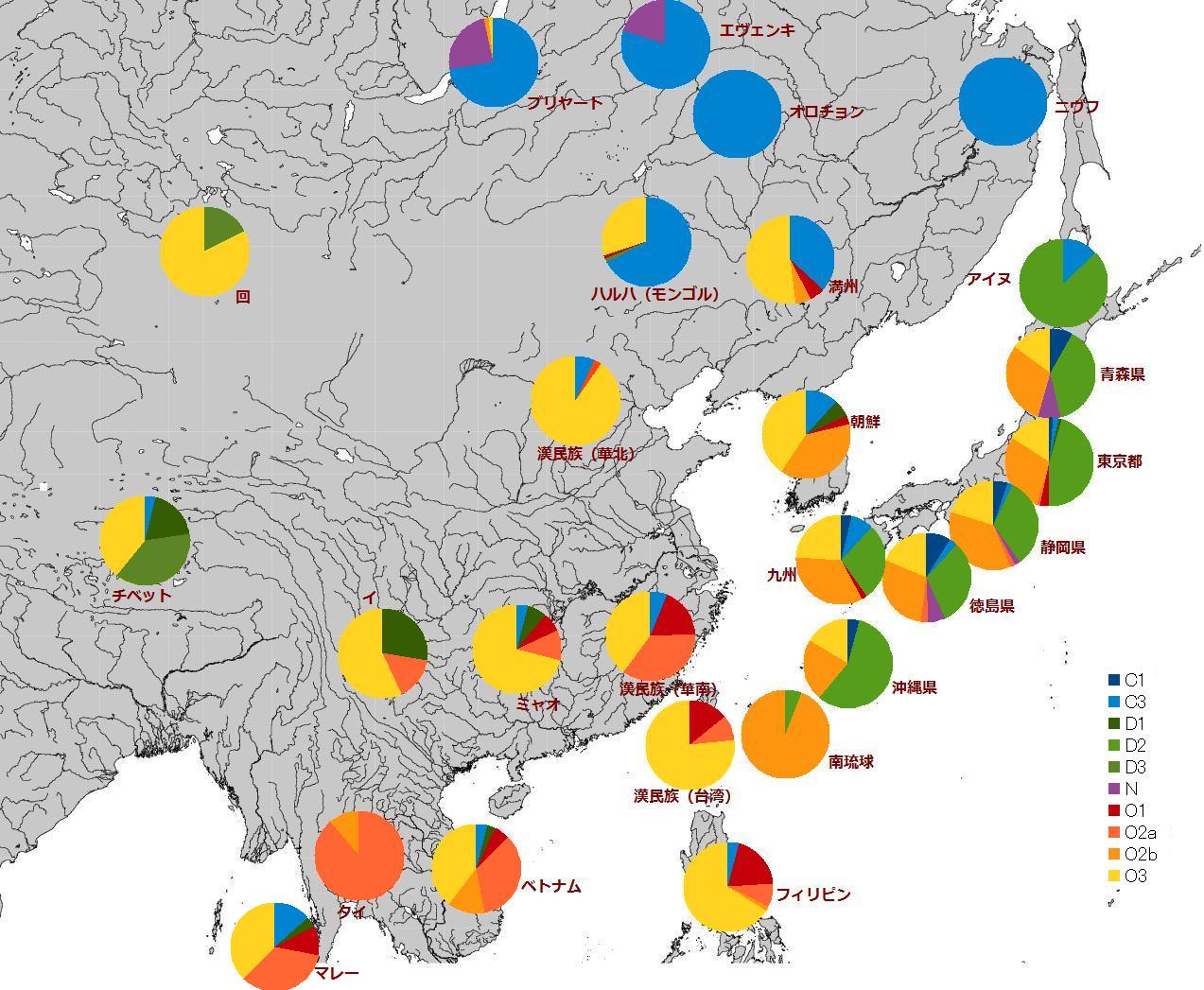
So far I've heard about a confirmed DNA and skull analysis, Chinese texts saying that the Japanese claimed descent from a Wu King, and a brief wikipedia sentence saying that the Wu were really good at making swords.
I think there's very credible evidence that some people from Wu and Yue came to Japan. This story actually opens a new understanding of what happened in Japan.
DNA evidence of rice has shown that there are 8 types of rice based on to SSR (simple sequence repeat). The origin of rice cultivation can now be traced to southern China with all 8 types of rice (the dominant strain was the type B rice). This rice cultivation moved to the Yangtze river delta to where the kingdoms of Wu and Yue were located.
From southern China that rice moved to Japan. We know this because Japan has only types A and B of rice while Korea has types A, C, D, E, F, G, H (with mostly type A). This means that type B rice had to come directly from China to Japan. Also rice was not cultivated in northern China until very recently. The people of north China plain grew millet.
Now with archaeological evidence pointing to rice cultivation in Japan going back to at least 1000 BC an interesting picture emerges.
Metal tools (bronze and iron) came to Japan around 200 BC. That's an 800 year time lag. People have always assumed that rice and metal tools all came together in a set. But it's clear that, that is not the case.
Japan therefore was formed out of 3 groups. Group 1: the first arrivals to Japan, the Jomon people. Group 2: the second arrivals to Japan, the rice cultivators from southern China ca 1000 BC. Group 3: the third arrivals to Japan, the metal tool makers from China and Korea ca 200 BC. I think we have mistakenly lumped Group 2 and 3 together as the Yayoi people.
So it turns out that Japan became the melting pot of East Asia by around 200 BC. The human y DNA haplogroup shows this diversity. (With dashes added from Siberia and Southeast Asia.)
http://livedoor.blogimg.jp/livereak-gekiyaku/imgs/1/b/1bfd5242.jpg