Today:
You know the drill: this is the thread for all your history-related outpourings that are not necessarily questions. Minor questions that you feel don't need or merit their own threads are welcome too. Discovered a great new book, documentary, article or blog? Has your Ph.D. application been successful? Have you made an archaeological discovery in your back yard? Did you find an anecdote about the Doge of Venice telling a joke to Michel Foucault? Tell us all about it.
As usual, moderation in this thread will be relatively non-existent -- jokes, anecdotes and light-hearted banter are welcome.
Can we play a game?
Do you guys remember the TV show Connections?
Basically, the show held that aspects of the modern world are the result of interconnected events, each one consisting of a person or group acting for reasons/motivations with no concept of the final, modern result to which the actions of either them or their contemporaries would lead (text plagiarized from Wikipedia). To play we start with A, the next person states how A lead to B, the next person says how B leads to C, and so forth until we hit the /r/AskHistorians 20-year event horizon.
I'll start...
Roughly 1,000 BCE, high in the Andes, in either Bolivia or northern Argentina, a hybridization event occurred between N. sylvestris and N. tomentosiformis to result in N. tabacum. From this hybridization event emerged a plant that could be used as a narcotic, a painkiller, a psychoactive substance, and its use became linked with ceremonial/spiritual ritual uses throughout the New World. Tobacco reached the Eastern Woodlands of the U.S. ~ 300 BCE and its use was firmly integrated into the social and spiritual life of the populations in the Eastern U.S. and Caribbean at the time of contact.
Another article draft finished and off to the editor! By the numbers:
Which all means I can now:
And then on to the next one...
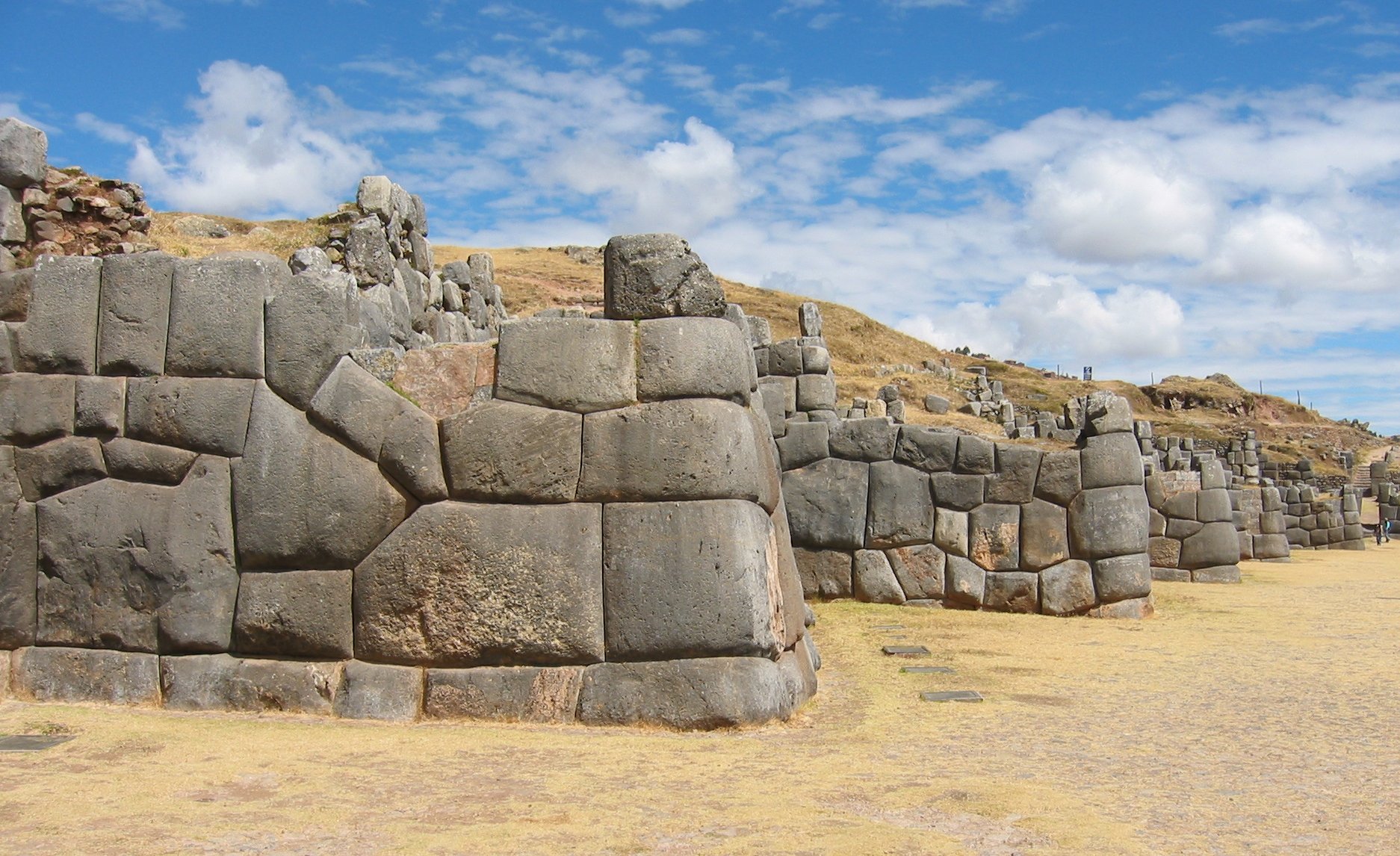
I have kind of had a thought niggling at me for a while. A lot of Andean architecture has a somewhat "jumbled" look because the blocks are not really cut to be uniform size or shape. (ed, Saskaywaman). But the quality of the stonework clearly shows that they had the capability to make uniform regular blocks, and in certain structures they do. Was there some sort of significance to the patterns created by the blocks? Or does the joinery have a sort of anti-seismic property?
Just wanted to say that I've been happy to see the recent Latin American revolutionary questions that have been popping up regarding Castro and Che the past couple days. Not that I don't enjoy other topics, but as someone who does a lot of lurking it is nice to see people asking questions that aren't dealing mainly with European history. Hopefully in the future there will be more to see on Latin America since it is an area that I am fairly weak in, as well as one that doesn't seem to get much attention.
gplnd, MA.
I was going to post this earlier today but forgot to: I got a job. Tenure track assistant professorship and all that. In the NYC area. Moving this summer. No more postdocs. Exciting and strange, like finding a unicorn or something.
So, on the Metro today I saw a poster for "The World Wars" on History Channel. Hmmm...
An assassination in Sarajevo sparks a global war. For the next 30 years, deadly fighting rages across Europe, Africa, China and the Pacific.
Hitler. Churchill. De Gaulle. MacArthur. Patton. Stalin. Mussolini. We know them as legends. But they first learn what it will take to rise to greatness as young soldiers, fighting for their lives on the frontlines.
This is the story of a generation of men who come of age in the trenches of World War I, only to become the leaders of World War II. The lessons they learn on the frontlines shape them as they rise to power—and haunt them as the deadly fighting breaks out again. Some become heroes, forged in courage under fire. Others emerge as the most infamous villains the world has ever seen.
Theirs is one story—the story of a 30-year global struggle. A fight that will either save the world—or destroy it.
Narrated by two-time Oscar nominee Jeremy Renner (The Hurt Locker, The Town), this three-night event series features gripping dramatic scenes, stunning CGI visuals and interviews with contemporary leaders, including John McCain, Colin Powell, John Major and David Miliband, along with noted historians from around the world. The World Wars is a mini-series event that takes viewers on an epic and groundbreaking ride through the bloodiest century in history.
Perhaps this isn't the correct place, but, sometimes I'm a little worried about going into history. Don't get me wrong, I absolutely love it. I want to double major in history and archaeology, but the only thing I see people doing with those is teaching. I've heard that most other job opportunities (especially those at museums and sometimes dig managers) are mainly reserved for PhD's.
I recently got interested in Historiography, and I kind of wishes to have some nice introductory articles on this topic. The first thing I have in my mind is Wikipedia, but I have been warned in the past to beware on the quality of historical articles in Wikipedia. Is there anything that is similiar that is both informative and newcomer-friendly?
That annoying moment where you set a Google News alert for Daniel Sickles a few months ago because you want to write a dissertation concerning him and then some director named Dan Sickles comes out with a movie and you constantly get alerts about it.
Hi AskHistorians,
can you shed any light on this petroglyph from the Philippines. Traced from a buried rock. About 10" in diameter, unknown age. My online searching has turned up nothing much. pic
Are there any actual events where the outcome has been influenced by math? I know that overall, math has had a large influence on history, of course -- but what about specific moments in history?
Saw this over on one of my local news stations, Newly Released Film Shows Different Angle of Hindenburg Disaster found it interesting especial since Wednesday was the 77th anniversary of the disaster.
Quick question: when writing history essays, is it best to use recently published secondary sources, or are older sources just as valid?