Today:
You know the drill: this is the thread for all your history-related outpourings that are not necessarily questions. Minor questions that you feel don't need or merit their own threads are welcome too. Discovered a great new book, documentary, article or blog? Has your Ph.D. application been successful? Have you made an archaeological discovery in your back yard? Did you find an anecdote about the Doge of Venice telling a joke to Michel Foucault? Tell us all about it.
As usual, moderation in this thread will be relatively non-existent -- jokes, anecdotes and light-hearted banter are welcome.
I passed my last Ph.D. Progress Review yesterday! I've received the official ok to finish my Ph.D. and submit it next year Assuming everything goes according to plan I'll have a doctorate a year and a half from now! I'm celebrating this great achievement by marking undergrad exams...yay.
I was told to post this answer here when the original comment thread was nuked over a rule violation. The question was on U.S. public support for wars and soldiers, i.e. is today's "support our troops" movement typical? Original Answer below:
I'll direct my answer at the Civil War. One could argue that American civilians were the most supportive, knowledgeable, and involved citizenry during the Civil War than during any other war in our nation's history. Regardless of which side they were on, American civilians were deeply connected to their soldiers for four reasons: (1) Units were raised, equipped, and deployed by locale. (2) Volunteerism was high during the initial stages of the war and was usually tied to honor, masculinity, and duty to their unit and home. (3) Civil War soldiers were arguably the most literate soldiers in the history of American warfare, writing and reading tens of thousands of correspondence from home, keeping them intimately connected to their loved ones and the home front. (4). American civilians, whether organized in either benevolent societies or as individual families, contributed more to the war effort than at any other time in our nation's history, with the possible exception of the Second World War.
First, historians like Peter J. Parish have argued that the Civil War (I'm paraphrasing here) was a war of small communities rather than one of organized nation-states. Civil War soldiers were initially raised and equipped by their towns and cities. As a soldier in 1861, you would probably volunteer and be integrated into a unit with your brother, father, family doctor, local representatives, and a few of the town's less reputable men, with your army services being provided by the town preacher, who could accompany you to the front. As the units were organized, families, groups of families, local politicians/bankers/merchants would buy the clothing and arms necessary to equip these units, before they would transfer to a state meeting point where they would join other units from their state. So already, we see armies organized by local communities that are then presented for state service, rather than like today where the federal government sends you to boot camp for training, equipment, etc. Though there was some variation to the way these things occurred, North and South, the armies of 1861 and 1862 were the largest locally organized forces in the history of America.
Second, many soldiers volunteered due to antebellum ideas of honor, masculinity, and duty to one's home and family. To not participate and contribute was viewed very negatively by both soldiers and civilians. Typically, a volunteers were viewed more positively than drafted men after 1862 in the South and 1863 in the North. Though, even drafted soldiers were largely supported by the homefront as well. In addition, since civilians had similar ideas of honor and duty (and also femininity), daughters, mothers, and younger sons wanted to contribute as well. Since they could not directly serve, they had to contribute in other ways. This will come up later in my fourth point.
Third, Civil War armies were probably the most literate armies in the world at the time, as seen by the tens of thousands of correspondence between them and the home front. This amount of correspondence shows a deep emotionally commitment from both soldier and civilian to each other. Soldiers would write home about the dullness of camp life, their health, the harshness of the march, the terror of combat, and etc. Civilians would write their soldiers about how they missed them, how they were coping at home, their health, going-ons in the town, gossip, news from the papers, and etc. This high exchange of information maintained an intimate connection between soldiers and their homes, that sustained both soldier and civilian during the trying times of war.
Fourth, civilians--either organized or independently directed--contributed more to the war effort than at any other time, with the possible exception of WWII. Northern benevolent societies ran and organized by both men and women, contributed to great increases in camp health that lowered death rates associated with disease and poor conditions. Southern nurses ran private hospitals out of their own homes, to care for wounded soldiers and the infirm. Both North and South, families sent care packages to the front, with clothing, weapons, food, and other necessities to improve their loved-ones morale and prospects.
One additional point to make, this description I have given, while accurate, was not universal and was also subject to change based on historical events. We have ample proof of the resistance to the war from Northern Democrats and Southern Unionists. In addition, triumphs of disasters on the battlefield, as well as political proclamations, could drastically alter the a person's position on the war. War weariness or a hatred for black emancipation could lead to a drop in support. While crushing victories could see a swell of support. It was all fluid and ever changing, much like today.
So, to sum up, because of the way units were raised and equipped, the role of ideas about honor and duty for both soldier and civilian, the high correspondence between the battlefield and the home front, and depth of contributions from families and benevolent societies; the Civil War represents a period of intense citizen support for the war and the soldiers who took part. However, this support was not always universal and was also contingent on historical events.
(Sources: Gallman, J. Matthew. The North Fights the Civil War: The Home Front. Chicago: Ivan Dee, 1994; Gallman, J. Matthew. Northerners at War: Reflections on the Civil War Home Front. Kent, OH: Kent State University Press, 2010; Parish, Peter J. The North and the Nation in the Era of the Civil War. New York: Fordham University Press, 2003; Parish, Peter J. “Conflict and Consent” in Peter J. Parish, The North and the Nation in the Era of the Civil War (New York: Fordham University Press, 2003): 149-170; Gallagher, Gary W. The Confederate War. Harvard University Press, 1999; McPherson, James M. For cause and comrades: Why men fought in the Civil War. Oxford University Press, 1997.)
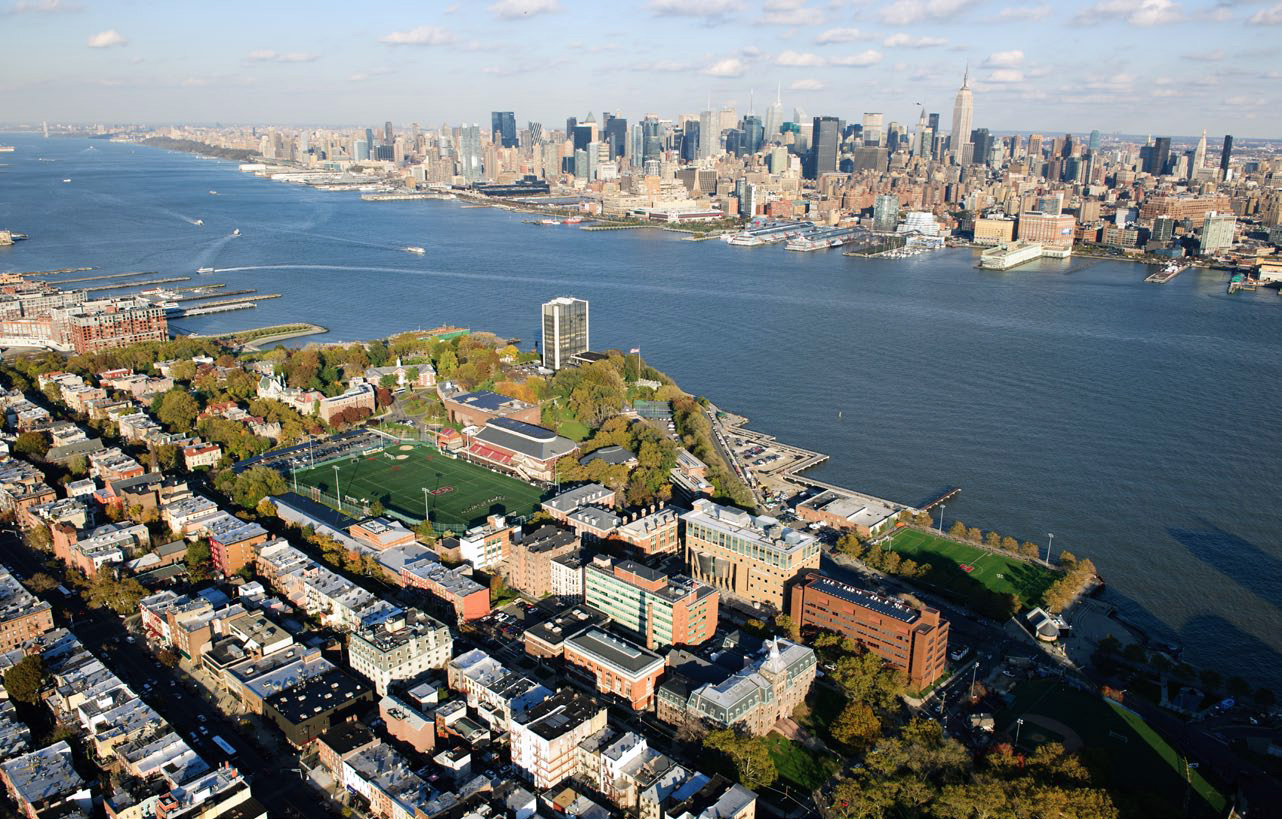
I mentioned this briefly last week but now I'm officially able to say it louder: I got a job. I start as an Assistant Professor in Science and Technology Studies this fall, at a small technical college right across the river from New York City. They are very supportive of my work (including digital endeavors), the teaching load is reasonable, the colleagues seem great, and the location is amazing. To make things even better, my wife managed to get a job teaching history at a very high-end New York prep school, one of the top independent high schools in the nation.
So we are pretty excited, and feeling ridiculously fortunate. Neither of us are job market optimists — two Ph.D.s in the History of Science makes for a pretty tough two-body problem and we refuse to entertain the idea of living separately. So that these two perfect jobs for us came up right at the same time (and right as my postdoc was ending!), and that we happened to both get them (!), feels like finding a unicorn. We're still kind of agog.
This week, I interviewed an 83-year-old man who helped build the first three Alaska Marine Highway System ferries in Seattle.
This one is for my fellow historians working with Spanish primary sources: Does anyone know if the late 19th century use of the word 'guerrilleros' or 'guerrillas' is supposed to mean light infantry or skirmishers? I keep coming across it, in particular with connection to the battle of Dolores/San Francisco 1879 and since I am not completely familiar with 19th century Spanish military terms, I wonder if someone could enlighten me on this issue.
I posted this elsewhere, but hey, why not here too!
I just finished up the last of the 30 or so books I dumped on my Kindle last year. So it was time to determine what I'll be reading for the foreseeable future! After some deliberation, I added another 50 or so books.
In no particular order, this is what has been added...
Seriously check out the history of milk, it is weirdly fascinating stuff from gene mutations to the invention of cheese to the DEATH OF THOUSANDS OF BABIES! Really thrilling stuff afterwards you can then have a slug of milk and be all "damn that is some 10,000 years in the making".
These food history essays for Uni are starting to make me go a bit strange, but it's a welcome change from stuff on Stalin and the horrible murders in Australian colonial history.
I don't know if I should be posting here but... I'm In secondary school in the UK and just got done with my unit1 history GCSE and I very happy about my performance. the questions I was hoping that would come up did, for the most part. I also aced my coursework so all in all I am pleased with how things turned out. I do have a question however, can anyone familiar with the A-level history courses give me some book titles or resources that could help me along once I start sixth form? thanks very much!
This week I was accepted to give a paper at a conference in Japan later this year. It's my first 'all grown up' conference, so looking forward to it.
Also teaching classes finished up, so once I finish marking next week I should be set for a summer of research and reading.
Small rant, I have no idea if this is the correct thread, but Free for all should be okay for it.
This week I decided to do a journey to my state capital for research at the State Archives. Only a few hours away and the hotel was 10 minutes from uptown, so I was quite excited about it. For some reason I had thoughts that by going to the state archives I would find some sort of lost record, the Holy Grail, for my research. Something no one else had used, found, or spoke about in the field.
Nope. Ended up finding just about nothing of great value. I left the archives the second day frustrated and got to the hotel kind of disappointed. My research is about Loyalist Scottish Highlanders of North Carolina in the American Revolution so I had high hopes of at least finding something for primary sources. I ended up with boxes and folders of claims, examinations of said claims, memorials, etc. I tried thinking outside of the box, maybe tax records?, nope, almost illegible writing and no context for anything for me. I tried asking the archivists for some help but the guidebook just ended up with more claims. Tried emigration lists and records. Looked for letters.
Maybe my searching was faulty and not broad enough to include other loyalists of the state. It's too late for now, if I figure out what I need to do I'll have to schedule in a couple months or pay for copies of the material. I didn't go in blind, I searched on their database for possible items to look through but it ended up being lists of claims for the most part.
So it's back to square one now.
Maybe a lighter note, the Highland Scots had terrible choices for names back then. Besides running across so many of the same first/last name combinations, they paired up names that was almost a stereotype being played out. Ronald McDonald, Donald McDonald (I came across several of those!), Dugald McDugald, Arthur McArthur. I wish I was making them up, I started jotting some down as I scrolled through to keep my spirits up.
I just started writing my book!
Edit: While it may turn out a bit too ambitious, I'm writing a complete history of inland shipping on the Great Lakes.
Has your Ph.D. application been successful?
Yes! Got into the school of my choice to boot!
I established a new section in the AskHistorians wiki in the Frequently Asked Questions. See the new section on Pirate History questions here. I picked out some questions I saw regularly reoccurring here and posted the ones that got answers. Enjoy!
Can anyone recommend a book (or books) about the history of the Silesia region? Looking through my grandfather's effects from the early 20th century, I found a few letters from various governmental agencies informing him of changes to his citizenship due to changing territorial boundaries (add to this the complication that he was Jewish). Fascinating stuff; I'd love to read more about the region (Myslowitz, if it's possible to get more specific). Thanks!
I finished the AP World History test this past Thursday, and I think I did pretty well, compared to the practice tests I took, I just wish I could discuss the prompts.
My copy of Kelton's Epidemics and Enslavement: Biological Catastrophe in the Native Southeast, 1492-1715 just arrived in the mail. I feel like a kid at Christmas.
So I'm flying out tonight for a one week trip to Canada and another week in Amman, Jordan. Looking forward to copious amounts of reading time (about halfway through Battle Cry of Freedom and going to start reading An Army at Dawn) while flying and driving all over the place. Oh and getting to see Petra, Jerash and some Roman ruins as well!
I'm writing a history essay right now and I'm slightly confused: what exactly are the conventions to write artillery calibers? For instance, 420-mm artillery and 420 mm artillery - is one of these more valid than the other?
Any book suggestions on a good radical take on the French Revolution?
How come no European nation, especially Italian states, in the dark ages ever tried to emulate/recreate the Roman Legions?