Lets make this question more specific. After the U.S. entered world war II many females assumed jobs that were vacated by men who went to fight the war. This caused a surge in female employment. What happened to wages in the country when the men returned from the war?
This can be looked at from an economic view as well. There are countless number of factors that go into wages. but I will be using the Overcrowding model to look at one point of it since your question is dealing with females entering the labor market.
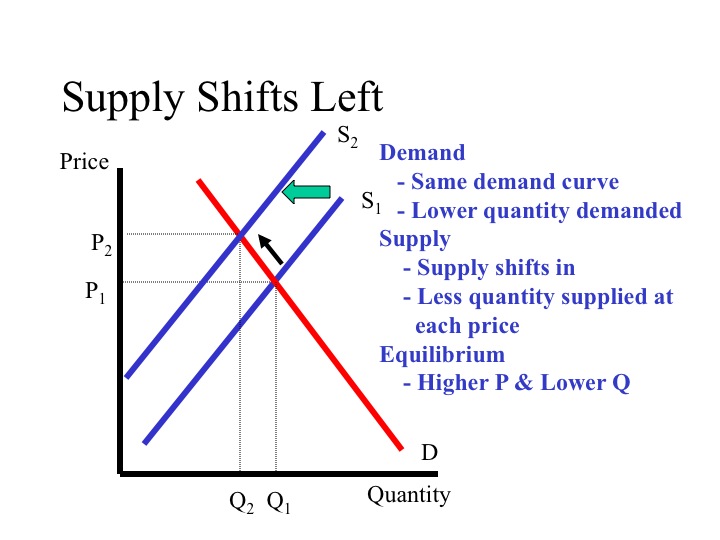
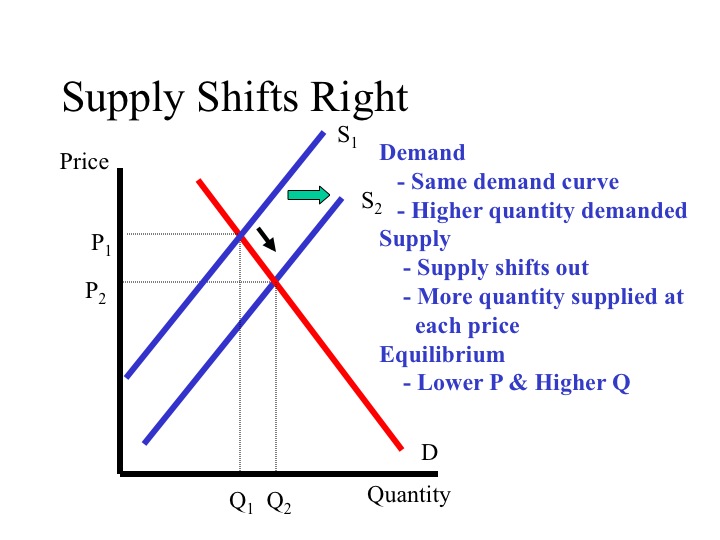
To keep it simple you have two markets A and B both with simple downward sloping demand curves and upward sloping supply curves (think of price as wages). Men are free to move between the two markets, however women have barriers to entry for market B in the form of discrimination for example. As a result women are concentrated in market A. Because women are no longer in the labor supply for market B the labor supply curve shifts left reflecting the decreased quantity of laborers and causing the equilibrium wage in market B to rise. Since men are still free to move between markets there is a surplus of labor in market A causing the labor supply curve to shift right and lowering the equilibrium wage for market A. Theoretically (ceteris paribus) if these barriers are removed then wages in market A will rise since women can move out of the labor supply for that market and into the labor supply for market B putting downward pressure on wages in market B until both markets are at equilibrium.
That being said there are still many other variables, like percantage of women now in the work force verses say in the 50's and the relation of the average wage. You could also look at traditionally female dominated industries vs male dominated industries (education vs financial for instance) The number of women entering the workforce vs the number men leaving it. So from an economic perspective it all just depends on the question.
Source -
Economics of Women, Men, and Work -
EDIT: I said literally millions of factors that go into wages to express the countless number of variables that impact wages, changed it to countless to avoid confusion.
Your question is a bit of a leading question. But, in short, the answer is no.
Here's a bunch of charts.
For in-depth analysis, consider breaking down your question into following points:
Part 1: In the United States, over roughly past 100 years, has the increase in workforce numbers resulted in decreased wages?
Part 2: Is the decrease a result of increased workforce (e.g. by population growth) or is the decrease caused specifically by a particular demographic (in this case women) joining the workforce?
Part 3: Can the decrease be explained in some other way, for example, changes to worker rights, other employer regulation changes (loosening or tightening), new technologies, social change, etc.?
(EDIT: fixed link)