For example, here is the soviet N-1 rocket
And here is the NASA Saturn V
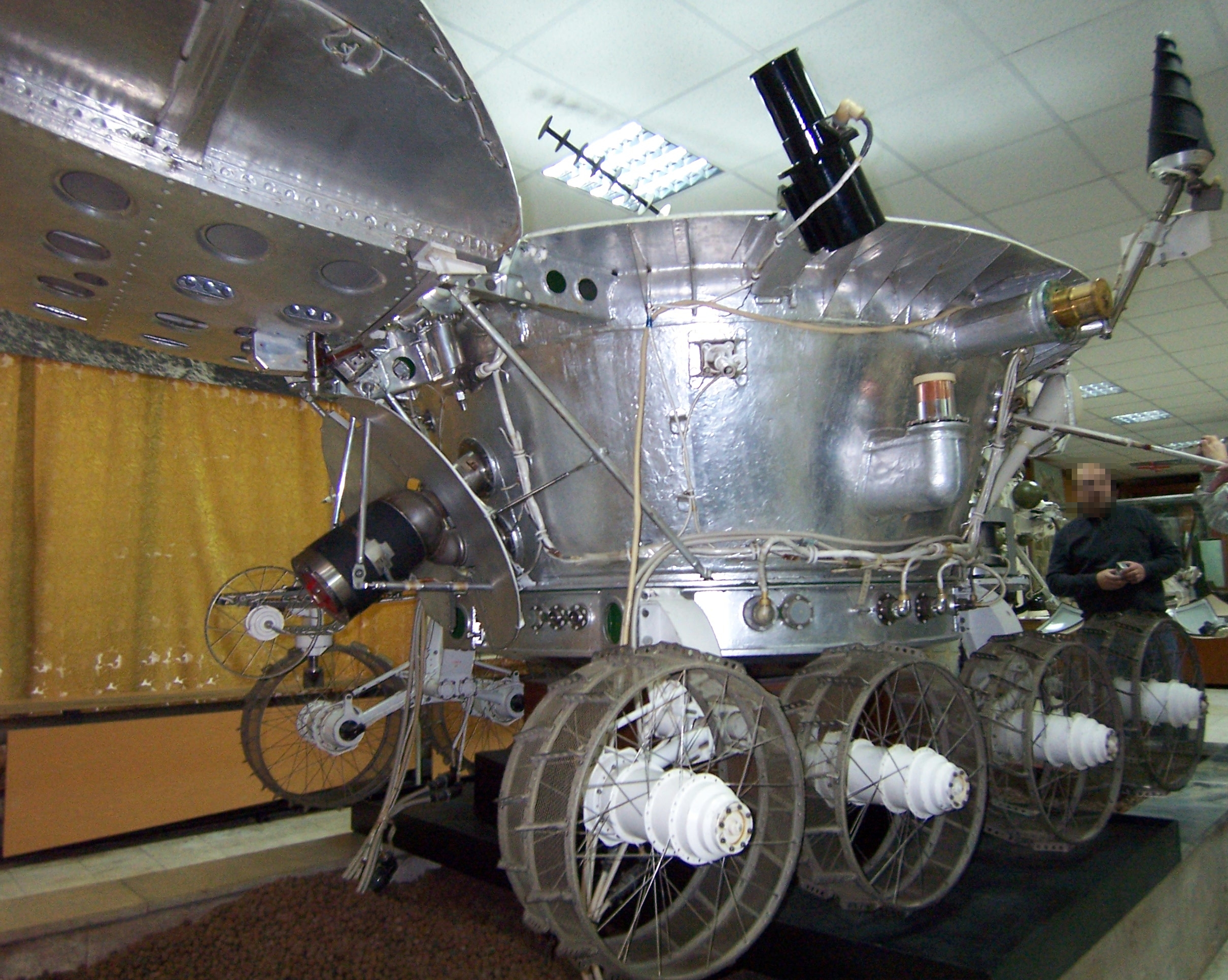
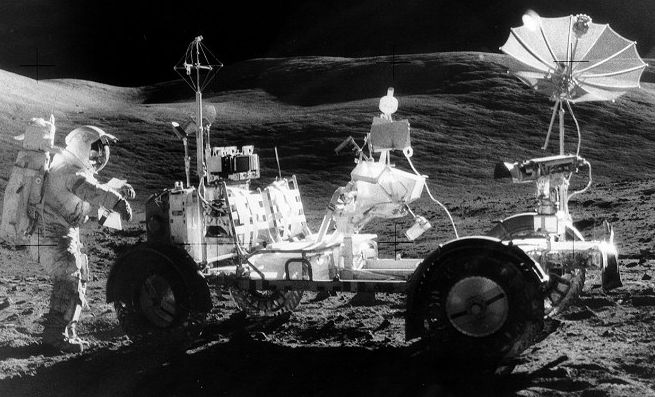
Another example is the Lunokhod rover
A large part of the problem was that Russian rocket engine technology was far behind American tech, especially in the matter of scale. The USSR didn't have a company like Rocketdyne that could build rugged monster engines like the F-1. You see how the first stage of the N-1 has over 30 engines, while the first stage of the (very similarly-sized) Saturn V has only five engines? The USSR simply couldn't reliably build big rocket engines. Putting so many small ones together, it was basically impossible to work out the bugs without a few rockets blowing up--and those were expensive rockets. Three of four N-1 launches were destroyed due to engine failure, and one was destroyed due to insufficient stabilization power. They may have been able to get it working eventually, but the program was cancelled.
Look at the first ICBMs for further evidence. The first stage of the Russians' first ICBM, the R-7 Semyorka, has four main nozzles and four boosters with four main nozzles each. The first stage of the Americans' first ICBM, the SM-65 Atlas, had one main nozzle and two boosters with one main nozzle each. That's twenty nozzles versus three, for a rocket which had barely over half the range of its American counterpart. Though, in fairness, I should point out that the Semyorka was slightly more reliable than the Atlas--presumably because the Semyorka was so much smaller than the N-1 and thus easier to debug.
edit: derp
Maybe because the first picture (of the russian rocket) is a construction picture while the second is the picture of a starting rocket. If pictures of the russian rocket in a comparable state of production are used, there is no real difference. http://www.extremetech.com/wp-content/uploads/2013/04/N1-L3-Moon-Rocket-Launch.jpg http://www.myspacemuseum.com/n1a2.gif For the NASA rover, if you compare a better picture of the russian rover with an worser picture of the NASA moon rover the NASA tech seems to be thrown together: http://upload.wikimedia.org/wikipedia/commons/1/11/Lunokhod_1_moon_rover_%28MMA_2011%29_%281%29.JPG http://apod.nasa.gov/apod/image/0406/rover_apollo17.jpg
That seems to be very subjective, and personally I've never had that impression. Functionally the stuff worked well - for instance the USA had no equivalent to the Lunokhod, which was successful in its objectives. Could you point out any features that appear to be "thrown together" that we could discuss?