I know talking about the Nazis can be a very touchy thing, and I feel like it is hard to word this question properly. I don't want to sound like I'm trying to validate anything the Nazis did, I simply ask this out of curiosity. What I'm curious about is this: What positive impacts--if any--did the Nazis have on our knowledge of biology, technology and science in general, given their supposed extensive research on human subjects, weapons of mass destruction and aeronautics?
It really depends on your idea of a "positive" thing. I don't know much of science, so I will let someone educated in science discuss Nazi technology in that area. I am, however, versed in Aircraft and Armaments from Nazi Germany, and as such I'll mention a few things the Germans brought about which had profound effect on the cold war, and arguably still today.
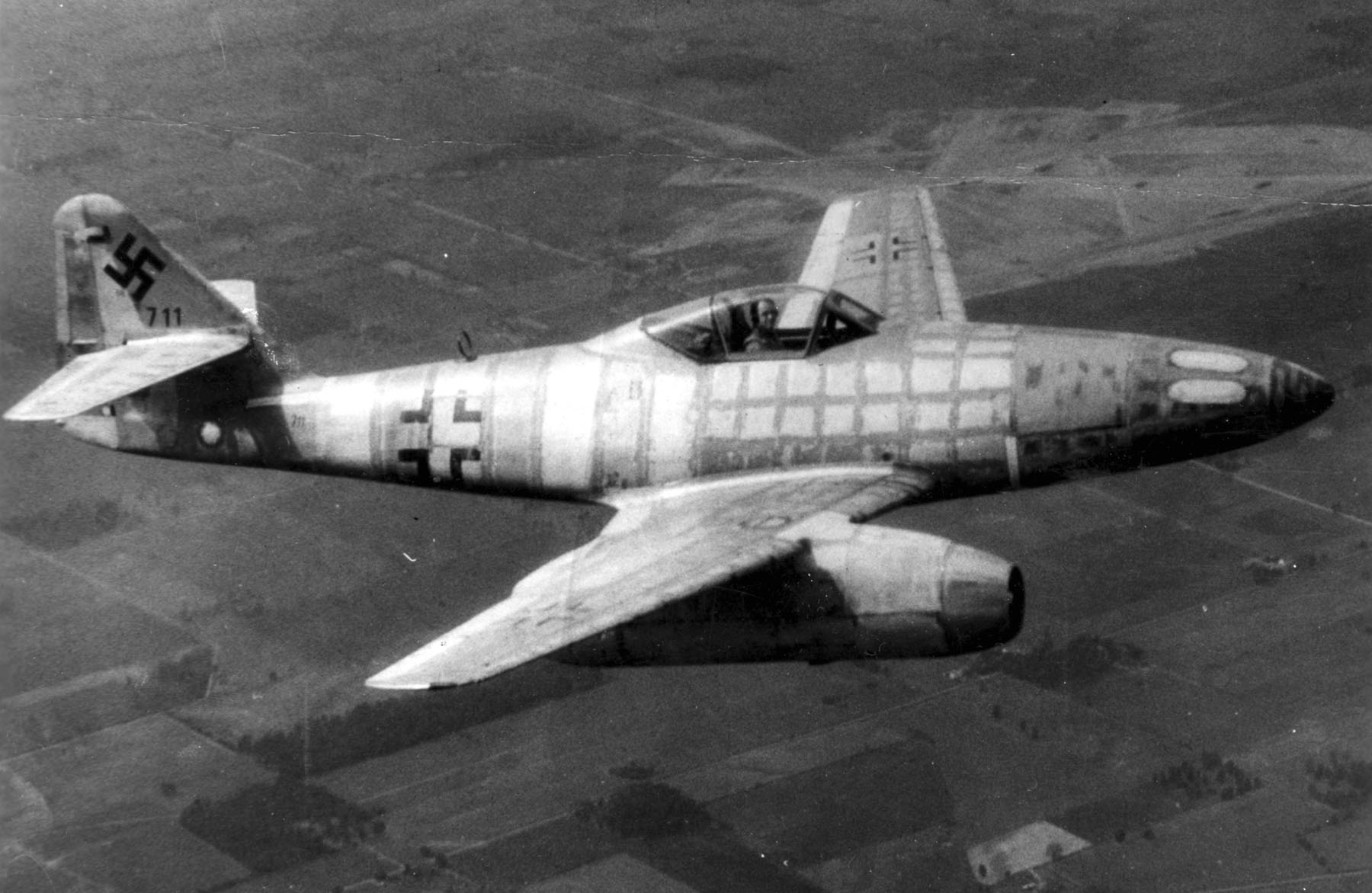
The Me262 was equipped with Junkers Jumo 004 jet engines, which was ahead of it's time really. Due to the stages of the war, the engines generally had 10-25 hours of service time & frequently burned holes through as the steel wasn't high enough quality. Skilled pilots who knew more about the jet itself could perhaps squeeze a bit more life out of their plane, but the Luftwaffe's habit of keeping aces on the front generally lead to most of their able pilots dead before they could get into jets. Another interesting fact of the Me262 is that it (debated by historians) is the first plane to feature a 'Swept Wing' of around 18.5°, which again was quickly decided to be the correct wing platform.
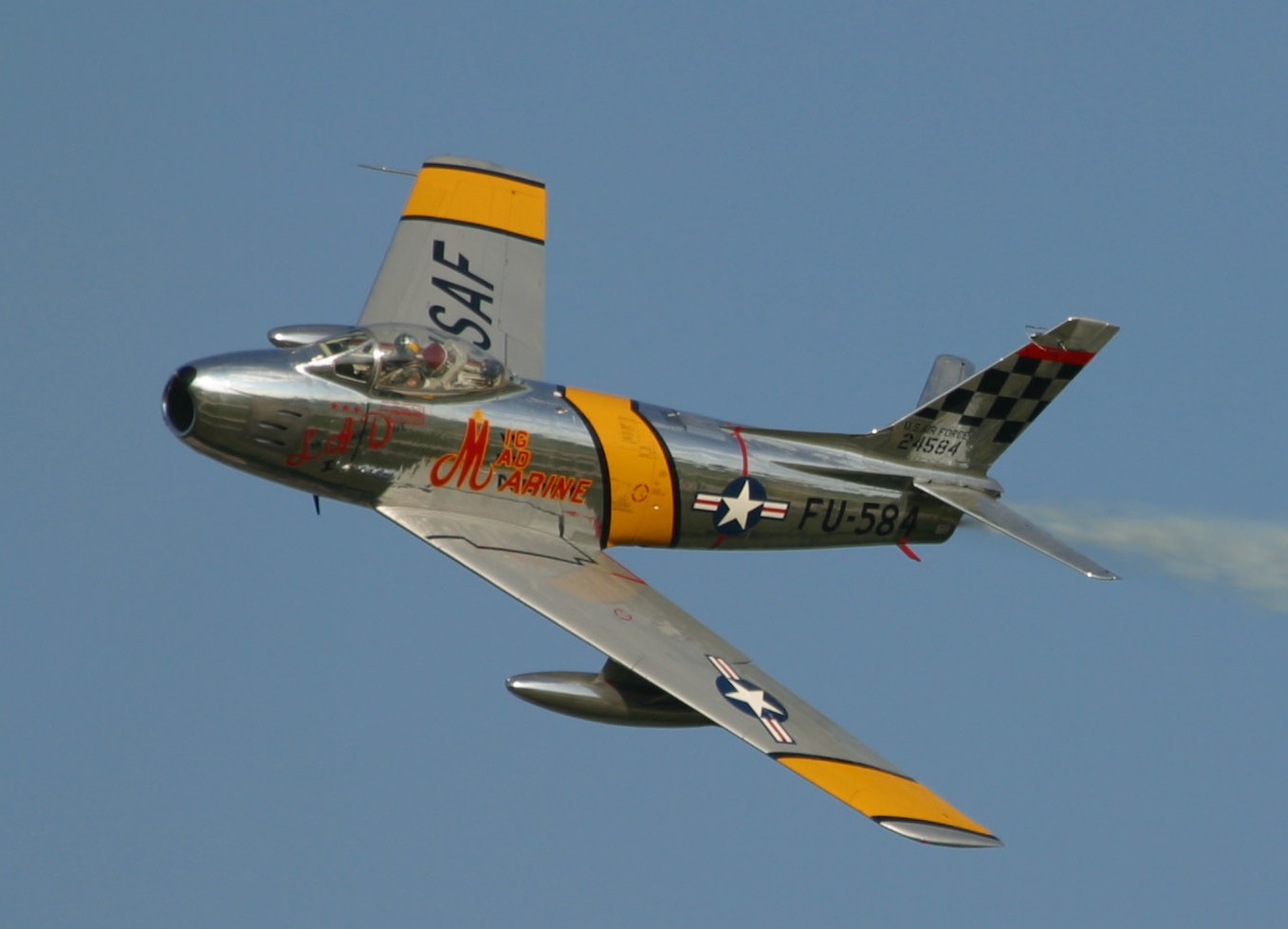
I can show you this visually from both Soviet & USAF designs -
Soviet -
USAF -
F-84 'Thunderjet' (1946) > F-86 'Sabre' (1947)
Another mention would be the Arado 234, another German 'worlds first', but this time a jet bomber. Again, it suffered from the same problems that plagued the 262 due to incessant interfering from Hitler, and the same problems from the powerplants as it shared the Jumo 004 engines. Despite being too late in the war, the design team went on after being captured by the soviets, producing a prototype improved Arado 234 model in '47, and also assisting to produce the first Soviet jet bomber - the Ilyushin Il-28 'Beagle'.
These failures and problems that arose from German Jet Production were fixed by the allies post-Operation Paperclip. Frank Whittle already invented the jet engine, but Germany was the first to actually produce an engine, designed by Dr. Hans von Ohain. As such, Germany had to fight technical problems, which considerably helped the Allies in later war designs, as most of the serious issues had been at least investigated and solutions provided, or actually fixed.
Another interesting rocketry project, is the Me 163 'Komet' - to date, the only fighter aircraft to be wholly powered by rocketry. It was basically an interceptor - quick launch, rapid climb, take out enemy fighter/bombers then quickly land to rearm. Here's a link to it's takeoff. Whilst the Komet doesn't have much carry-on into allied weaponry, it's still a very interesting branch of technology to come out of Nazi Germany.
The 'Fritx X' system was the bigger brother of the Hs 293. Rather than light-armour, the Fritz-X was designed to pierce heavily armoured battleships and cruisers. It was controlled by the same system as the Hs 293 - Funkgerät (FuG 203) Kehl -and saw limited service under Kampfgeschwader 100 'Wiking'. [This is the aftermath of a Fritz-X direct hit on the Savannah] (http://upload.wikimedia.org/wikipedia/commons/a/aa/USS_Savannah_%28CL-42%29_is_hit_by_a_German_guided_bomb%2C_off_Salerno%2C_11_September_1943.jpg). The bombs worked well when they scored a direct hit - One put the HMS Warspite out of action for 9 months - it penetrated 6 decks through the ship, and detonated inside Boiler Room No#4. Here's a German WW2 produced video about the Fritz X.
SAM's. Germany, again, had the first, and SAM's are still an essential part of anti-air coverage today. Germany produced the Wasserfall Ferngelenkte FlaRakete, or the Waterfall Remote-Controlled A-A Rocket. Similar to the V2, but around 1/4 the size and rather than a 2,000kg warhead, it carried a 306kg Flak warhead designed to explode mid-air. This warhead would spread shrapnel into Allied bomber wings, decimating them. It was guided by a (now) primitive, but fairly advanced 'Rheinland' Radar system, of which was later trialled on the V2 system. Again, the design team got shipped off to the USA and began working on Project Nike - the US' post 1945 guided SAM project.
Air-to-Air missiles, now a vital and totally indispensable part of design for Aircraft, originated in.. once again, Nazi Germany. The Ruhrstahl X-4, despite not being used in actual operational service, was designed as a wire-guided AA missile. Since it was wire-guided, it was fairly unsuited to fast-paced air-to-air duels, so the British especially took the concept and turned it into what we have today as TOWs. The British/Australian Malkara used quite a bit of research from the X-4, and from them improvements were made to the concept.
Sources:
J.R. Smith, Antony L. Kay, E.J. Creek. German Aircraft of the Second World War. London: Putnam, 1985. 44.
Fitzsimons, Bernard, general editor. The Encyclopedia of 20th Century Weapons and Warfare (London: Phoebus Publishing Company, 1978), Volume 24, p.2602-3, "X-4, Ruhrstahl".
Myhra, David. The Horten Brothers and Their All-wing Aircraft. London: Bushwood Books, 1997
Neufeld, Michael J (1995). The Rocket and the Reich: Peenemünde and the Coming of the Ballistic Missile Era. New York: The Free Press