On a painting of the battle of Tewkesbury there is a soldier with what looks like stars on it. Could soldiers actually do this or is this just the artists interpretation of the battle?
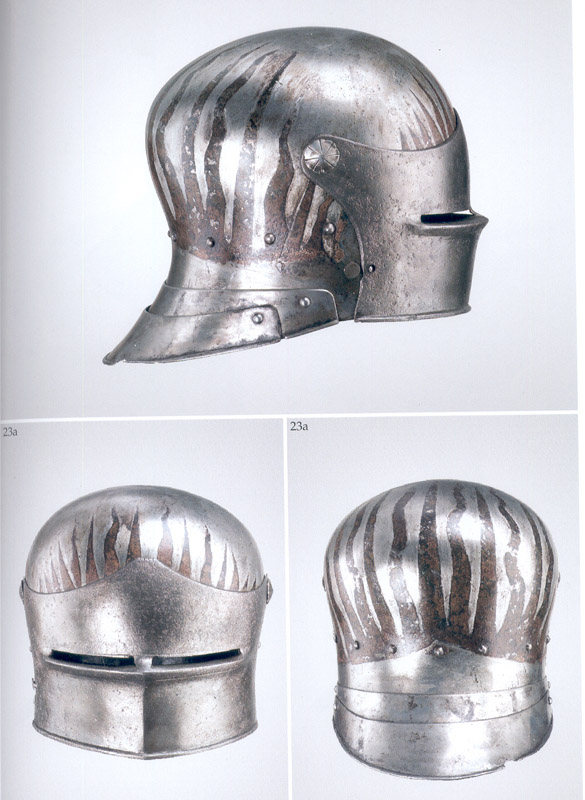
Men-at-arms certainly wore sallets painted with livery or other designs in the 15th century. Painting was an alternate, inexpensive way to decorate armour as opposed to mirror polishing. I have not seen any evidence that they did the painting themselves. Instead, after purchase from the armourer, the man-at-arms would have hired a professional artisan to decorate it with paint or fabric. Here are some extant examples:
Sallet, South German, Wallace Collection, c. 1500
"Black" Sallet, Royal Armouries, c. 1490
Sallet, South German, Kunsthistorisches Museum, c. 1490
Sallet, German, Zleby Castle, c. 1485
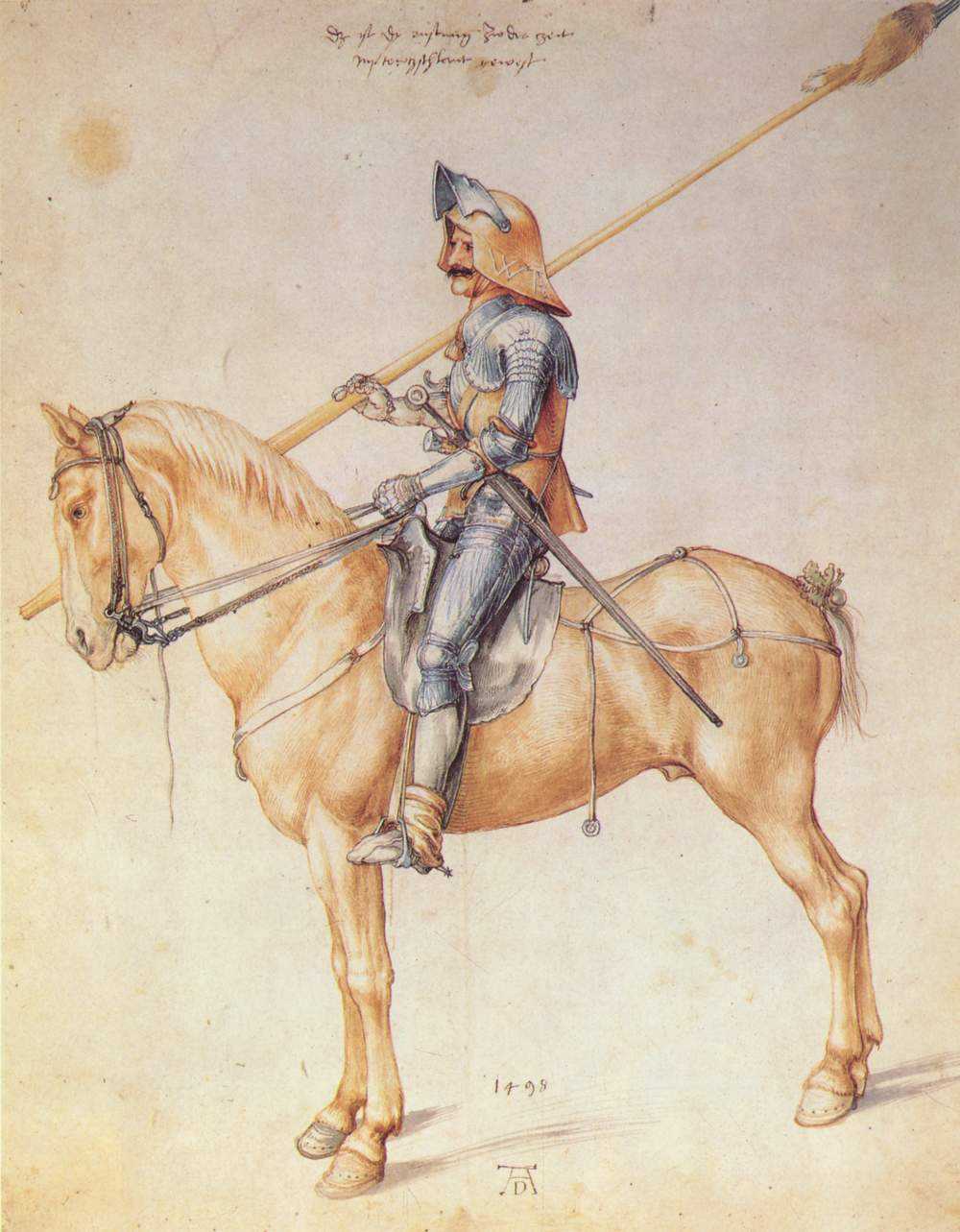
Here is a painting by Albrecht Duhrer showing a painted sallet, 1498
Dr. Capwell, curator of the Wallace Collection, writes that "Paint was an inexpensive way of decorating low-grade armour, the rough, hammered surfaces being an ideal base onto which the slow-drying, linseed oil-based paint could adhere. A painted finish was still somewhat fragile however, and only a handful of early sixteenth-century helmets survive today with their original surfaces even partially intact." (Source)
Of course, this doesn't prove that combatants wore painted armour specifically in the Wars of the Roses. Although there is evidence for the painting of pieces armour throughout the middle ages, the evidence for painted sallets in that style is mostly after 1485 and south German. Unfortunately, I'm not aware of any evidence that does prove the use of painted armour in the Wars of the Roses. Graham Turner is the artist of the piece in discussion, and I believe that he's simply injecting his personal interpretation based on the museum pieces I linked above. Turner's work is outstanding and I suggest you check out his body of art if you haven't already. However, he's not exacting with his interpretations and he likes to get as many references to museum pieces as possible into his work.
The likeliest explanation is this soldier is displaying the livery badge - the personal emblem of - the feudal lord he served.
Kingdoms very rarely had a permanent standing army in this era. Instead, armies were made up of the individual forces of various vassals and landowners. Most of these lords would have a personal icon that could be displayed on their banners and worn by themselves and their troops for the purposes of identification.
What we're looking at here, I think, is a soldier from the retinue of Edward IV, who used a sun as his device. Seeing as this soldier lacks the more easily identifabile brightly-coloured clothing of his comrades I'd say he'd been given a helmet that shows just who he is fighting for.
This practice did cause confusion. At the Battle of Barnet, a month before Tewkesbury, Lancastrian troops attacked friendly forces under the Duke of Oxford, whose badge was a streaming star, believing them to be troops loyal to Edward IV, who used a sun.
Indeed, I could be equally confused here! Oxford fought at Tewkesbury too, so this could just as easily be a Lancastrian and not a Yorkist soldier - but I'm reasonably confident this is one of Edward IV's troops.
Any Game of Thrones fans will surely recognise this practice. It's the direct inspiration for the 'sigil' system.