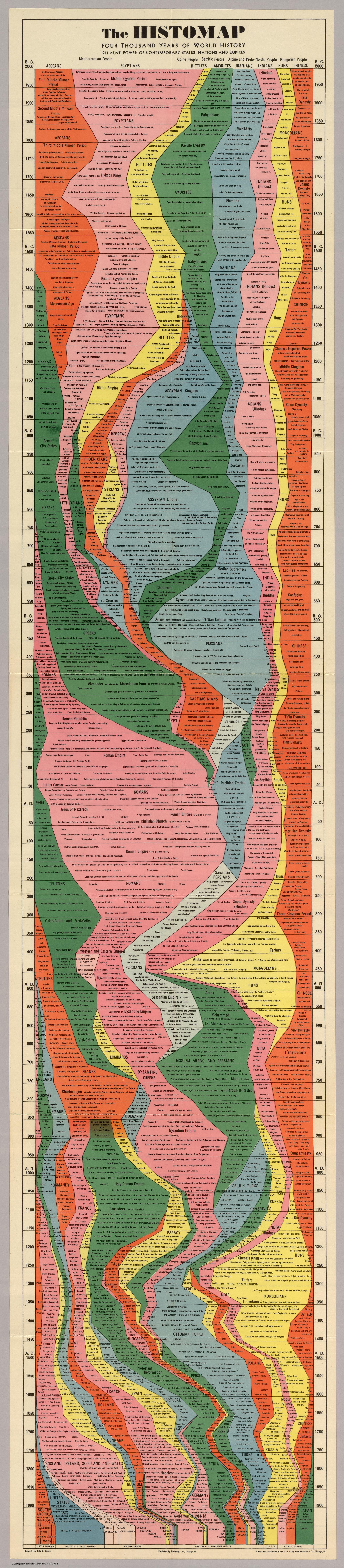
I'm sorry my title isn't the clearest. I did my best, but will elaborate here.
When we study history, it is often a collection of isolated matters - this battle, that agricultural advancement, here an explorer, then a shipwreck, etc. What ways are there to really pull it together and develop a deep understanding of all the different aspects and how they interplay? Something like this is great for giving some relation to areas we don't tend to learn in context of each other, but how can a student create this sort of reference when learning?
I'm interested in the broader spread, and I think this applies at many different levels, but my particular area of interest is the Canadian Rockies.
When I study historical events in the Canadian Rockies, I find three different ways of connecting individual bits:
I have stored in my memory several unrelated individual stories.
Where I am struggling is how to connect them all. How can I put together these various angles with different people in different places at different times, doing different things, and develop a comprehensive big-picture view?
I'm sure this is a common problem for studying anything not completely specific, and I'm hoping you brilliant Historians will have some ideas to help me understand how I can go from remembering unrelated events, to understanding history in its full scope, within my area of study, or more broadly.
I believe this falls under the "Questions may also be about historical method or the “world of history” more generally", and I did not find a similar question when searching. If I am incorrect and it should have gone elsewhere, or I missed the question already answered, I would appreciate being redirected.
I'm having some trouble understanding what you mean by student. Are you an undergraduate, postgraduate, or an independent researcher (if so do you work with primary sources or only secondary sources, ie. books about the Canadian Rockies).
Ps. That map, especially in that unreadable state, is useless. It doesn't provide a clear definition of power, it is also over eighty years old and relying on outdated data.