How does a densely populated, extremely old city become modern? By that I mean how does the city build roads suitable for cars, create a modern waste disposal system, lay down eletric lines, and so on.
Do these decisions have to be made at the governmen level, or can they happen organically?
Who loses out? Are the poor typically displaced during this process?
Obviously this is a big question, so I'd be interested in hearing about specific cities you are an expert in.
A really great example of this is Paris in the middle of the 19th century. When Napoleon III became Emperor in 1852, Paris was still a relatively medieval city. There was little to no sewer system, the streets were small and winding, and many neighborhoods were more-or-less shut off from one another. Many inhabitants spent their entire lives in the same part of the city.
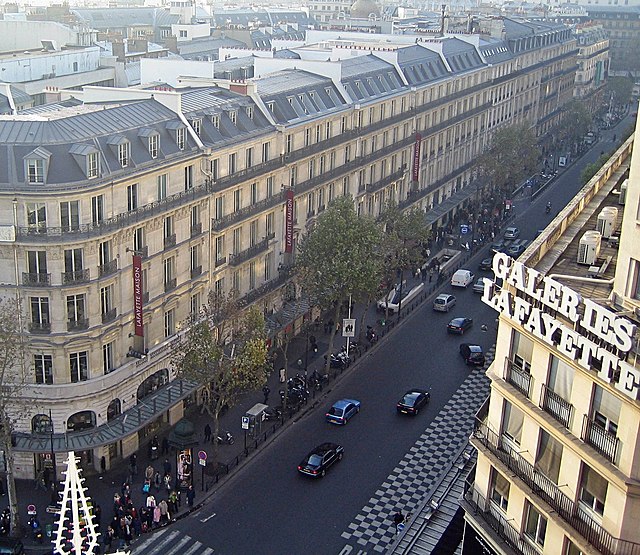
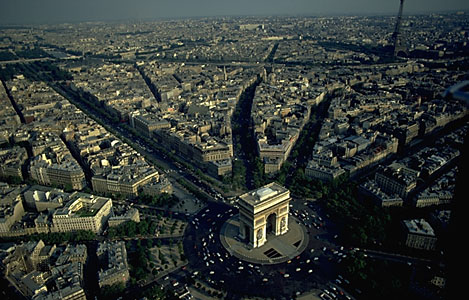
Napoleon III had great designs to completely re-structure the city. To this effect, he named Baron Eugene Haussmann as Prefect of the Seine region to undertake this urbanization project. Together, they laid out a boulevard system that would tie neighborhoods together through massive arteries. The original idea was that these boulevards would terminate in a monument: a church, a train station, or a municipal building. The boulevards would be wide to accommodate omnibus traffic (omnibuses were large, horse-drawn carriages used for public transportation). The first major omnibus line which dates from the 1840s brought together the place de la Concorde and the Bastille; when PAris began building underground subway lines, the very first line was built to serve the same patrons of the omnibus, You can still take this line in Paris (it's the yellow "Ligne 1").
They would also allow for police troops to quickly move from one side of the city to another to address potential unrest. Some have claimed that the wide boulevards would discourage rioters from building defensive barricades, but this claim doesn't seem to hold much water, as barricade building still continued in side-streets during insurrections (during the Commune, for example).
The gutting of Paris was a difficult process for everyone. The city had to buy up large chunks of land for the long, straight boulevards. Private entities were contracted to demolish and rebuild, leading to enormous insider trading. Speculators made millions from the misfortune of poor residents of old Paris. They would buy up huge swaths of land for cheap, and then sell their services and property to the city at exorbitant prices. The poorer residents of central neighborhoods, like the Marais and to the north of Palais-Royal, were displaced to new ghettos in the east, like Belleville and Montmartre to the north. While the new, rich, glamorous neighborhoods in the center were getting new sewer systems, the poorest populations were forced to live in dense hovels in the north-east.
The Paris you see now is still the Paris of Haussmann and the end of the 19th century. The large, imposing 5-6 story buildings with their intricate iron-work, the traffic patterns (once horse-drawn now mechanical), the intricate lacework of boulevards and avenues; these were all the inventions of Haussmann, who one observer called the tyrant of the straight line.
Some neighborhoods were spared, of course. The Marais still retains many tiny streets that were first laid out in the Middle Ages. To the south, in the Butte aux Cailles, you can still find quaint and modest two-story buildings, some from the 18th century. But for the most part, Paris is a 19th century city.