One thing I've always wondered about the Ancient and Early Mediaeval period, was the prevalence of Chain-mail as an armour type.
From what I've read it can and often did take up to a year to make a hauberk (upper/lower chest, upper arms and upper legs coverage). Granted it was reportedly excellent at stopping slashing blows and even many piercing attacks, it offered little defence against crushing blows. And to me at least a sword is as often an edged club as it is a slashing weapon.
Wouldn't Banded armour like the Roman "Loricum Segmentum" (Lamilar) be much easier to manufacture, or Splint, Brigandine or Scale armour (small pieces of metal sewn or riveted to a leather backing.
Granted it was reportedly excellent at stopping slashing blows and even many piercing attacks, it offered little defence against crushing blows. And to me at least a sword is as often an edged club as it is a slashing weapon.
You have to understand the context in which chainmail was invented. Chain mail in Europe wasn't invented by the Romans, or any other Mediterranean polity for that matter, but by the Gauls of temperate Europe. This kind of armour would have been made almost exclusively for the Gallic warrior-aristocracy, and was crafted to suit their method of warfare which centered around the use of long, slashing swords which were a symbol of status and were sometimes adorned with jewels and precious metals. Sometimes, the longest of these swords didn't even have a point, but were rounded completely because they were meant to chop or slash instead of puncturing. If your method of combat revolves around swinging large, slashing swords, commissioning armour that would protect you from slashes instead of puncture or crushing attacks simply makes sense. Chain mail was invented by the Gauls in the context of their indigenous methods of warfare, and was adopted by the Romans and other European people later on.
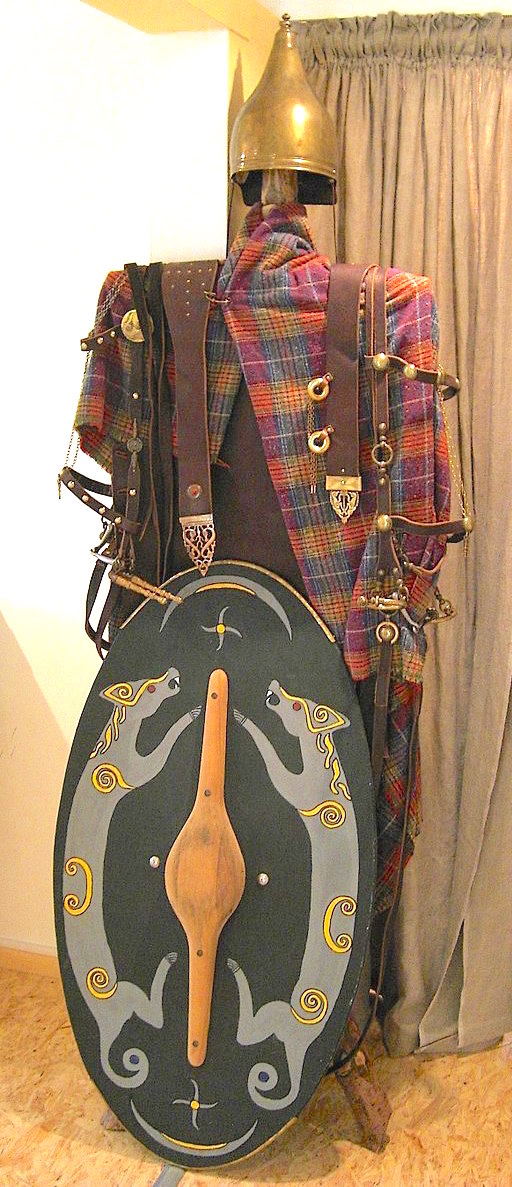
Likewise, Gallic shields were also designed with the methods of warfare of the Gallic warrior-aristocracy in mind. Unlike other shield designs, Gallic ones were shaped like a long, thin rectangle or oval. This seems impractical for protecting the body, but again, you have to consider the fighting style of the Gallic aristocracy; these shields, like chain mail, were meant to stop sword swings because those would have been their most commonly used weapons. It's possible that these shields were carried horizontally rather than vertically, as they're often portrayed, so that they could stop sword attacks even more effectively.
And to me at least a sword is as often an edged club as it is a slashing weapon.
Swords generally make poor clubs. Clubs usually put a lot of weight in the head, to make blows stronger. Many swords, by contrast, have a good amount of the weight in the hilt, where it aids maneuverability. Additionally, swords were surprisingly light - usually around 2-3 pounds. Much later two-handed swords would still only be 3-7 pounds if they were meant to be used in combat. To be fair, though, clubs weren't much heavier, just differently weighted.
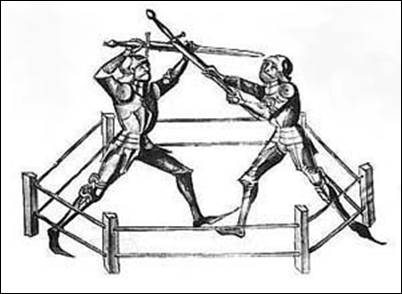
In fact, when longswords were used as clubs against opponents in full plate, people would hold the sword by the blade and hit people with the hilt, which is much less dangerous than it sounds (try holding a sharp chef's knife by the blade, sometime. As long as you hold it firmly enough that it doesn't slip, you won't be cut).