I work in a Native American history & arts museum and may be able to provide some information specific to Plains Indians. In the Great Plains region exhibit, we have a display case of all the various things Plains Indians would make from the parts of a buffalo. Nothing went to waste; they used every part. One such thing were spoons made from the buffalo horn. But I'm not sure if these are pre- or post-contact.
Perhaps we wouldn't consider these "utensils," but you might also be interested in learning more about native basketry. It's huge in many native cultures and has a hand in their cuisine. For example, some southwestern coil baskets are woven so tightly that they can hold water. Navajo (Diné) frequently used pitch to waterproof baskets, and then placed hot stones inside to boil water and cook food.
Edit: The museum is kind of small and I don't have any pictures. But after searching around the internet I found this website run by two Lakota Indians. It explains some history, use, and methods of making buffalo horn spoons: http://www.kevinpourier.com/spoons.html
Baskets were made to sift, serve, store, and sometimes even cook food. Nut and acorn flours were processed with stone mortars and pestles or hollowed out logs with giant wooden pestles. Men in the Northeastern Woodlands often carried wooden bowls carved from burls.
Buffalo horn spoons have been mentioned but in the Plateau and Northwest Coast regions, elaborate mountain sheep spoons were carved. To create the shape, you cut off the horn, split, the steam it open, shape it, then carve it.
Pottery is used for cooking (often using water and rocks heated on fires) and serving. Ceramic canteens were common in the southwest.
For unbelievably elaborate dishes, look up Northwest Coast potlatch feast dishes, such as so-called grease bowls. Some 19th century potlatch dishes in museum collections still have visible oolichan grease.
In Mesoamerica, tortilla served both as food and utensils. They would be used to scoop foods from bowls or dipped into sauces. Tamales, which were the true staple food of Mesoamerica, would also be dipped into sauces. The bowls themselves were typically ceramic, but we have Spanish reports that Motecuhzoma drank cacao from golden vessels, so the possibility of metal serving dishes, for the elites at least, cannot be ruled out.
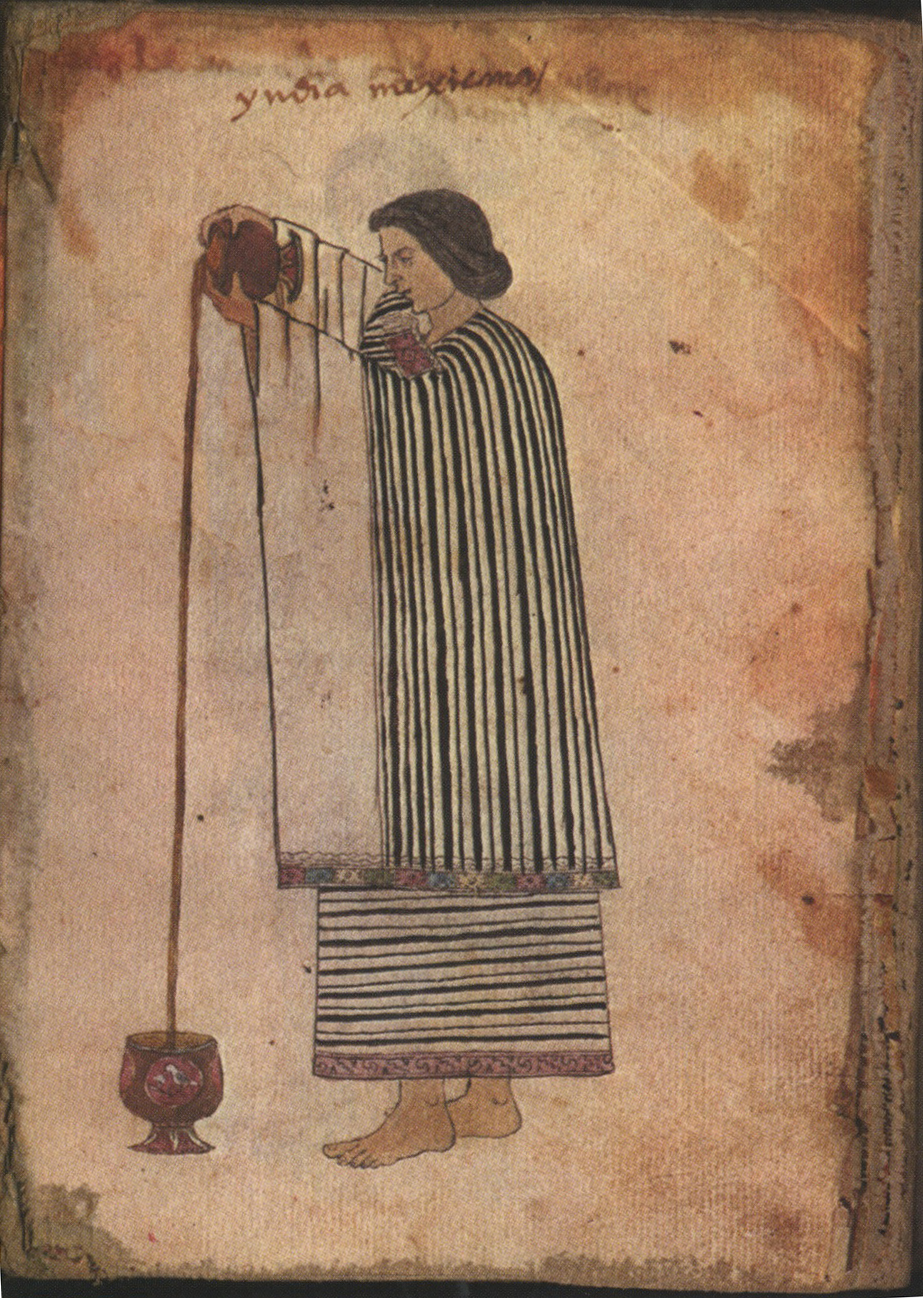
More typically cacao (itself an elite food) would be prepared by tall pours between two pitchers. A more cup-like vessel was also used, such as this example from the Maya.
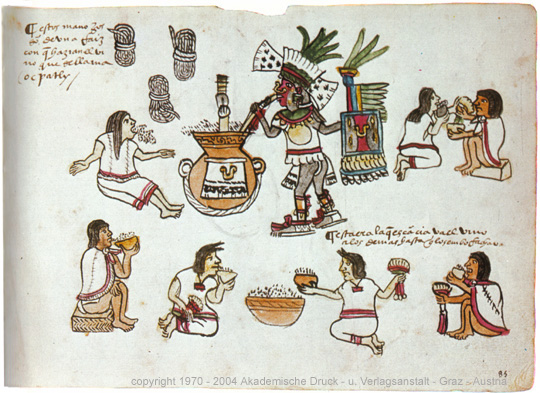
Pulque, the fermented sap of the agave, had an interesting trait: containers are depicted not only with a stereotypical "amphora" shape, but are also marked with a distinctive "U" shaped glyph which represent the septum piercing of the god Patecatl. You can see both in this panel from the Codex Magliabechiano. The top part of the page shows a very fancy scene of pulque drinking being drunk from the stereotypical vase-shaped container, while the lower portion depicts a simpler consumption from a bowl. Both are shown with the foamy head that was also part of the typical depiction of pulque.