This is false.
If you simply look at the genetic data you can find out. The Jomon people were likely very close to the Ainu people genetically and had the D type haplogroup. This is also evidenced by the fact that most people in Okinawa also have the D type haplogroup. (The other nationality to have a large number of D haplogroup is interestingly Tibet. The people with D haplogroup are one of the first groups of people to have left Africa so it's an old genetic marker, emerging about 60,000 years ago.)
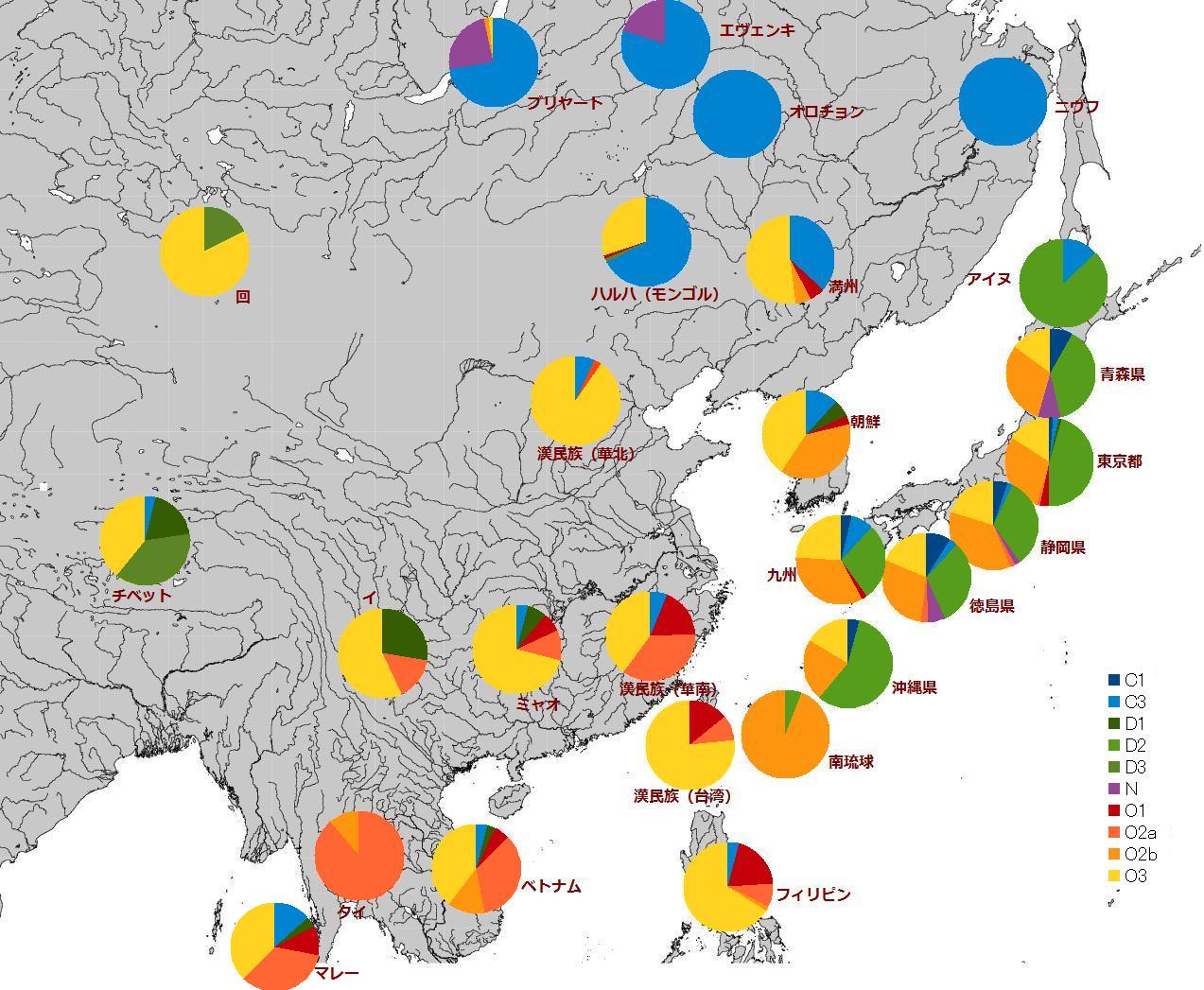
Here is a map of East Asia and inside Japan in particular.
http://livedoor.blogimg.jp/livereak-gekiyaku/imgs/1/b/1bfd5242.jpg
You can see that the Ainu in Hokkaido have mostly D (green) with some C (blue) DNA. Then as you go down the archipelago the % of people with D gets lower and the % of people with O (orange) increases. In Kyushu 1/3 are still people with D haplogroup DNA. Once you get to the more isolated Okinawa prefecture the % of people with D jumps back up to over 50%. (And oddly the extreme south of Okinawa is mostly O, this area was likely not populated by the D haplogroup or the D haplogroup people there were mostly wiped out.)
So clearly the people that came first to Japan were not wiped out by later arrivals. Instead there was a steady intermixing of the peoples.
Since the people with O haplogroup DNA emerged around 35,000 years ago, and they spread widely about 8000-13000 BC these are likely the immigrants that came with the introduction of agriculture.
You can see the same story from the reverse angle. Below is a map of people who can't digest alcohol in Japan.
http://kazuboma.blog29.fc2.com/blog-entry-22.html
The dark prefectures are places where more people have the DNA to digest alcohol and the light prefecture are places where more people don't have the DNA to digest alcohol.
You link that map with these 2 maps of people can't digest alcohol (first in Red, second one in shades of grey).
http://www.gbhealthwatch.com/Trait-Asian-Flush.php
http://blogs.discovermagazine.com/gnxp/2010/01/rice-alcohol-and-genes/#.U9Zfv0Al9gg
And you see that a large proportion of those people are from Southern China and probably linked with Rice Agriculture.
My hypothesis is that there were three waves of immigrants to Japan. The first wave, the Jomon people starting around 30,000 BC. The second wave, the rice agriculture people from South China (who also can't digest alcohol) starting around 1000 BC. The third wave, the metal workers from China and Korea starting around 200 BC. The mixing of these peoples plus a few others form the people of Japan today. The last major migration event happened around 700 AD when Tang China and Silla in SE Korea destroyed Paekche in SW Korea. Many of Paekche's peoples fled and came to Japan around this time. The imperial family of Japan granted the prince of Paekche a new last name, Kudaranokonikishi (literally King of Paekche), and their descendants served the imperial court as aristocrats. So for example, Kudanokonikishi Shuntetsu 百済王俊哲 (740-795) was a general who helped pacify northeastern Japan and gained an official court rank of a lower 4th rank junior 從四位下.
I wrote about rice agriculture and its spread in this thread:
Below is more science on genes in Asia. This is part 2 of a 3 part series. (This article is talking about a 2 stage migration to Japan which I disagree with.)
http://www.genebase.com/learning/article/22
Edited to add a bit more information on migration.