One of the groups of people that are usually mentioned when talking about American immigration during the 1800s are the Germans. They seem to be second only to the Irish in terms of number of people who traveled to America. I understand that due to the potato famine, many Irish people had to leave the country, but why did so many Germans choose to leave? Did the American Dream travel that far?
Not a historian myself, but...
You are partly right in your statement, I guess, as the democracy in the US was a major factor. I have to elaborate a little bit.
One of the major political forces behind German emigration was the failed revolution of 1848, known as the "March Revolution" as well as additional social factors.
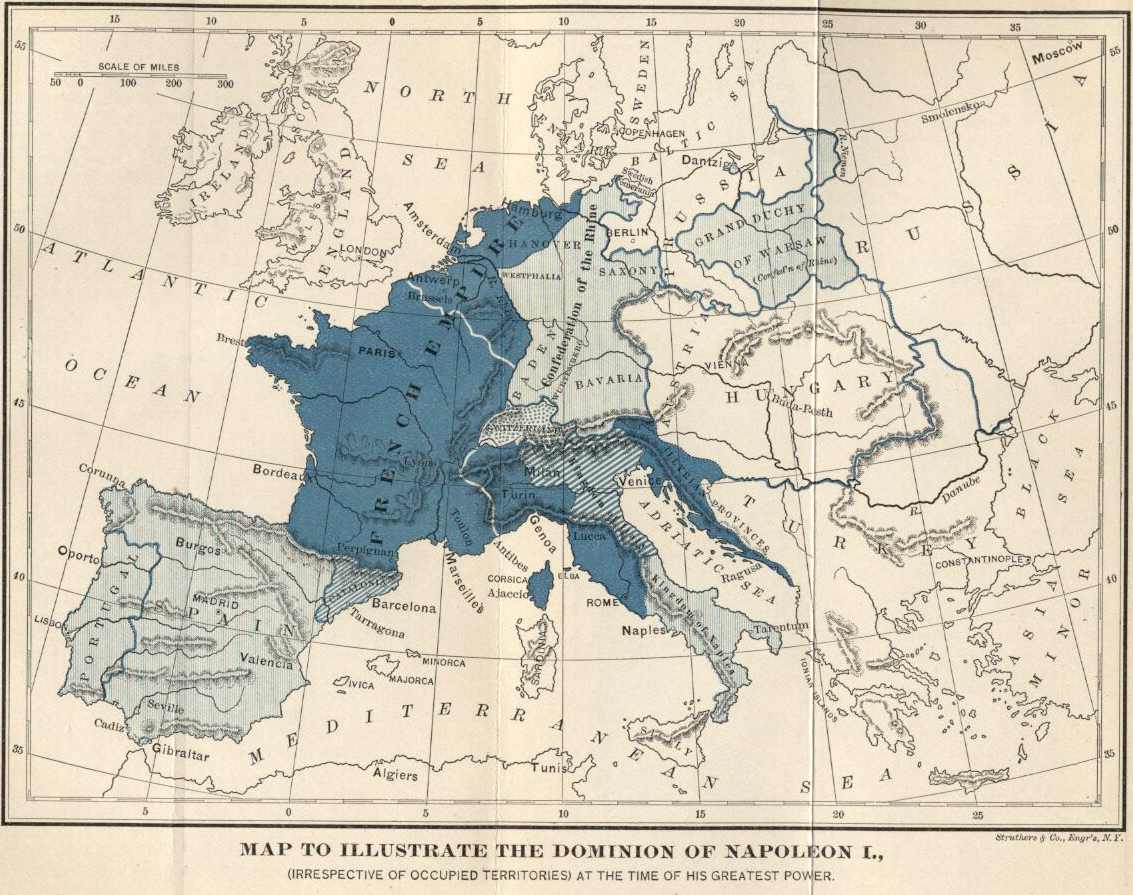
The background for the March Revolution are rather complicated and start way before. At the end of the 18th century Germany was still very much fragmented into little princedoms like in medieval times. This was changed by force, when Napoleon invaded Germany in the early 19th century.
Maybe with the exception of Spain or Italy, Germany was the country which the one most affected by Napoleon's conquests. The individual princes failed in their attempts to maintain their independance and many of them were forced to side with Napoleon. This created strong discontent in the German population who considered the french to be occupiers.
The result was a resistance movement of volunteers, known as "Freikorps" which came from all parts of Germany. After Napoleon's defeat, the Freikorps returned home, most of them expecting political change and a pay-off for their efforts. These expectations were mostly shattered as the Congress of Vienna re-instated not all, but most of the previous aristocratic princedoms. Most of the princes (such as Frederick William III of Prussia) reacted with force to demands for reform.
The dismantled "Freikorps" in the meantime had a large influence on students' fraternities, called "Burschenschaften" which formed right after Napoleon's defeat in 1815 and had their first public show of power with the "Hambacher Fest", a democratic festival in 1832. As the "Burschenschaften" mostly consisted of young students, demanding democracy (or some variety thereof) and German unification, they carried these ideas into the larger populace as they grew older (many of them were writers, journalists and editors) and thus were instrumental in the revolution of 1848.
[One of the most obvious signs of that heritage is the city of Boerne, TX which was named after Ludwigs Börne, one of the most prominent participants of the "Hambacher Fest"."]
The Revolution of 1848 (which did not only take place in Germany) failed miserably and was followed by a huge exodus of its supporters, know as the "Forty-Eighters". The most famous among them being possibly rebel troop leader and later US Secretary of the Interior Carl Schurz. The Forty-Eighters did not only consist of Germans, but the German were a major part of that group, because democracy and German unity were still many decades from happening.
While the repressive, conservative regime of the German princes continued and Germany began to modernize itself, the US became a very attractive country of emigration, due to the large German population already present there. Even though German unification was achieved in 1871, the overwhelming influence of the Prussian chancellor Bismarck and his intolerant politics towards catholics and socialists, meant that a strong political reason for emigration to the US lasted for most of the second half of the 19th century.
On a social level, the 19th century saw an overpopulation in the agricultural regions of the south (Badenia, Swabia,...) where the traditional form of distribution of the estate among heirs and coheirs meant that few farmers could live off the land they owned. Together with the abolition of serfdom of farmers in the north-western parts of Germany (an ongoing process which lasted until around 1850) this also fuelled emigration.
TL;dr The failed revolution in 1848 and social pressure due to overpopulation led to a emigration from the conservative, opressive Germany to the democratic and less densely populated US.
The largest ancestry groups in America are English, German, and Irish I believe in that order. Discrepancies in the U.S. census make exact numbers and percentages quite difficult. I can say that the Germans actually came in larger numbers as immigrants than the Irish actually. To understand migration, part of it is two factors, Push and Pull factors. A push factor encourages you to emigrate or leave a place, while a pull factor encourages you to come to a place.
Push factors: Some early Germans came for religious freedom most often Protestants. Given that America was still British during this period, Protestants were preferred. When a famine hit the Palatinate region of the German states, Queen Anne gave some passage to America. Lack of land was a problem. While Germany's population grew, most rapidly during the 19th century, land to farm on, particularly enough to use more intensive techniques, was scarce. Another factor was political. The revolutions of 1848, often referred to as the "Springtime of Nations", caused political refugees to come to America.
Pull factors: Religious freedom was attractive to those who wished to freely practice beliefs. Land was plentiful and fertile, and vast. Germans looking for space to farm was major factor causing immigration. The expanding and relatively prosperous economic conditions of 19th century America was also a factor. Industry, particularly in urban areas required labor and urban areas were large magnets for immigrants. Established communities sort of amplify the pull once people have already started coming. People like people like them to put it simply. Established communities of Germans in places like New York, Pennsylvania, and Virginia attracted more Germans who would find a place to fit in.