Examples are the Partitions of Poland, and pre-WW2 plans by the USSR and Germany, among others
What about Poland (and all its related precursor states) was so valuable to these greater powers that Poland was constantly divided?
Poland was a great power for much of its existance, from when it became a Kingdom in 1025 until the 18th century. The Polish-Lithuanian Commonwealth (as the country was called after the Polish King had become Grand Duke of Lithuania) was a strong power that contented for the Russian throne during the Russian times of trouble 1598-1613.
Polish-Lithuanian forces under King Jan III Sobieski was instrumental in defeating the Ottoman forces laying siege to Vienna in 1683, but after that, Poland-Lithaunia declined compared to other European powers.
The Polish parliament, the Sejm had substantial influence over the country. The throne was elective, not heraditory and the Sejm chose the heir to the throne. Every single nobleman in Poland had vet right in the parliament - thus every decision had to be voted for by 100% of the parliament. As you might understand, this paralysed the parliament, and necessary reforms were never made.
The power of the nobility also allowed them to force the peasants into a very restrictive serfdom, where, towards the end of the 17th century an serf owed his lege lord 8 days per week in labour. Yes, he had to work all week, and someone from his family had to work another day for the lord.
Poland-Lithuania became a noble republic of sorts, and when other states were centralising and building up strong governments capable of collecting taxes and raising modern armies, Poland-Lithuania became less centralised, and the Crown Army, which consisted mostly of the famous Winges Hussars (and the retainers of the noblemen that the Winges Hussars were made up of) slowly became less and less powerful compared to other nations, which raised modern armies of musketeers, pikemen and light artillery.
The Great Deluge 1655-1660, in which Sweden and Russia (and to a lesser extent Brandenburg) raped, murdered, plundered, destroyed and burned their way through Poland and Lithuania severly weakened the Polish-Lithuanian Commonwealth.
During the Greay Nordic War, the Prince-Elector of Saxony, August the Strong, who was King of Poland-Lithuania as fought and Peter the Great of Russia fought the Swedes unsuccessfully 1701-1708 in Poland. This brought further devastation to Poland-Lithuania and the Battle of Kliszow 1702 was probably the last time the Winged Hussars made a major appearance - they were shattered by Swedish cavalry in the battle.
After the Great Nordic War, the Polish-Lithuanian Commonwealth was no longer a grand power and its crown and eventually its territory became something to be divided by three grand powers surrounding it - Russia, Austria and Prussia.
All took advantage of the Polish-Lithuanian relative decline and inability to defend itself to sieze Polish-Lithuanian territory in the three partitions of Poland.
The ww2 partition of Poland was an attempt by the Soviets and Germans to regain what they had lost in ww2 and eliminate what they saw as a French puppet hostile to both Germany and the Soviet Union.
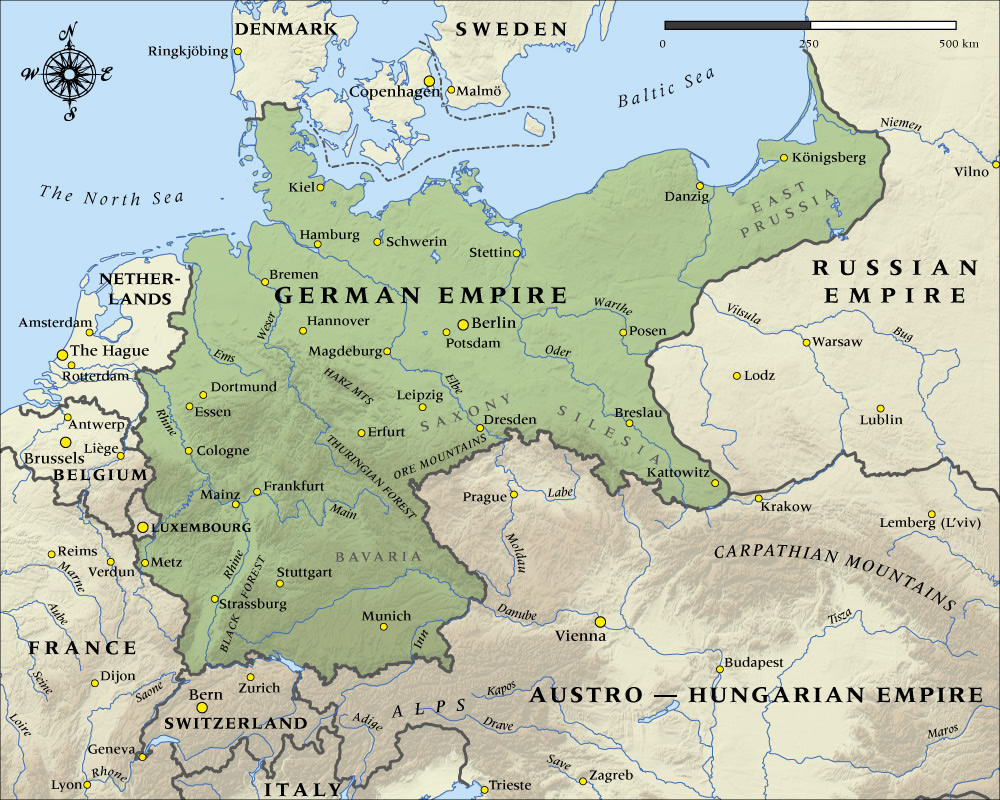
At least for WW2 Germany there were several reason as to why Poland was a natural target. First there is the idea of reunifying the German Empire. If you look at this map from 1914 modern day Poland is split between Germany and Russia. When Poland became a country, it separated Germany, creating a split between Germany and the Prussian part. The strip of land that split it was known as the Polish Corridor (and the smaller Free city of Danzig). Hitler demanded that these two land areas be given back to Germany.
Poland is also rich in natural resources, especially hard and brown coal, copper, zinc, lead, sulphur, rock salt and construction minerals.
The last reason which made Poland valuable to both the USSR and Germany is the idea of denying the expansion of the other country. Poland was the dividing country between them and Poland therefore holds strategic importance.