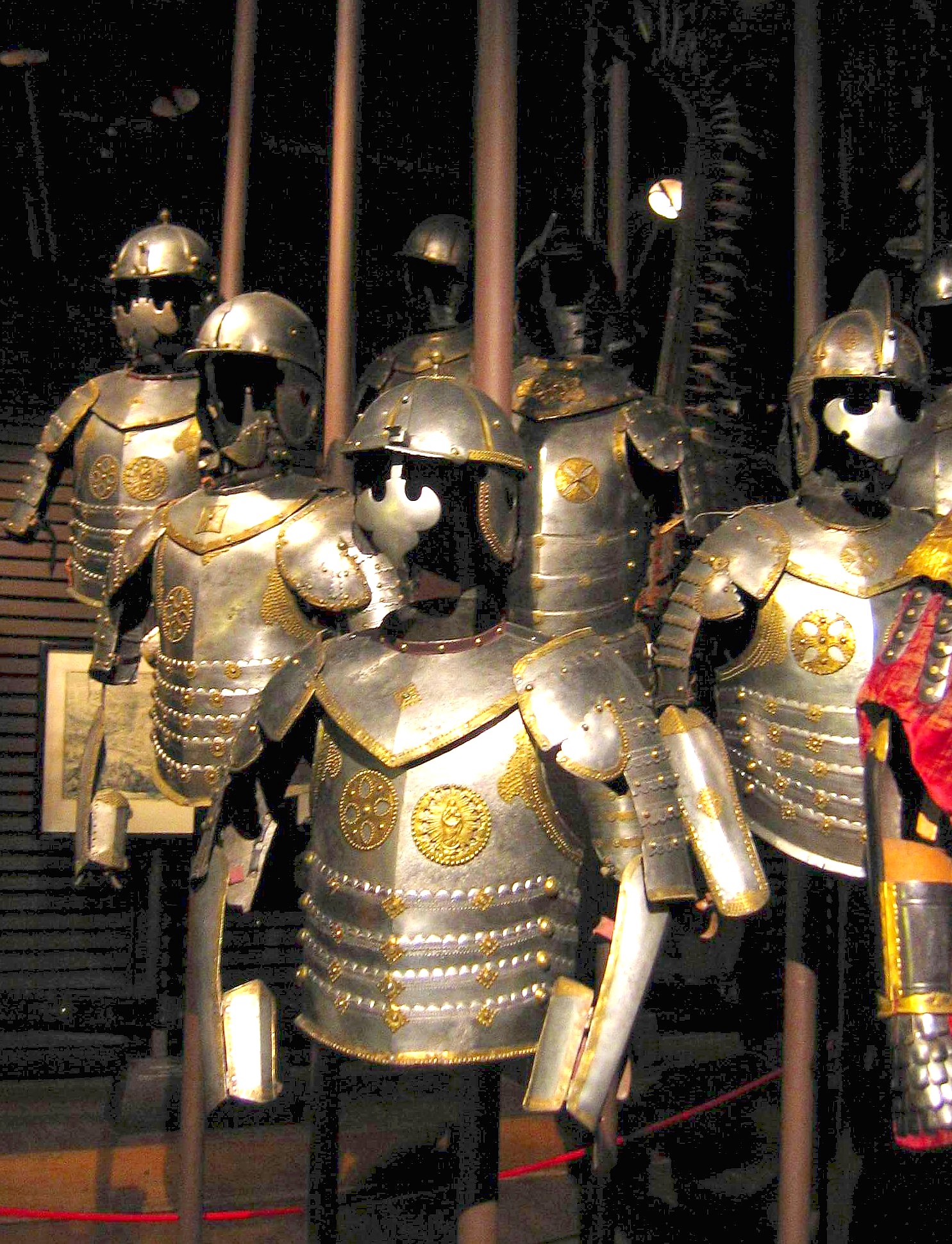
The process was fairly gradual, so depending on whether you mean 'full plate armour' or 'any plates at all' you're looking at quite different time periods. I'm going to pretend it was the latter, as that makes for a more interesting answer. Basically, due to the introduction of hand-held firearms, armour was forced to become thicker (and therefore heavier and more uncomfortable) but at the same time became less effective, so during the 16th century lighter alternatives became more common (the state also began having to pay for the armour and cavalry began to be used rather differently in battle, but this explanation works too).
The first bits to go were the leg plates, leading to either half, or three-quarters armour. (here's a wikipedia page with a couple of pictures, and here's a portrait of Charles V from 1548 wearing the style). This kind of armour was mostly retained by the cavalry; infantry, divided almost entirely into pikes and muskets, had much less. Shot (soldiers using muskets and lighter guns, turning into entirely muskets by the early seventeenth century i believe) pretty much dropped armour entirely, pikemen had (at best) a helmet, tassets (covering the hips) and breast and back plates (here's a picture of this level of armour. Not sure of the date, but this very similar couple of pages are from 1630).
The situation was fairly similar to what I've just described throughout the almost the first half of the seventeenth century, with the pikemen losing their tassets and back plates, and sometimes all their armour, and the number of cavalry units that were equipped as 'cuirassiers', ie. in armour generally declined (some polish armour of the period). I've read a bit about the armour of the english civil war recently, but it was a bit of an old source, so I'm not sure how valid this bit is going to be. In the english civil war (the first one, 1642-46) there were only two cuirassier units raised (wikipedia page for one of them, the 'London lobsters') but the soldiers didn't really like wearing the armour, it was a bit much for a lot of them. Most cavalry either had just a breastplate and helmet or a leather buff coatPikes were now armoured basically the same, with many of them not even having a breastplate or helmet.
Throughout the 18th century, the Napoleonic wars, and the rest of the nineteenth century most European armies had some cuirassier units, who now wore only a breastplate, and in some cases a back plate. The french army kept the cuirass as part of the field uniform for their cuirassiers right into the first couple of weeks of the first world war. Here are some (second pic down) french napoleonic cuirassiers, and here are some from 1914.
TLDR: 16th century for complete plate (I believe), early nineteenth century for breastplates.
I'm not sure how relevant all of that was, but hopefully some of it was interesting or new. Please correct me on the many mistakes I'm sure I've made, this was a pretty broad answer, and a lot of the stuff I'm talking about is well outside the subjects I'd be comfortable with. I'll try to find sources if you ask for them, but to be honest, a lot of this is just stuff that I know, but have no idea where I originally read it.