I asked my prof this earlier in the year and he and his colleagues were stumped, so I'm moving up to reddit. I did not put the whole question in the title as I think the question needs some background so I do not confuse the question.
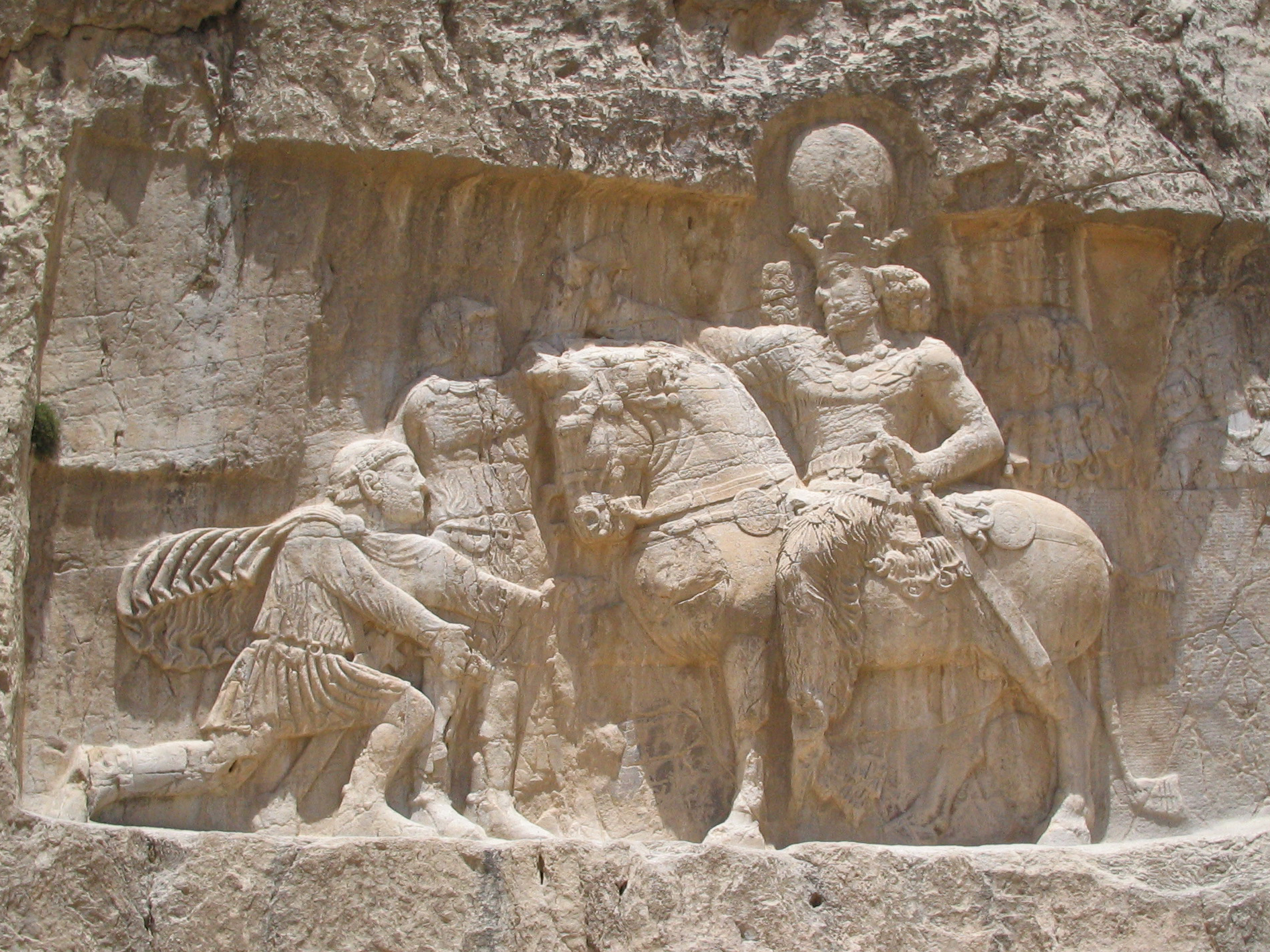
Most Sassanian Investiture reliefs, the documents carved in stone showing the monarchs rise to the throne, took roughly this form: https://c2.staticflickr.com/8/7091/7246704044_bf39de2b85_z.jpg
The framing of the relief is always interrupted by the symbolic crown on the monarchs head. Also the monarch is always given the right to rule by Ahuramazda, the chief divinity. One monarch, Ardashir III, broke this tradition to limit the power of the Zoroastrian church at a time when it was overbearing. In his relief, Ahuramazda is not present, the right to rule is granted by a lesser known divinity. This broke tradition quite significantly, but it also broke the artistic tradition of the reliefs in that the framing of the relief was changed so that there was no bulge.
This is the relief I am specifically referring to. http://www.livius.org/place/taq-e-bostan/taq-e-bostan-small-cave/
Another example of a typical relief I was shown in class is here: http://upload.wikimedia.org/wikipedia/commons/4/40/Bas_relief_nagsh-e-rostam_al.jpg
I am curious whether or not this change in the artistic tradition was:
Thank you for your time.
This is an interesting question, and I don't have a good answer off the top of my head for sure. I can give a few comments and suggestions, however. First, we can note that the relief doesn't seem to depict the king with a god or at least not as an investiture scene(note that the king is not in fact being handed a diadem) but rather with his predecessor Shapur II. One could itself take this as evidence of an ideological shift(presuming the identification with Ardashir III is correct; this point does seem to be disputed based on the contradiction between the crown and the inscription), since it shows the king legitimated by his ancestry rather than by divine ordination; on the other hand this may be more to do with the setting. With regard to your specific question, I would also consider carefully the siting. Unlike the more well-known investiture reliefs like that or Ardashir I at Naqsh-i-Rustam or the relief series at Bishapur, the relief you have linked to is in an ayvan(later Persian Iwan) rather than a flat outdoor rock relief, possibly in relation to a regional tradition of stucco carving and a general shift towards interior stucco decoration of architecture as the main focus of artistic activity. Because of this, the curved frame is architecturally demanded in a way it would not be for a open-air rock relief. The frame can also easily accommodate both figure's crowns given that they are placed at equal height and spaced so that their crown is more or less close to the edge of the back wall. So I would not rule out an iconographic explanation but I would not assume it to be the case either, and in any case I think the choice of subject matter might be a more fruitful path of inquiry. A more noticeable and interesting case is the outdoor relief at Taq-i-Bostan, where the top of the relief is well above the heads of the principle figures, but in this case it is a relief of an ordination by Ahura Mazda so it probably is not a reaction to Zoroastrian orthodoxy. Unfortunately, it's hard to say much that is especially definite since there are still considerable limits to our understanding of Sasanian rock relief-even the identification of the figures is at times problematic.