I imagine that it didn't happen that often, lack of light and such?
Over Germany:
There were rarely "dog fights" at night time, you just couldn't see the enemy very good. For this reason the entire equipment for fighting at night was different. Real interceptors at night were uncommon but were used as well.
The germans for example used the BF 110 as their primary nightfighter. This aircraft was bigger and therefore less agile than real interceptors, this made it inferior in dog fights but because of its size it was capable of carrying heavy aranment and equipment for night hunting plus a radar operator. The radar allowed the crews to locate bombers from within a limited range after beeing guided to the right area. Another option of locating an enemy, were searchlights which locked on the incoming bombers after they got picked up by ground radar. Within a certain range you could then see the target and attack it. Moon light for example had obviously an impact. On a macabre side note, burning cities also helped locating enemy bombers.
On the other side allied airforces tried to counter with aircrafts which were equiped with radar detectors. One example for this is the mosquito.
Overall there were less "dog fights" at night and when they happened the participating aircraft were often heavier types which had special equipment suited for night. Which didn't really qulify these engagements as dog fights. The first one to find an enemy had a big advantage.
There weren't night "dogfights" per se, but there were certainly plenty of nighttime air-to-air engagements.
Generally, night air combat was a contest between an interceptor and an intercepted aircraft (usually a bomber). And it was a very important component of WWII air combat. The London Blitz, the RAF bombing of Germany and occupied Europe, and the USAAF firebombing of Japan happened almost exclusively at night. All involved a cat and mouse game between bombers and night fighters
There were a variety of ways to locate and intercept intruding aircraft.
One method was to spot the small exhaust flames produced by 1940s-era engines. Obviously, these flames were fairly faint and difficult to see, especially if there was light pollution from searchlights, flak, or flares. By 1941, most German and British had flame dampeners fitted, although the USAAF was slower to adopt flame shields.
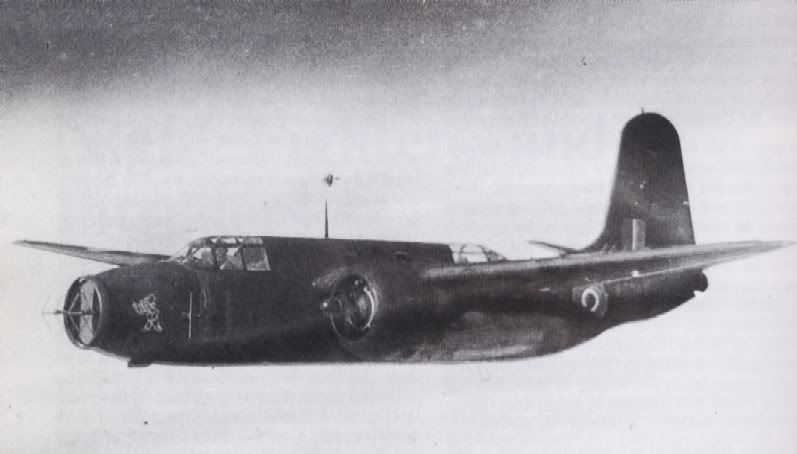
Another method was to use searchlights (or a similar light source) to illuminate enemy aircraft, which could then be intercepted by fighters. The German "Wild Boar" system used this to great effect. Single seat day fighters (e.g. the Bf109) would operate independently from any ground control. Once a a ground-based searchlight picked out a bomber, the fighter would maneuver to engage the now-exposed enemy aircraft. the RAF tried a similar concept with the Turbinlite. They fitted a 2.7 million candlepower searchlight and a radar set to the nose of a Boston bomber. The idea was for the Turbinlite aircraft to locate a target with radar and turn on the searchlight. Accompanying fighters could then dash in and score the kill.
Ground control and intercept (GCI) systems were critical to the success of nighttime air defence operations. The British Dowding System and the German Kammhuber Line were both integrated air defense systems, a combination of radar, searchlights, and interceptors that could detect and destroy enemy intruders at night.
The German system is a particularly interesting study in the evolution of ground-controlled night intercept tactics, so I'll go into it in some detail. When it was first founded in 1940, the Kammhuber Line was a fairly simple network of boxes. Each box had an array of radars and searchlights, as well as a single assigned night fighter. These ground-based units helped vector the night fighters to engage British bombers as they entered the box.
The RAF quickly adapted to these tactics. The RAF's "bomber stream" sent a constant flow of bombers through a single Kammhuber Line box. The lone fighter would be quickly overwhelmed and the majority of the RAF bombers would get through. The Germans eventually adapted to these new tactics. The introduction of fighter-borne radars allowed German night fighters to act more independently, although ground-based radars still played an important role in vectoring fighters into the bomber stream. In 1943, the Germans further refined the system. The "Tame Boar" approach had the radar-equipped night fighters orbit a radio beacon. Ground controllers would then vector the fighters into the bomber stream. Once at the stream, the fighters would use their own radars to located and engage individual targets.
As radar technology improved throughout the war, it became more and more feasible to mount radars on aircraft. In some cases, these radars were used to bomb and navigate. The British H2S and the American H2X radars are good examples of a bombing radar. Other electronic equipment allowed fighters to intercept bombers. For example, the German Naxos system vectored German fighters to RAF bombers by "listening" to H2S emissions. Other radars, like the German Lichtenstein radar or the American AN/APS-6 helped aircraft locate aerial targets. In areas without good ground-/sea-based radar networks like the Pacific Theater or the China-Burma-Indian Theater, airborne radars were essential to successful night fighter operations.
David Wragg, Royal Air Force Handbook 1939-1945 (2007)
Stephen L. McFarland, Conquering the Night: Army Air Forces Night Fighters at War (1998)