Though I am unable to fully answer this question, I can provide some insight on the adoption of Christianity in Lithuania, often recognized as the last pagan nation in Europe. During the 11th and following centuries, the spread of religion was characterized by an increase in cultural exchange, through means such as war or trade. With increased interaction between already-Christianized states and not yet-Christianized states, religion was able to spread throughout most of Europe.
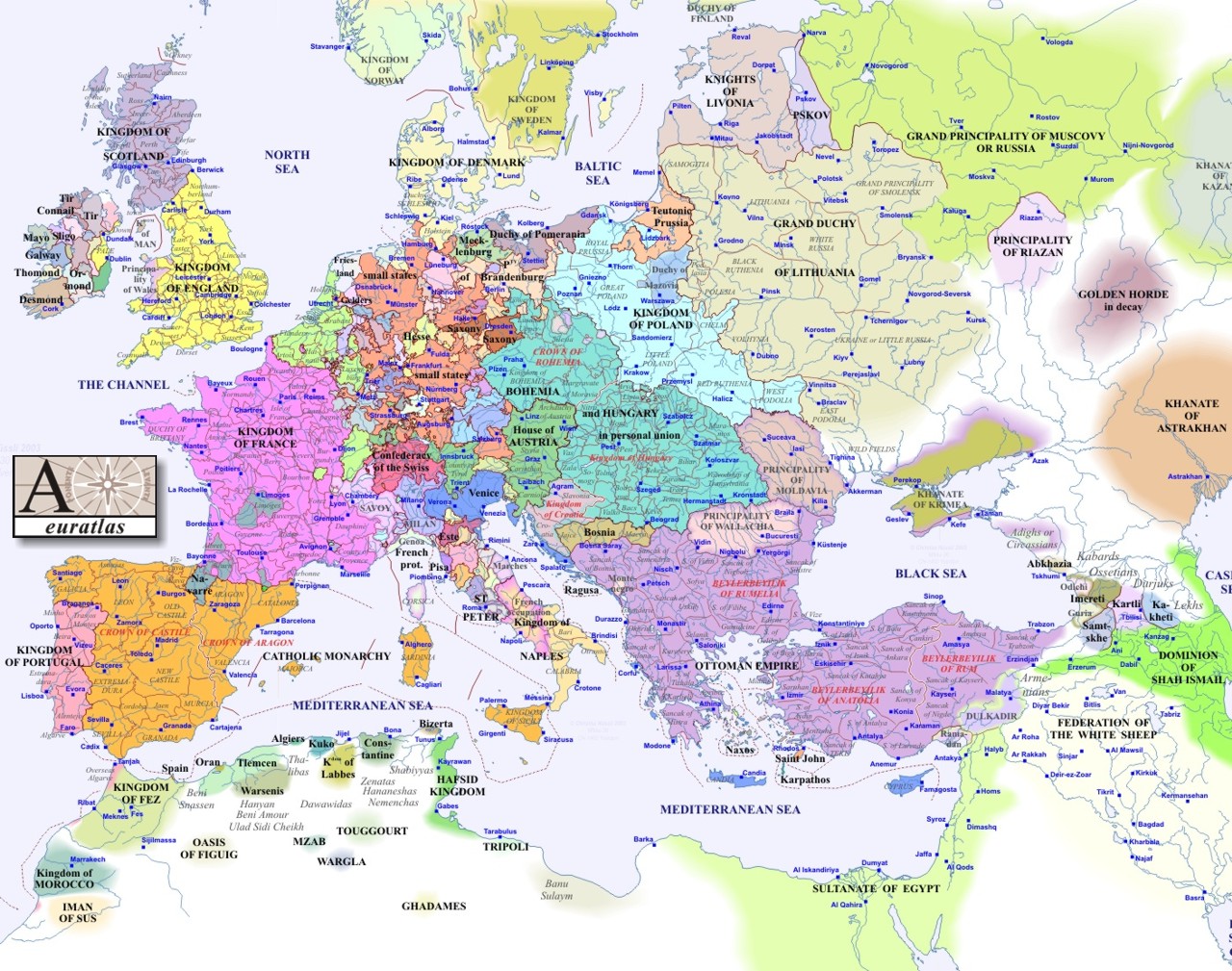
This map of Europe in the 1400s helps show the relative isolation of the Grand Duchy of Lithuania (established in the 12th century) from the rest of Europe, which limited its initial interaction with the Christian religion. According to Lithuanian historian Alfredas Bumblauskas, it was the Annals of Quedlinburg, written between 1008 and 1030, that contained the first baptismal attempt in the history of Lithuania.
As the dukes of Lithuania expanded southward and eastward from the 11th century onward, there was a marked increase in cultural exchange between Lithuania and the Kievan Rus', as well as with the Eastern Orthodox Christian Slavic states, expediting the spread of Christianity.
Finally, by the mid-13th century, Lithuanian grand dukes were pressured to choose a state religion due to the rise of the neighboring Livonian branch of the Teutonic Order. In 1250, Mindaugus became the first Lithuanian Grand Duke to adopt Christianity, and in 1251 Pope Innocent IV proclaimed the Kingdom of Lithuania, finally putting it under the jurisdiction of the Bishop of Rome.
This is the extent of what I know about this topic, and I hope I've helped shed some light on it!
For further reading on the Christianization of Lithuania, I would recommend Lithuania Ascending: A Pagan Empire within East-central Europe, 1295-1345, by S. C. Rowell.
First of all, I recommend checking some of the answers to a similar question: http://www.reddit.com/r/AskHistorians/comments/295486/how_did_lithuania_hold_out_against/
I will answer this question primarily from a perspective of the period of the Livonian crusades.
Only by securing the southern shores of the Baltic sea, the trade routes could be sufficiently controlled and once they were, the economic importance of trade with and through the Baltic lands increased drastically.
With the increase in economic importance came the desire to control the trading routes and control lands closer to the source. Hence the first crusades near the mouth of the river Dvina (Düna, Dünamünde) which led to foundation of Riga.
The arrival of German crusaders (pilgrims, according to the Chronicle of Henry of Livonia) meant that the tribes of Estonians, Livonians, Semgallians, Selonians and others would come under German/catholic dominance, thus robbing the tax revenues from the Russian lords of Novgorod.
For instance, the idea of sending armed men to The Holy Land, was largely based on the claim that it was originally christian lands. In the case of the Baltic lands, such a claim did not exist. There the first idea was that the armed men were there to protect the missionaries.
And the experiences prior to the 13th centuries indicated that the Baltic tribes were not ready to accept a new god without additional motivation.
The geography that protected the Lithuanian heartland from aggression from the west was mostly marshland, which prevented logistics and long term campaigns from reaching their areas. The Swordbrethren (later Livonian order) plus the armed pilgrims had to do slow progress which allowed the Lithuanians to prepare. The Lithuanian cavalry was better adapted to the local conditions (fighting on home territory) than the ultra-heavy feudal knight cavalry (who were in a foreign environment). (See the battle of Saule in 1236 and the battle of Durbe in 1260.)
Internal political – That which was to become the Lithuanian state was on the brink of having a centralized power, which allowed them to have one leader. This helped them mustering forces and remain (relatively) united in the face of a threat. It also was an advantage for the Germans, as they then had a person with whom they could negotiate. This was not the case with the Estonians, Livonians, Couronians to name a few.
Sources and references: I use primarily the Livonian Chronicle (english translation) as my source of information. http://books.google.se/books/about/The_Chronicle_of_Henry_of_Livonia.html?id=FmJnyTlis7oC&redir_esc=y As a beautiful source for the "Fratres militiæ Christi Livoniae" I must refer to a work in German "Der Orden der Schwertbrüder" by Friedrich Benninghofen. Not easily obtained, but there are copies if you google for it and look in antique book shops. And for the Nestor chronicle (Russian early documents) I have used the translation that I found via wiki: http://en.wikipedia.org/wiki/Primary_Chronicle (look at the bottom of the page)
This question needs many perspectives to gain a better understanding of the processes that all influence the process of christianization. I hope that this was one such perspective.