Specifically: pre- and immediately post-1917, the interwar period, WWII, and during the fall of Communism.
I wrote a short paper in university on post-WWII relations - in which I argue that Finlandization in Finland was not so much the reduction of sovereignty as self-limitation to preserve it - and will summarise it here. It's been a few years, but I'll do my best to elaborate and answer questions where I can.
After the war, Finland paid reparations of six billion marks (or 300 million dollars, some four billion USD today) in addition to the cession of more territory. See the Moscow Treaty and Armistice for the Winter War and Continuation War peaces.
Finland was compelled to sign the Treaty of Friendship, Cooperation, and Mutual Assistance (YYA-sopimus in Finnish). Most importantly, it demanded that Finland resist any invasion directed at the USSR through its territory. While this was initially intended to be a counter to future German aggression (unsurprising, considering paranoia over a resurgent Germany in the future), it later came to be understood as an anti-NATO agreement. If Finland was unable to resist on its own, the USSR would provide assistance. The potential for massed Soviet troops in or close to Finnish territory (the leasing of the Porkkala peninsula near Helsinki was a particular concern) represented a serious threat to Finnish sovereignty, especially considering the disarmament Finland had to undertake.
Following the return to peace, Finland, seeing the Communist takeovers in what would become Soviet satellite states, sought to maintain neutrality and sovereignty at all costs. Neutrality was key in that it could not approach the West for fear of antagonizing its neighbor, yet the lack of Communist power in domestic politics made it unlikely to seek closer ties to the USSR. Thus, as for Austria, neutrality was the best path forward. Sovereignty was crucial to the maintenance of neutrality, and initially, the Soviet Union did not trust Finland with either. The presence of Soviet troops at the Porkkala military base provided for the possibility that the USSR could hold the country hostage if it so wished, meaning that Finland’s sovereignty was significantly curbed. Finland, then, sought to convince the USSR through its actions, though on a short leash, that it was committed to neutrality as President Paasikivi (in office from 1946-56) laid it out. Thus, it avoided antagonizing the USSR by, for example, refusing to recognize either Germany as legitimate for the purposes of establishing trade, and by refusing to join the Nordic Council. Finland succeeded in convincing its neighbor that its intentions of neutrality were true, and that thus the USSR’s weak northwestern border was more or less safe. So, in 1956, the USSR returned the Porkkala peninsula to Finland, in part because it did believe that Finland would not ‘betray’ it. Now freed of any threats of intervention, Finland was fully able to exert its sovereignty and extend its commitment to neutrality.
Finland would gain greater trust from the USSR, especially during the administration of Urho Kekkonen, over the following decades, but rapprochement to the West would not happen until the 80s (with a few minour exceptions: 1955 Nordic Council, 1961 EFTA, and others). Successor president Mauno Koivisto was not so willing to cling to the Paasikivi-Kekkonen Line, and following the rise of Gorbachev and the advent of perestroika, he began to seek closer ties to the West. So, Finland joined the EFTA as a full member in 1986, the Council of Europe in 1989, and even went so far as to abrogate the military obligations of the FCMA treaty in 1990 amid the crisis in the USSR. None of this provoked a negative response from Gorbachev, who in 1989, on the heels of George Bush, formally recognized Soviet support and acceptance of Finnish neutrality, thereby finally dispersing the fear of Soviet intervention.
Since then, the country has continued to develop close relations with Russia, which makes up a significant portion of Finland's trade. Public opinion is still divided on NATO membership, and this is in part a relic of the Cold War, and it remains to be seen how the current situation will this and relations between the countries.
Two political crises in the post-Stalin period that Finland managed to ride out:
Relevant sources from the paper:
Finland’s Relations with the Soviet Union 1944-1984 by Roy Allison
Finland in the New Europe by Max Jakobson
SSSR-Finlyandia: 260 let otnoshenii, 1713-1973 by B. B. Pokhlebkin
Perestroika and Changing Neighbour Images in Finland and the Soviet Union by Pentti Raittila, Elena Bashkirova, and Lyudmila Semyonova
Pardon me my answer might be more from a Finnish point of view.
Pre-1917 Finland was a Grand Duchy of the Russian Empire, and actually that time spanning over a century (1809-1917) was one of the most peaceful in the area called Finland. The collapse of the Russian Empire and the revolution there led to a power vacuum, which conflicted into a Finnish civil war between the Fennoman movement driven and Germany supported “whites” and left-leaning social democrats aka. “reds" supported by then emerged Soviet Union. It is important to notice that as an aftermath of the civil war Finland had fallen from Russia/Soviet Union’s influence sphere to the Germany’s, and that did not change during the interwar period mainly because the Soviet Union was not in condition to do anything about it.
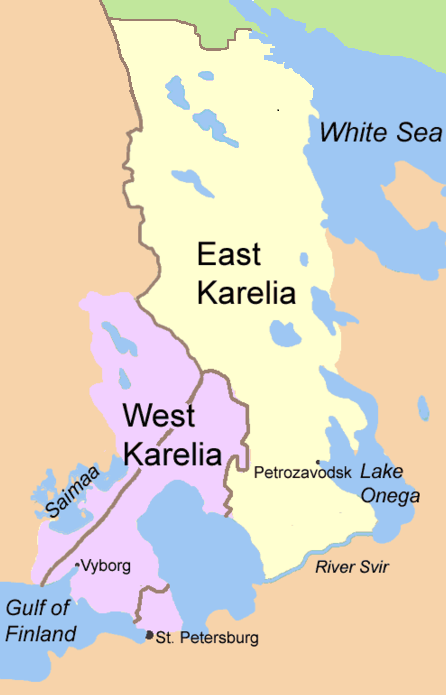
Briefly after the civil war, circa 1918-1922, was fought the “Kinship Wars” in the Karelian and Estonian regions. The name comes from the fact that Estonian and Karelian people are also Fenno-Ugric people and some right wing Finns thought it was their responsibility to free these kindreds from Soviet Union. Finland was not officially supporting this but around 10 000 people joined the operations which actually led to the Estonian independence. After the Kinship Wars the Academic Karelian Society was found to support and help Baltic Finns and Karelian people to migrate to Finland and drive the ideology of Greater Finland. The ownership of the East Karelian was the main thing causing spasm between Soviet Union and Finland during the interwar period and especially at 1920s.
Here is a good map of the Karelian regions, also showing current and interwar borderlines: http://upload.wikimedia.org/wikipedia/commons/3/39/East_and_West_Karelias.png
During the interwar period Finland realised it’s position next to the powerful nation and seek for a military union especially with Sweden and Baltic countries, but none of them was interested. Late 1930s when the political situation in the Europe was already getting pretty serious Soviet Union inquired Finland to exchange land area with Finland. Soviet would have gained regions from Karelian isthmus near Leningrad (St. Petersburg) and some islands in Gulf of Finland and Finland would have got land form the Eastern Karelia. This made a lot of sense for Soviet since the Finland was seen as an ally of Germany when the war would emerge, so in a sense Soviet Union had to start the Winter War as a preventive measure to secure the Leningrad region. How that and the whole WW2 went can be studied elsewhere.
As an aftermath of the WW2 Finland was hugely influenced by the will of the neighbouring super power. The basis of the relationship was Finno-Soviet Treaty of 1948 aka. Agreement of Friendship, Cooperation, and Mutual Assistance which was basically a military union between Finland and Russia.
The term “finlandization” was invented in the 1960s to describe a situation where more powerful nation is hugely influencing weaker nations affairs. This was the time when President Kekkonen led Finland in symbiosis with Soviet will and requests. Certain Finnish parties and politicians were flagged as “anti-soviet” and were not given government position regardless of the election results. This caused many right wing politicians and business people to seek to the close relations with Soviet and left wing colleagues. As an exchange of this Finland got to keep her independence and Kekkonen his power, as Soviet saw him as a leader loyal also to the Soviet interests.
Part of the close relationships was also extensive bilateral trade which was highly popular with Finnish business circles: 15-20 % of Finland’s foreign trade was bilateral with Soviet Union. That disappearing overnight when the Soviet Union collapsed did not help Finland which was suffering from the worst economic crisis in her history.
Almost instantly after the collapse the Finnish political atmosphere made an U-turn from East to West and Finland was almost instantly applying for European Union membership and after that we’re closing in the 20-year rule. Let's just say that Russian trade is significant, tourism flourishes and the current trade ban really hurts Finnish economy.