But now I can’t find any more info about this. Does anyone know what Battle this was or just more info in general about the bomb that was buried under the trenches then the soldiers retreated to make the enemy advance into their trap? I think that the explosion was claimed to have been heard in London.
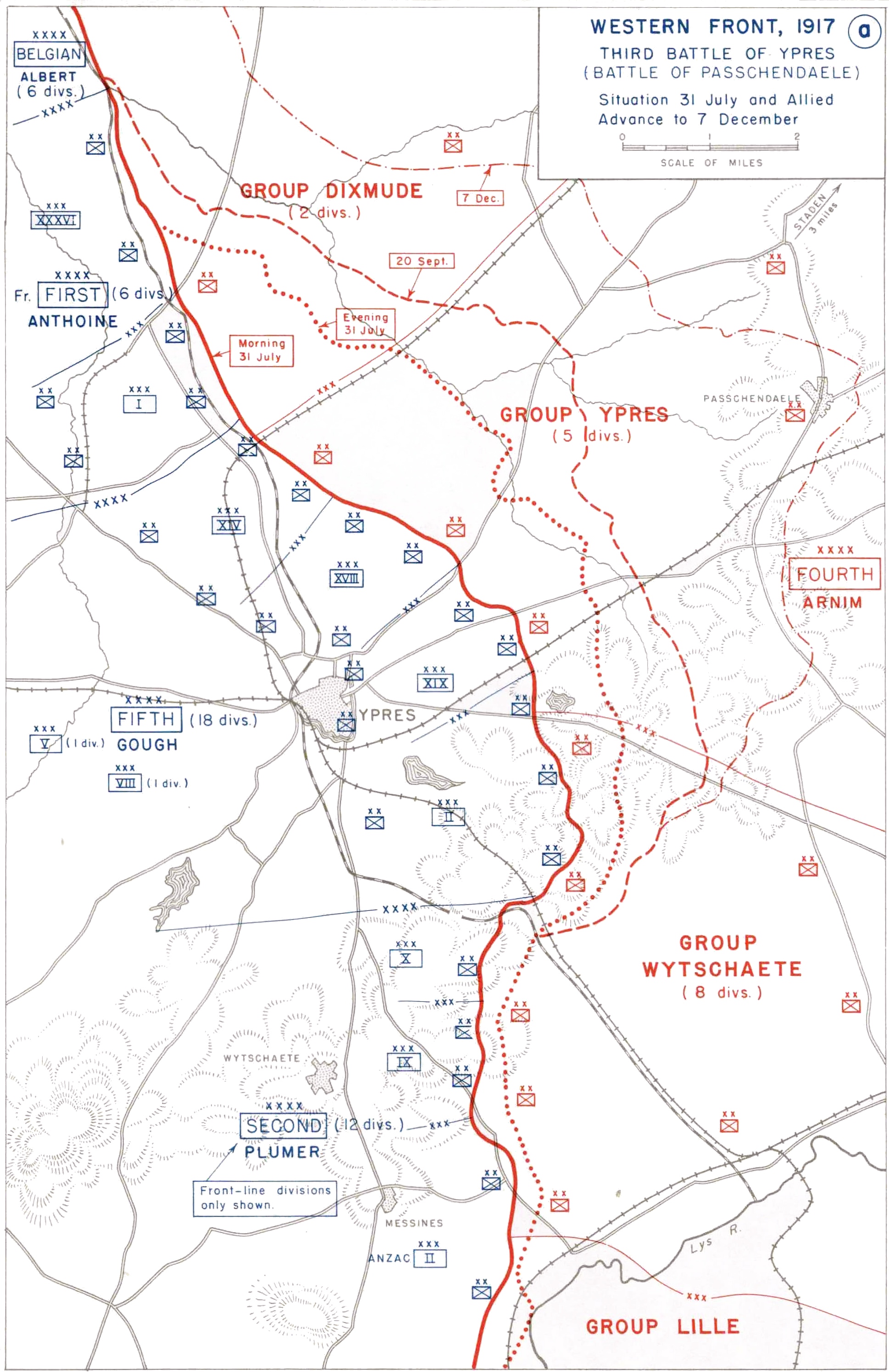
The Third Battle of Ypres, or more commonly Passchendaele, was set to begin on the 31st of July 1917. Ypres is more commonly known as the "Ypres Salient" was a pocket in Northern Belgium at the very tip of the British lines and was noted for being a death trap throughout the war; it was surrounded on the South, East, and Northern sides by Germans on high 'ridges' that constantly rained artillery fire upon troops stationed there. Passchendaele ridge, the 5th ridge East of where the German line was, was the objective of the mission as it would allow attacks on German rail systems (which were crucial for the German 4th Army) and on Belgian ports which were housing German submarines.
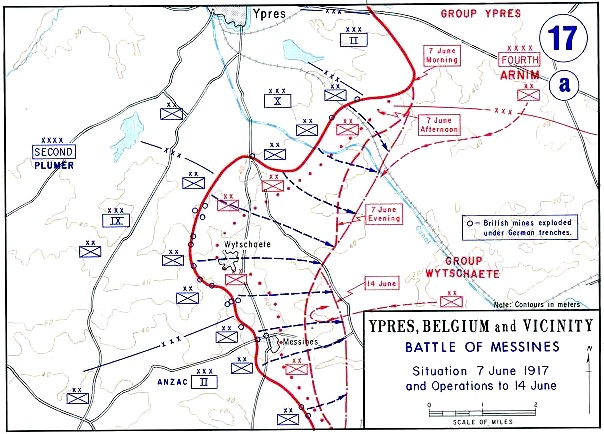
However, there was a bit of an issue -- it was a fucking salient. To the South was enfilading fire from the German ridge at Messines. Any mass offensive which was to push East would expose its back to the Messines Ridge and thus, for Passchendaele to work, the Messines Ridge would have to be taken prior. This assault on Messines Ridge is the battle you are referring to and it was one of, if not the, most successful operation of the First World War for the Entente. Just about every single thing that could have gone right did for the British so I'm not sure where you got the idea that it was a 'trap' of any kind.
This was a battle which was won and loss in the subterranean front. 2000+ miles of underground tunnels would be dug between late 1915 and June 7th 1917 for the purpose of burying not one but twenty-two total explosive caches weighing a total of 450 tonnes -- just under 1,000,000 total pounds of ordinance under a single ridge. The largest single cache would be near St-Eloi by the 1st Canadian Tunneling Company which held 95,600 pounds of ammonal and was 125 feet below the German trenches.
The Germans were not totally ignorant of the process and performed something called counter mining which sounds just like it was. For approximately 18 months thousands of soldiers on both sides would be engaging in hand to hand combat with nothing but fists, coshes, knives, pickaxes and the occasional pistol in cramped chest high tunnels in near pitch blackness with only handheld lanterns to guide their way. The Germans were also keen on using camouflets, small explosive devices to collapse tunnels, to great extent in their countermining operations. Sappers would regularly suffocate a hundred feet underground under the weight of dirt and rock.
One mine would be discovered by a German counter-tunneling team in mid-1916 and neutralized and that would be the only one discovered by them. They understood this explosive plan was being enacted but they were completely unknown to the extent of it.
On the 21st of May the preliminary bombardment by about 2500 guns would begin firing 24 hours a day 7 days a week until the 7th of June at 2:50 in the morning. Hearing the silence, thus signifying an enemy assault, the Germans threw the weight of their reserves to the Messines defenses as they manned their machine guns and firing positions in a half hour of silence while sending up hundreds of flares to get a read on British advancements. They got no great British assault and there was no creeping barrage or lightning artillery barrage. There was nothing but silence until at 3:10 19 of the 21 explosives, the last two malfunctioning, would detonate in what witnesses described as 19 separate mushroom clouds. Multiple independent accounts in Dublin and London report having heard the blast and it was and is the largest manmade non-nuclear explosion in human history.
It was, as I said, an absolute crushing victory. The explosives would detonate at 3:10:00 AM and there would be 10,000 dead Germans at 3:10:01 AM; most would be vaporized instantly, others would be crushed. Phillip Gibbs gives his views of the spectacle:
The most diabolical spendour I have ever seen. Out of the dark ridges of Messines and Wytschaete and that ill-famed Hill 60 there gusehd out and up enormous volumes of scarlet flame from the exploding mines of earth and smoke all lighted by the flame spilling over into mountains of fierce color, so that the countryside was illuminated by red light.
The remaining 7,000 Germans who survived the initial blast would be so disoriented from the blast that they would not even resist the Entente assault and surrender immediately upon contact or be dug out of the rubble. By nightfall the ridge and all the objectives were taken and for the first time in the war the casualties of the defender exceeded that of the attacker. The battle would persist to July 14th as the Germans got their shit together by nightfall and resisted the last few bits of land being taken but the damage was already done; it was the only real surprise assault of the war and it worked perfectly according to plan.
What was a failure, however, was Passchendaele. The offensive as a whole was really Douglas Haig's lifes failure and one that he didn't even get authorization to perform it until July 25th, 2 days before it began, it was such a divisive issue. Many did not see the point after the French's failed Nivelle Offensive (which lead to mass mutiny) and the fact that the American's were coming into the war. Just sit on their gains and wait for the hundreds of thousands of Americans to get there and back up a combined Anglo-Franco-American offensive as the Germans were not doing anything tricky anytime soon after the Somme and Verdun. Haig was having none of it and believed that the salient had to be broken for future offensives to succeed and that even a marginal victory over a few ridges would make the offensive worth it.
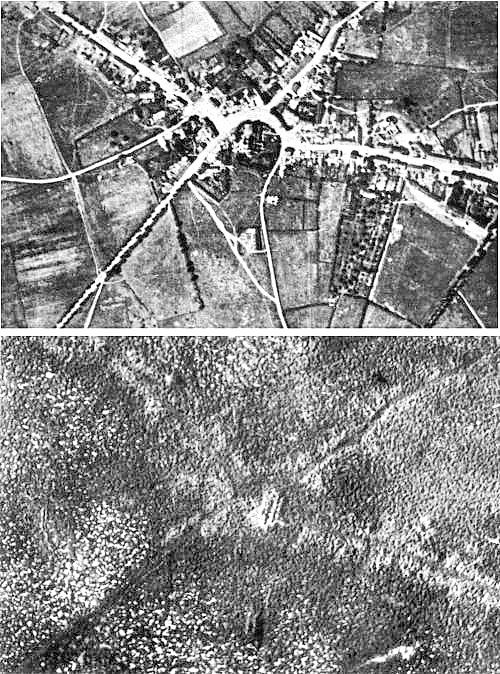
The battle was, from a 'lines on the map' perspective, a success. There would be significant land taken in the first day but you'll notice the offensive began to grind to a slow. Flanders, the region it was performed in, is wet. A region which has a significant amount of rain...and mud. Combine this with millions of shells obliterating the landscape and we get something out of a horror flick. Holes over 10 feet deep filled with water that men would have to traverse while under fire. I am not exaggerating when I say thousands would perish at the hands of falling into the mud and drowning or getting stuck and cut down. Passchendaele was a strategic victory but it showed once and for all the tactical limitations of relying on artillery to "batter" the enemy into submission. It would obliterate the landscape and make it untraversable, even for tanks. At the tail end of the battle Canadian forces would at last take the city of Passchendaele pictured here before and after.
Richard Holmes, Tommy: The British Soldier on the Western Front
Mining (tunneling underneath the enemy's trenches, packing the cavity with explosives and then detonating them suddenly) was a relatively common offensive tactic during the First World War. It was generally used as a shock tactic at the start of an attack, to open a gap in the enemy defensive line and to throw the defenders into disarray.
It was also an incredibly dangerous task — not only are you working underground and handling large quantities of explosives, both of which are dangerous activities in themselves, but the added risk of detection and counter-mine attacks by enemy listening posts made the situation even more perilous.
So the situation you describe could refer to any one of a number of events. The most notable was probably the Lochnagar mine, the detonation of which was (perhaps apocryphally) reported to have been heard in London. Lochnagar was detonated on 1 July 1916 as part of the opening stages of the Battle of the Somme.