I know he split it to give each nationality its own republic (Slovenia, Croatia, Macedonia) but what I truly don't understand is why he didn't unite Serbia and Montenegro, along with serb majority areas in Bosnia and Croatia. If his true intentions were to divide the countries by ethnicities that would have been the way to go. (the same question applies to the formation of Croatia, he left many Croats in Bosnia)
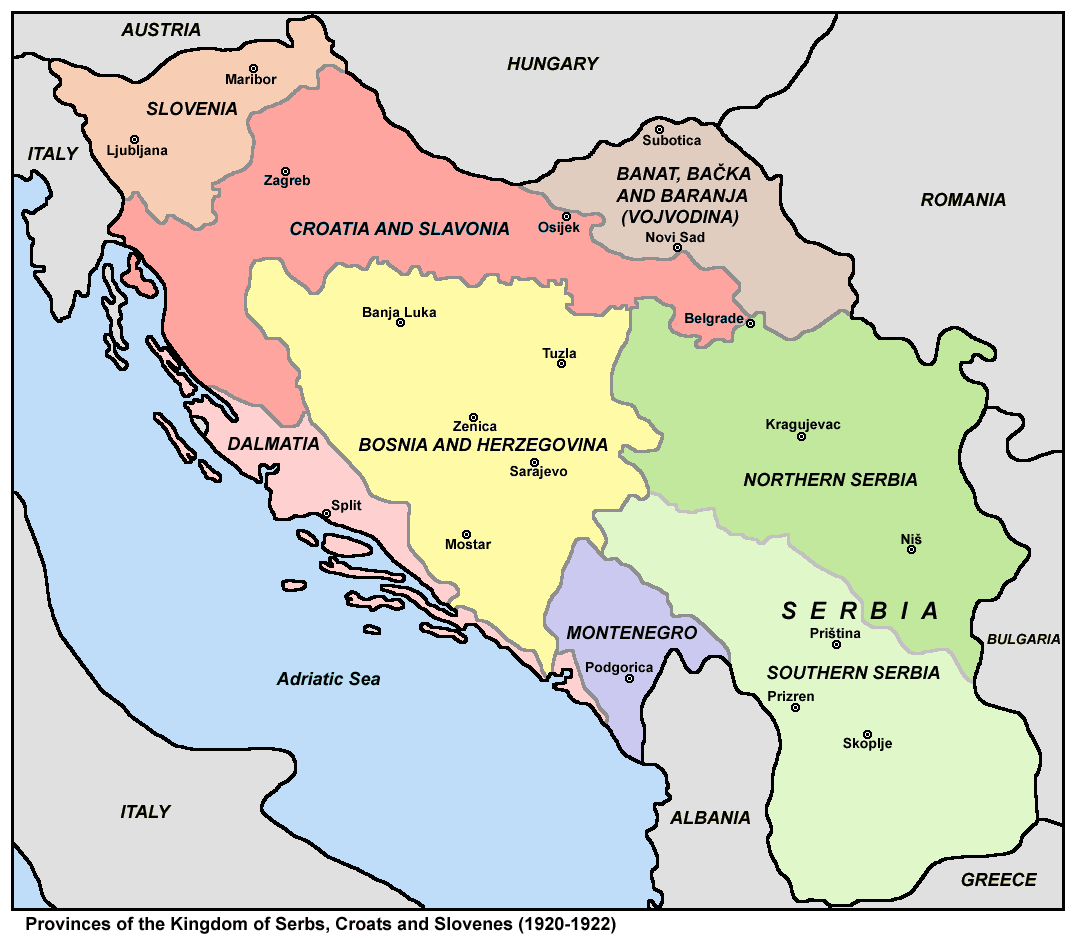
Let's compare these two maps:
http://upload.wikimedia.org/wikipedia/commons/6/60/Jugoslavia-kart.png
and
http://upload.wikimedia.org/wikipedia/commons/0/04/Scs_kingdom_provinces_1920_1922_en.png
The process to get here involved attempting to solving the complex ethnic questions as well as the legacy of WW2. Croatia in particular was enlarged to include more ethnic Croats, however, it was also shrunk from it's pre-war boundaries (http://upload.wikimedia.org/wikipedia/commons/e/ef/Locator_map_Croatia_Banovina_in_Yugoslavia_1939-1941.svg) largely due to the Croat complicity with the Nazis. The Croat puppet state encompassed all of modern day Croatia and Bosnia and more.
It's important to note that is that Montenegrin and Serbian peoples are not the same. The separation of the peoples during the Ottoman period created distinct cultural identities, despite language similarities. In addition, Montenegro had an established history of independent rule, helping explain why they gained independence from Belgrade while Vojvidna did not.
In short, Tito basically used a combination of pre-war boundaries and ethnic mapping to create Yugoslavia.
@Spoonfeedme gives a very good answer to this, I just want to add that Tito was trying to bring stability and peace to the region by diminishing ethnic tensions, and considering that the biggest reasons first (capitalist) Yugoslavia got ripped apart in the WW2 is because Croats and Bosnian muslims felt that Serbs were to dominant and overbearing. That's why he tried to unite all Croats and Bosnian muslims (where it was possible) and not all Serbs, if it did that Serbs, being the most populous, would have the biggest republic by far with parts of today's Montenegro, Macedonia, Bosnia and Croatia. Tito thought that by (somewhat) leveling the territories and power of all republics he would manage to reduce the tensions which may seem dumb now after the Yugoslav wars that were predominantly started because of said borders but it did bring peace to the region for 40 years. That's also why he gave autonomy to Vojvodina and Kosovo that previously were a part of Serbia, by reducing Serbia's power he thought that it would appease Bosnian muslim and Croatian separatism and in his vision of Yugoslavia all ethnicites where living together peacefully in a single federation so Serbs wouldn't have a problem with it 'cause they wouldn't get separated from their family in Bosnia, Croatia etc.
Bosnia-Herzegovina was restored in Post-WW2 Yugoslavia precisely because of Serbia-Croatia fighting over the division of the territory. As for Montenegro, well it is simply its own thing, Montenegrins are predominantly ethnic Serbs but they do not consider themselves "Serbian" (in a national sense) their homeland is Montenegro not Serbia and everyone was fine with that (although Montenegro is currently going through an identity crisis)