Music changes over time stylistically, but are any of these styles more difficult to play? Have any technological innovations changed this?
Has western music become any more or less technically difficult to play since the invention of musical notation?
Let's address notation first.
Do we know how music was made before the invention of musical notation? Not really. We know a few things about that music because of how it is represented in art, because of some mentions, because of the surviving (fragments of) instruments and so on, but we don't really know what kind of music people were making.
The earliest thing we think is musical notation (fragments) is about 3400 years old. The oldest complete notated example of music we have is about 2000 years old. The oldest thing related to OUR Western modern musical notation is about 1100 years old. Those 3 notations I mention are completely different and are not related.
We don't really know specifics about the musical practices of the people making music then, even if we have some form of surviving notation. See, there are debates about how music was made just 300 years ago, and the notation from that time is in many ways pretty much the same we use today...
So, has music become more technically demanding for performers after the invention of notation? We can speculate, but we don't really know with certainty what people were doing back then. Notation does change the game, though. We have reasons to believe musical notation changed the practice of chant, and we have examples of the music changing because of notation.
Music changes over time stylistically, but are any of these styles more difficult to play?
I think we face an issue of relativism here.
It's not just the styles changing, in some cases it's the whole musical tradition. For example, treatises from just 300 years ago tell us musicians were into improvisation, a lot. That people added and changed stuff to notated music, and they were doing music on the spot. We know people practiced creating music out of just a few clues, that lengthy periods of rehearsals were not a thing, and that most music was new (as in, people were not particularly interested in playing old music). Most modern classical musicians are not used to that, at all. So, if you drop a bunch of your average modern orchestral players or pianists into a time machine and send them back to meet their baroque colleagues, they might find they are in some ways incompetent.
From notated music we can see that modern music has more notes and is played faster than earlier music, it also contains more dissonance (this concept has changed, but we find agreement in some intervals being frequently called dissonant both in the past and in our time). We can see that modern music has tried to avoid using earlier patterns, and in many cases it results in music that is very difficult to play.
Music has changed a lot. As I said, a modern musician would probably lack some of the skills of baroque musicians, and I think they would be just as lost if we brought them back to our time. Really, I think your best baroque and classical keyboard players would be utterly lost if they were told to play this kind of music, orchestral musicians from the time of Haydn might not last 30 minutes in a rehearsal of music from the early 20th century.
We might think modern musicians would have an advantage, because we kind of have an idea what people were doing in the past. But that doesn't mean we would be able to became competent or super good if measured to their standards. I think we have reason to believe modern musicians might also have an advantage in being used to play super complicated music, but it's all relative: all these modern virtuosistic music might be noise to earlier audiences, the idea of playing the same damn thing all the time could be completely boring and alien... A lot of our modern "virtuosity" might come useful, but think about it as if you know a lot of words in several languages, and then start learning a new one. Will it help? Maybe, but you will still have to do some work to learn.
Also, instruments have changed.
In my experience and that of musicians I know, it is difficult to adapt to a different way of making music. Being able to play super fast scales/chords/arpeggios/what not and super intricate passages doesn't make you superior to other musicians, and those skills are completely useless for some musical styles.
Today it's common for pianists to start playing the harpsichord. There are similarities, but a hell of a lot of differences. The very way in which you play the notes is different, not to mention the way the music is played. Some times the same music you learned to play on a piano...
Have any technological innovations changed this?
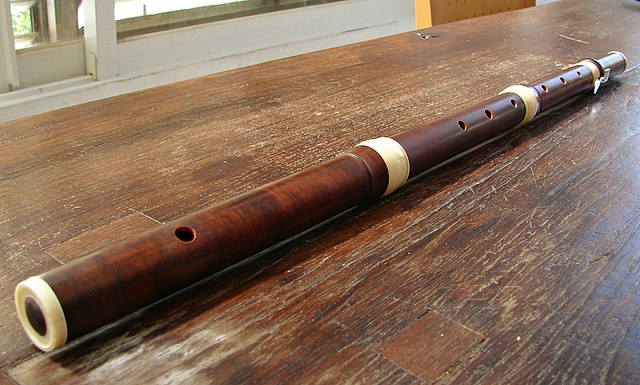
Historically informed performance has been around for a while, and we now have people with experience playing both modern and earlier instruments. We know it's easier to play with good intonation in a modern flute than in a traverso. Quantz was changing the design of the flute back in the 18th century because it was very difficult to be in tune back then...
Instruments are designed to be able to do some things. If you need more notes, you make keyboard instruments with more keys. Wind instruments were modified to provide better intonation in more scales, brass instruments got valves...
Changes in musical practice have an influence in instrument making, music theory and so on. And changes in each of those areas affect the others.
TL;DR
It's relative. What is undeniable: music has tended to be faster, have more notes, and be more dissonant. Relying on notation has allowed us to create music with more complex patterns and has given us a huge repertoire. We are familiar with more music than most musicians were in the past. But performance practice is way more than just notation or playing a lot of notes very fast.