I understand he changed some things to make a better story, but what exactly differed?
Shakespeare's account of the Percy Rebellion and the Battle of Shrewsbury, while a fantastically written piece of historical fiction, should not be taken as an accurate portrayal of history. Numerous books on the subject have been written over the centuries, but I will try to summarize the primary differences here. What follows should not be considered a complete list of differences between history and Shakespearean narrative, but I'll try to provide you with a summary of the most glaring differences. Let's go character-by-character:
In Part 1 Henry is committed from the very start (indeed, from Richard II, 5.6.49-50 onward) to a crusade to absolve his conscience, thus stressing sin and retribution as the causes of the unrest of Henry's reign. In fact, and in Shakespeare's sources, Henry did not propose a crusade until late in his reign, when it seems to have been intended to expand his influence in continental European diplomacy. Second, Henry's sickness, which he actually developed only a year before his death, plagues him for most of his reign in the plays, dominating all his appearances in Henry IV Part 2.
Henry's reign is compressed in the plays, producing an impression of greater civil unrest than in fact occurred. While the rebellions of the play did take place, they were widely spaced and easily suppressed. Henry was a strong king, although he was not a very good administrator and his regime had persistent financial troubles.
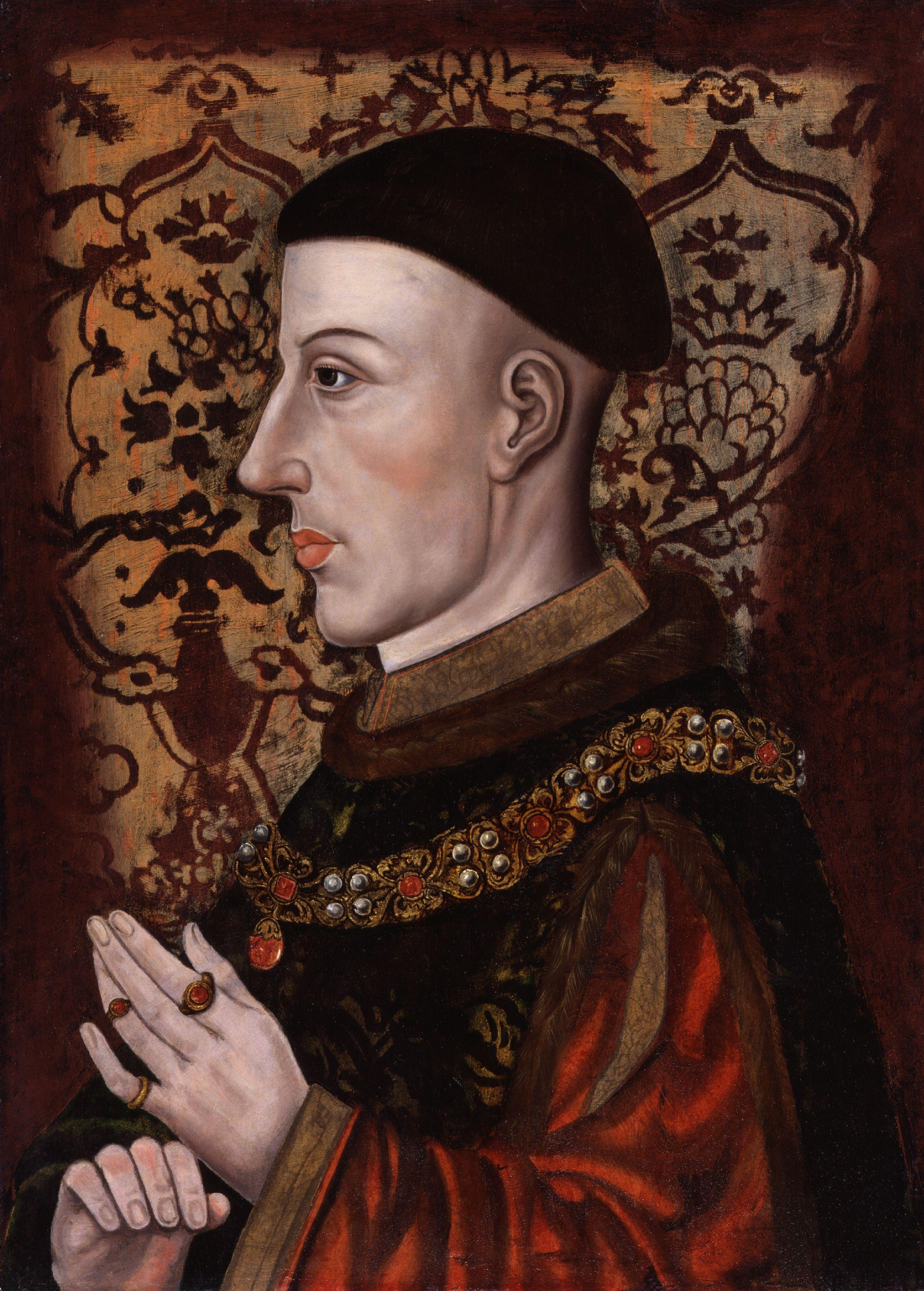
Shakespeare changed Hal's biography to fit his dramatic ends. Hal is portrayed as an adult at a time when he would have been only 12 years old, as part of the playwright's strategy of presenting him and Hotspur as contemporaries, though Hotspur was actually a full generation older. Also, Hal did not fight Hotspur at Shrewsbury. The rebellious Percy died at the hands of an anonymous warrior. Shakespeare may have actually believed that the two heroes had met as his sources are ambiguous, but he would surely have had them do so in his play, even if they had not historically done so, to enhance the impact of the plot.
The young Prince Hal's wild life was apparently real, for contemporaries wrote of his conversion to a better virtue upon being crowned. It was written that the Prince was given to drunken brawling and possibly even gang warfare in Eastcheap. Shakespeare believed in the truth of a tradition that Hal had assaulted the Chief Justice and been imprisoned for it, but since this story cannot be traced earlier than 1531 (to an account that omits physical assault), its authenticity is highly dubious. A more reliable early account states that Hal had robbed his own agents on the highway; a later version changed the victims to bearers of the king's money.
Shakespeare omitted a striking anecdote, well known at the time, that is probably true: Hal, perhaps in a spirit of atonement, approached his father wearing a dog collar and a strange garment with many needles sewn into it. This strange story has never been explained, and Shakespeare may have simply found it too inconvenient and distracting to use. Hal's wearing of his dying father's crown, while coming directly from Shakespeare's own sources, is clearly apocryphal.
Reports of 'wild Prince Hal' likely reflect only a few isolated incidents, and not a committed way of life, in the youth of a privileged soldier. Certainly, much of the Prince's time was devoted to military training, for he fought in Wales beginning in 1400, and he was considered a competent enough warrior at the age of 16 to command a wing of Henry's army at Shrewsbury. He governed part of Northumberland shortly thereafter, and he served in increasingly important offices over the next eight years. In 1411 Hal was removed from the king's council, an event that is alluded to in Henry IV Part 1, 3.2.7 where it is associated with the assault on the Chief Justice.
Shakespeare's depiction the historical Prince John is wildly inaccurate. His presence in Henry IV Part 1 is entirely fictional. John was only 13 years old at the time of The Battle of Shrewsbury, and he does not appear in Shakespeare's sources until many years later. However, in addition to preparing for Henry IV Part 2, Shakespeare wished to bring the Lancaster family together at a point of crisis. Also, the 16-year-old Lancaster was not responsible for the negotiations at Gaultree. As Shakespeare surely knew, they were conducted by the Earl of Westmoreland. The playwright wished to attach this maneuver to King Henry's family, thus focusing on the web of treachery that followed Henry's usurpation of the throne. John was not Duke of Lancaster—Hal bore that title—but Shakespeare's sources were confused on this point, and the playwright probably thought he was correct. The historical Prince John was a successful military leader who achieved great distinction against the Scots and who was later to help govern the kingdom when Henry VI was a child.
It was Westmoreland who actually tricked the rebel leaders at Gaultree, not Prince John who was a youth at the time. Shakespeare downplayed Westmoreland in order to keep the focus on King Henry and his family.
The historical Blunt was a long-time follower of King Henry IV's father, John of Gaunt. He was Gaunt's executor, and he became one of Henry's advisers. He was indeed killed at Shrewsbury, but he was not among those disguised as the King.
Shakespeare followed his primary historical source, Holinshed's Chronicles, in presenting an evil Worcester. Modern scholarship finds the truth unclear, but, while Worcester was certainly a leader of the rebellion, he was likely not its instigator. He was indeed executed after Shrewsbury, but the tale of the negotiations is probably untrue. On the day of the battle it was probably Henry who broke off the talks and began fighting. Before the play was written, Worcester had served ably in the government of King Richard II, who had made him an earl in 1397. Two years later he joined with Bolingbroke when he usurped the throne and became Henry IV (as is enacted in Richard II; although Worcester himself does not appear in that play, his actions are described in 2.2.58-61 and 2.3.26-28).
The historical Northumberland did rebel with Bolingbroke and then against him, but Shakespeare exaggerates his treachery and alters the facts of his life considerably. Being King Henry's age in the play, Northumberland was actually a generation older; this change is part of Shakespeare's rivalry between Hal and Hotspur by making them contemporaries. Northumberland was a major landowner in northern England and a revered warrior in the Scottish border conflicts and was a supporter of King Henry's father, John of Gaunt. Like Gaunt, he had supported Richard II against Thomas of Gloucester, but he was alienated by Richard's seizure of Gaunt's estate, and when Bolingbroke returned , the earl became one of his allies. His despicable personality as Bolingbroke's lieutenant might come from the playwright's knowledge of a famous incident that he did not include in the play. Sent by Bolingbroke to negotiate with Richard, Northumberland swore an oath that Bolingbroke intended to allow Richard to remain in power if he were restored to Gaunt's estates. Richard was thus induced to forego escape by sea and leave the castle. He was ambushed by Northumberland and taken to London where he was deposed. It is not known whether Northumberland used this ploy under orders, but it was reported in Shakespeare's source, Holinshed’s Chronicles, as an unforgivable betrayal.
After Henry came to power, disputes arose between him and the Percies, leading to their revolt. Northumberland's role in it in the Henry IV plays is almost entirely fictitious. According to Shakespeare, his illness shocks the rebels, and contributes to their defeat at Shrewsbury, but in reality he had been sick for some time and his absence had been anticipated. Shakespeare's version is far more interesting, and it allows the rashness of Hotspur and Douglas to be emphasized. The Earl pretending to be ill is also unsupported by Shakespeare's sources; it is simply a nasty rumor to associate with his Machiavellian character. Further, his betrayal of the Archbishop is false. Northumberland was the elected leader of the rebellion, and the Archbishop commenced the uprising prematurely, before Northumberland could join him. Only after the catastrophe at Gaultree Forest, when Henry marched on his headquarters at Warkworth Castle, did Northumberland finally flee to Scotland. Years later, after recruiting weapons and money in Flanders and France, he again revived the rebellion and invaded England, dying in unsuccessful combat, according to Holinshed. This account of tenacity did not at all suit Shakespeare's model of a contemptible rebel, and he simply chose to ignore it.
Continued in Part 2...