How differently were the slaves treated? What rights did they have in one era, and not in the other?
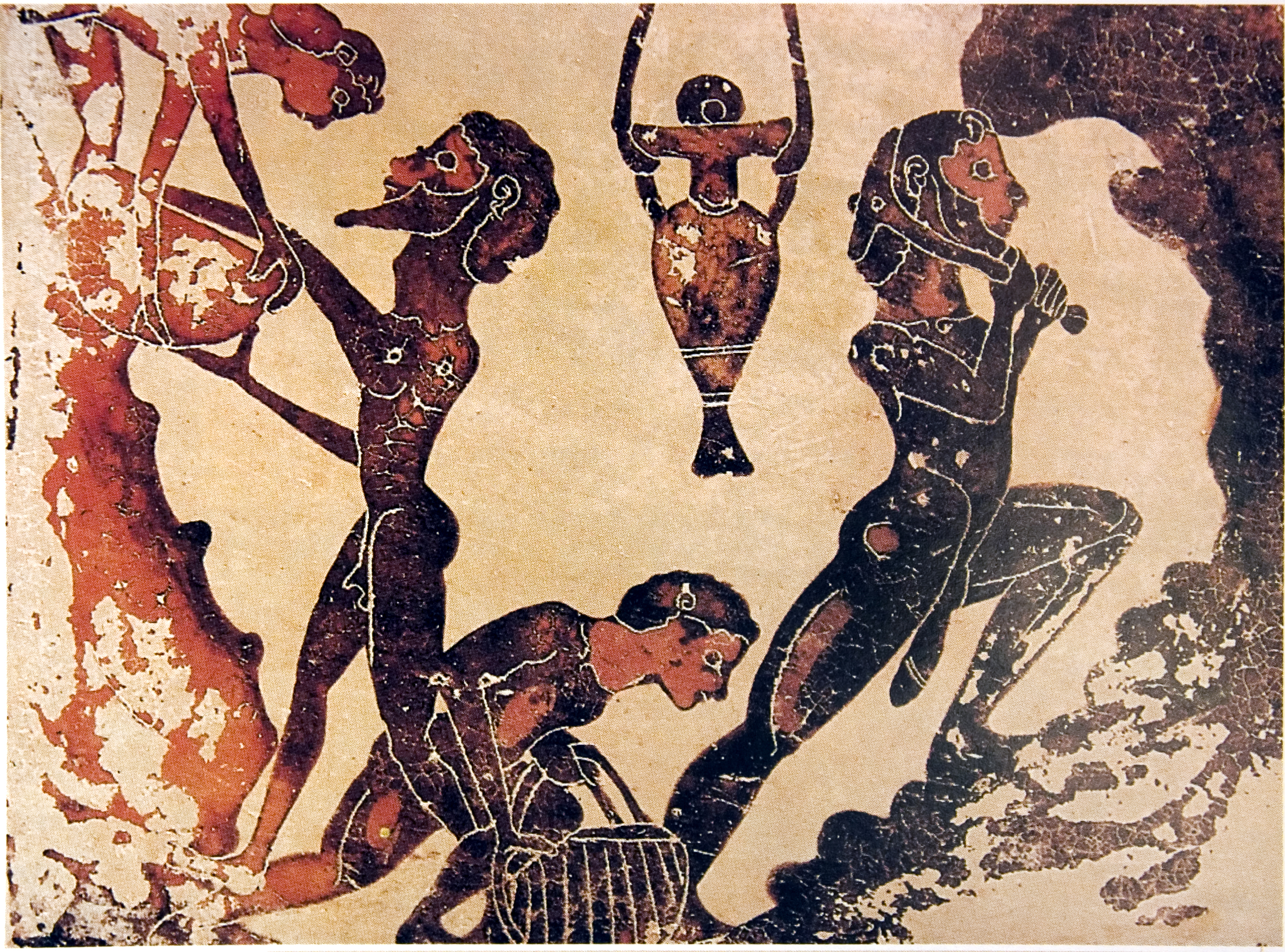
Your question is a little vague in describing "older times". Different forms of slavery have existed and morphed over time to suit the dominant populace's needs. For example, the form utilized by the United States during the colonial period is known as "chattel slavery" which essentially makes the people themselves property and on par with working tools or animals. This allowed for landowners (plantations especially) to hold large groups of 'non-persons' and treat them accordingly. At the time, Americans would have seen this practice more as a necessary evil, particularly in the South where the economy was heavily dependent on the free labor. Once importation of "new slaves" from Africa was implemented in the 1807 Act to ban the importation of slaves was ratified, those existing were more selectively "bred" and coveted as a piece of property still but in a way like we would covet something banned from importation today. In Contrast, in the South American colonies, slavery was more intense in that the slave population was more expendable as they worked mostly in mines (which was very dangerous and lacked proper safety). We don't know how slaves during the Hellenistic Age would have perceived their existence (no one really cared enough to write it down) but from pottery and artworks like this: http://upload.wikimedia.org/wikipedia/commons/8/8f/Mines_1.jpg, that they were mostly working force.
Interestingly, (and this goes beyond my ability at work) Greek slaves could sometimes be placed in shops as workers who received a very small amount for their labor and could eventually buy their freedom. The range of services included domestic house workers to the aforementioned mine workers (essentially would be worked to death and see very little sunlight). Even the middle class of the Greeks could afford a simple servant however, meaning that the institution was a socially accepted institution. I'd recommend reading Nicholas Fishers book on the Classical Greek slave keeping for a more in-depth look. books.google.ca/books?id=NX-4AAAAIAAJ (http://upload.wikimedia.org/wikipedia/commons/8/8f/Mines_1.jpg)]()
The shortest answer to your question would be to say that United States slavery and the slavery during the age of exploration onward was far most race based than that of earlier times. Each culture thought itself superior to others, but in the case of the Greeks and Romans this didn't translate into a moral imperative for the barbarians to serve them. In Greece is was considered more appropriate for barbarians to be slaves than Greeks. But Greeks were still enslaved by Greeks and held in service by Greeks. As others have noted, all men could be enslaved in ancient times. A running theme of the Iliad and Odyssey is that any man can become a slave and fate/chance is the true master of men.
But another big difference would be that the ancient world recognized degrees of slavery. Though much of their literature present freedom and slavery as exact opposites Greek and Roman culture support many degrees in between. The lowest slaves worked in unskilled manual labor. If someone was punished with slavery this is the kind of work they would likely be condemned to. Mines, mills, porters, bearers, etc. These slaves had no rights and few privileges. They were human beasts of burden. These slaves had the smallest chance of gaining their freedom. It's difficult to impress the master when all you do is haul things around and perform one mundane activity over and over again. But has already been pointed out by others there were also privileged slaves. These were the ones who often lived away from the master and rendered a payment (paramone) to the master. They were skilled workers like slave bankers, craftsmen, overseers, and the like. Though everything they earned legally belonged to the master it was customary that the master receive this paramone and not everything that the slave earned. The slave could then save up their earnings to eventually earn their freedom. Because they often lived away from the master or worked along side him, they had better chances of being granted freedom for their good work and were more in control of their own lives. Those that lived away from the master were in control of their own movements and lives with the exception of the payment to the master. These individuals functioned much like subcontractors. Even slaves who gained their freedom often lacked all of the freedoms that society could offer. Freedom did not mean citizenship so freedmen could not participate in politics and were excluded from other activities. When a slave bought their freedom it was fairly common that the agreement be sealed with a sort of contract. The slave would agree to render a fixed amount and often agree to perform services for their master at the former master's request. This obligation to provide for the former master could last until the master's death and, rarely, even afterward. If the obligations proved to be too burdensome a freedman could offer suit in Athens and if he won would be given unconditional freedom(not citizenship), but if he lost he would re re-enslaved. The stigma of having been a slave lasted for life and severely limited future opportunities.
Some points about Classical slavery: It was customary in Rome to free a slave after he had reached the age of 30 if he had rendered good service. This practice was far more common with domestic and skilled slaves in the city than with agrarian or unskilled slaves. It was recommended that a master in Athens immediately discuss with a slave what would be required of them to buy their freedom and how they would earn it. The master would try to arrange a marriage with the slave and have him start a family. If a slave knew what was required of him to gain his freedom and his freedom lay before him a a real possibility why risk rebellion or escape, especially if the slave had family also owned by the master. It was to encourage productivity and reduce rebellion or flight. It was recognized that slaves were human beings. It was just also recognized that these people were property. As such, slaves were to be treated with a certain level of decency (not hubris). Now many masters clearly had no compunctions about ruthlessly beating their slaves, but literary evidence from Rome and court records from Athens suggest that there was an expectation (and sometimes law) to treat slaves as people if only to avoid rebellion.
One of the biggest differences to modern eyes is that in the ancient world ANYBODY could be enslaved; it wasn't exclusive to one race. The Norse kept slaves, and these would often be captured during raids, not only on Ireland and other foreign countries, but also in other part of Scandinavia. This meant that a slave in Norse society could be from the next fjord over, and look exactly like his masters. In Roman law, being enslaved was a common punishment. If you accidentally killed someone, you could be sold to the victim's family. Since Roman masters had the right to kill their slaves on a whim, the family could then either put you to work or put you to death, whichever they deemed an appropriate punishment.
Slavery in the US wasn't uniform. The treatment, justification of, and practice of slavery varied dramatically in the US based on region (Deep South, Tidewater, Midlands, Yankeedom, etc) and time period (17th vs 18th vs 19th century).
American Nations: A History of the Eleven Rival Regional Cultures of North America by Colin Woodard covers a lot of these regional differences in the practice of American slavery during the first few chapters (Particularly the introductory chapters on the Tidewater and the Deep South).
Perhaps not quite the time period, but I can talk to some degree about Moroccan slavery in the sixteenth and seventeenth centuries.
Comparing it to American slavery is possible, as there are quite a few similarities. One of the big ones is a religious justification, oftentimes centered around the Hamitic myth. Essentially, Ham saw his father Noah naked, Noah cursed his youngest son Canaan, saying his offspring would be the servants of servants. One Babylonian version of the Talmud claims that his offspring would also be cursed with dark skin. These two Old Testament accounts works be highly influential in both societies' conception of racism. However, it's important to note that both the New Testament and Quran, there was an aversion towards slavery and so these systems were not fully supported by scripture.
So obviously there was a racial element to both systems, justified by stretchy religious dogma, this racial element was undermined a bit by the social mobility in Morocco. In America, if a child had black ancestry then no matter what they would remain a slave. Even if freed, there were many difficulties with social mobility. However, in Moroccan society if there was any hint of Arab slavery they would become free and have just as much social mobility as any other Arab.
The desired gender slavers looked for was also reversed. In Morocco, there was, as far as I know, no crops to harvest, factories to work, or much hard labor. As such most slaves were female concubines which was well suited for the merchant class of Arabs. However, Sultan Mawlay Ismail in the early eighteenth century created a slave army of roughly 300,000 black Africans. He was legendary for his cruelty, both towards his slaves and his enemies and like those before him utilised shaky religious reasoning to justify this racialized slavery.
My sources are centered around George Fredrickson's A Short History of Racism and Chouki El Hamel's monograph Black Morocco: A History of Race, Slavery, and Islam.
There was also a recent thread you might find interesting on the size of Roman estates. It looks like the biggest Roman estates were larger than the US plantations, but Roman slaves were more likely to live in small groups of less than 6 on an estate.
A large part of what we think of as the viking age was fueled by capturing slaves from undefended population centers in Europe and selling them in the wealthier Byzantine and Islamic world. While there wasn't a racial element to this it doesn't mean the lives of these slaves were necessarily better than African slavery in the new world. It totally depended on what task they were assigned after enslavement. Castration was common as eunuchs were valued as administrators in the Byzantine Empire and as harem guards in the Islamic. Slaves from Central Asia were often trained as soldiers and even founded their own dynasties in India and Egypt. The Roman Empire was built on the backs of slaves taken as spoils of war. While an educated Greek slave could be a tutor or doctor it was far more common for the slaves to wind up laboring on latifundia plantations or being worked to death in salt mines. The major difference between these forms of slavery and new world slavery was that if you were manumitted, which was especially common among the Roman senatorial class as a way to show their magnanimity, the color of your skin did not stigmatize you or your descendants.
%5D()