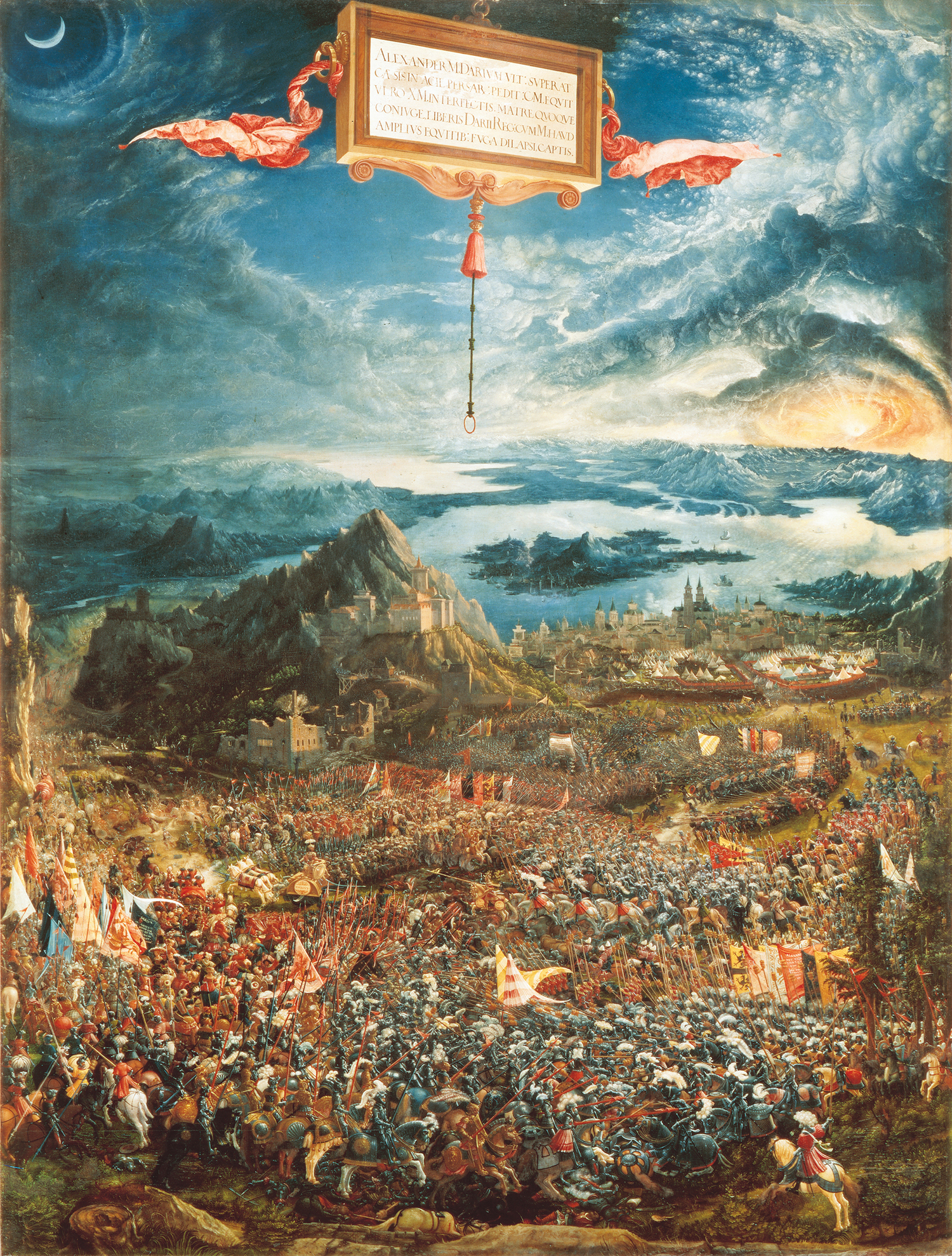
I've recently finished Chaucer's Canterbury Tales and was struck by how much the stories relating to the ancient past seem anachronistic (e.g. the Knight's tale about ancient Thebes includes jousting between knights). Also, medieval paintings depicting supposedly ancient or biblical battles are often anachronistic with respect to gear, siege-craft and so on.
So, do we have any evidence or reasonable conjectures if these authors and painters 'knew' they were wrong? If I painted something titled 'Battle of Alexander at Issus' but had all the participants in WWI gear, I would either be making a deliberate point or be woefully mistaken. Did these painters simply not know many details about the ancient world and assume their society was similar, did they not care, were they making a point about their own times...?
This is a very complex question, however, your last sentence is close to correct.
First of all, majority of art (especially illuminations and illustrations) were commissioned mass product, done by large groups of illustrtators, painters, sculptors etc. These were done "economically", which is especially evident in illuminated manuscripts.
Illustrators and illuminators would copy the same design over and over, often by almost copy-pasting faces or entire persons, with only a change in hue. Unknown peoples, locations or animals would be painted "as best as they could" based on heresay and brief descritions.
This led to curious situations, where say, the illustration done by one scribe/painter would be absurdly similar and anachronistic; for example, one monk would use his own autoportrait, with added armor, and longer hair to depict his local lord, then copy the same design with a slightly different hue to portrait st.George, then in next copy replace the armor with a robe and crown to depict the Emperor , then remove the crown, change the colour of the robe, and there you go - st.John the Baptist!
So, to simplify, the most common reason for this anachronism was that they just did not care about accuracy, and neither did their clients. However, your other two points also are correct, the importance of symbolism,and telling a good (christan, culturally apropriate) story was far more important than any accuracy.
Sources:
De Hamel, Ch., Scribes and illuminators.
de Hamel, Ch., the art of mediaval manuscripts.