So this inscription on the lintel of La chiesa dei Santi Pietro e Paolo d'Agrò, which is in the province of Messina, dates to 1172. It is written in the oddest script: Many of the characters appear to be Greek, but there are some I've never seen, as well as what appear (to me) to be odd groupings of diacritical markers.
What I am wondering is whether it's just ornamental carving or if this was some script popular in Sicily or the Byzantine Empire at the time. Is the inscription possibly incorporating some Slavonic characters? It seems unlikely, but I'm really not sure what to make of it.
The Italian wiki page you link to gives the inscription as "Fu rinnovato questo tempio dei SS. Apostoli Pietro e Paolo da Teostericto Abate di Taormina, a sue spese. Possa Iddio ricordarlo. Nell’anno 6680. Il capomastro Gherardo il Franco".
I guess you already found this, and it's obviously an Italian translation, but it at least confirms that the inscription has meaning and is not just ornamental. Once again according to that wiki page, it's written in "greco antico" - Old Greek.
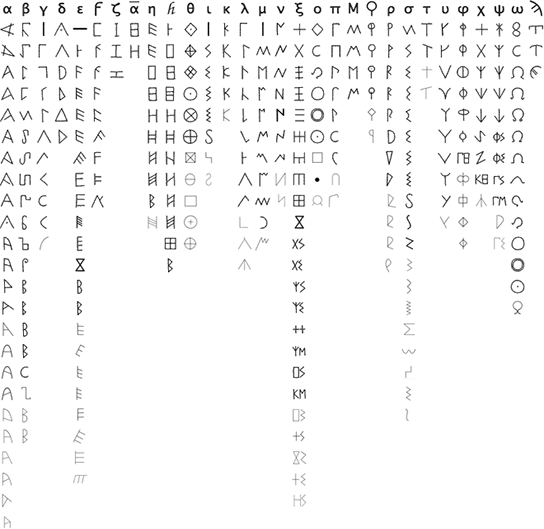
This image gives an overview of the vast amount of variance found in the Greek script of the time. I see no reason to doubt that these diacritics are some local form of writing.
I'll see if I can dig up some more info.
Edit: one of those weird characters that I personally didn't recognize is the archaic letter Sampi, which made a /ks/ or /ts/ sound. This page offers a lot of information that explains several of the weirder characters.
See also this page which does good job of explaining the diacritics.