Hello. I'm a big nerd and like painting model soldiers. Soon I'm getting some mounted men at arms and some footsoldier models which are based on War of the Roses era English troops.
Since I'm from Manchester I thought I'd paint then up as Lancastrians.
I'm really keen to make them fairly authentic, so I'd like some information on how an army of that era, specifically a Lancastrian one, would have looked.
Would there have been a uniform of sorts? Or would each man have brought his own equipment? If so, would they have tried to wear the right sort of colours for their army?
Would a unit of troops have been led by a lord they were affiliated with? If so, how many or few troops would a lord lead? Would he go mounted with his fellow upper crust guys, or join his foot soldiers in battle? Were the soldiers professionals, or were they drawn from local populations by an indebted lord?
I would also love to hear about any particularly famous lord type leaders of the Lancastrians as I would like to paint models to represent these also.
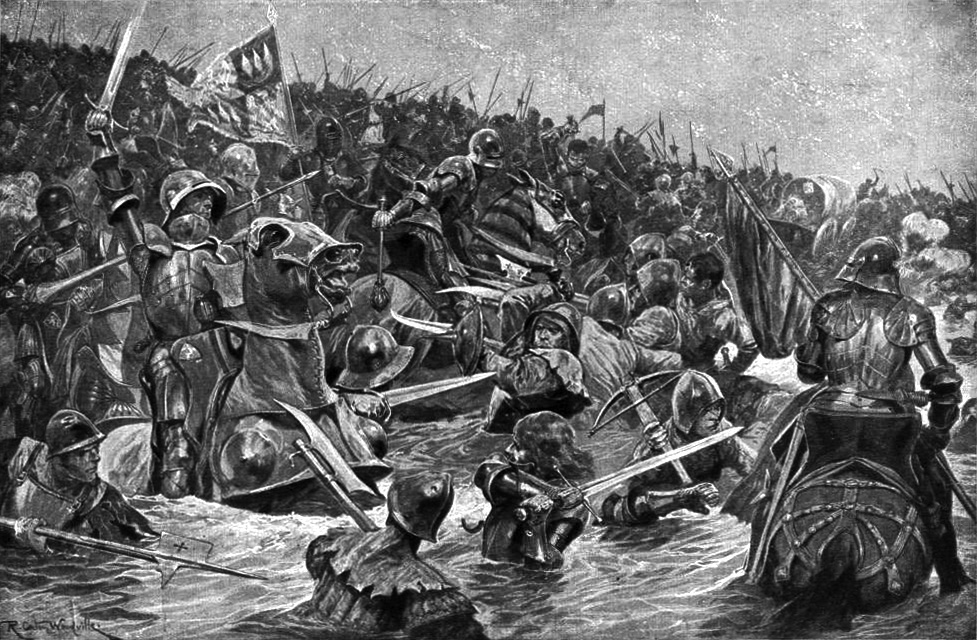
Finally. What would the army have looked like? Are there any paintings or such which give an idea? Or any first hand descriptions of how the armies of the time were outfitted visually.
I realise it seems like I have a lot of questions here, but really it boils down to; How would a Lancastrian army in the war of the roses have looked, been led, and been organised.
Thanks!
Well Sam, the War of the Roses was a long and bloody conflict so as time went on there were natural changes in equipment and composition of the men but I will try to answer how the armies were composed in the early years, 1455-61 to be exact.
The War of the Roses took place not long after another rather large English conflict, The Hundred Years War. The war had finished in 1453, only two years from the first battle of the War of the Roses and as such, had left a large number of recently unemployed men-at-arms and mercenaries in England and France. Edward the III, created a system of 'contracts'. These were formal agreements with captains who were then obliged to supply an agreed number of men for the length of the contract. As stated before, there was a surplus of out of work mercenaries and men-at-arms in England and many magnates acted as contractors who would supply quantities of knights, men-at-arms and archers to the Commander-in-Chief, King Henry VI, at a fixed rate.
Many lords took their retainers to war with them, these men were well equipped and trained (provided the lord could afford good soldiers!) and received an annual pay of up to £40 a year (an annuity) for their constant service. Lords could also call on their tenants, many of whom had military experience from the 100 Years War and even men who had no 'master' but wanted the protection provided by a Lord in a time of conflict.
As an example: Sir Walter Strickland, knight of Westmorland and retainer of the Earl of Salisbury was required to raise "74 Horsed and harnessed men, 69 mounted bowmen, 76 dismounted billmen with 71 foot archers" A quite incredible 290 fighting men!
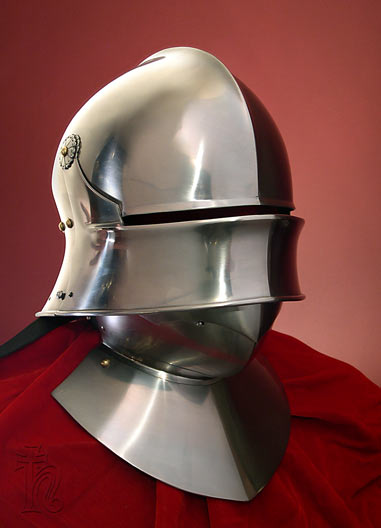
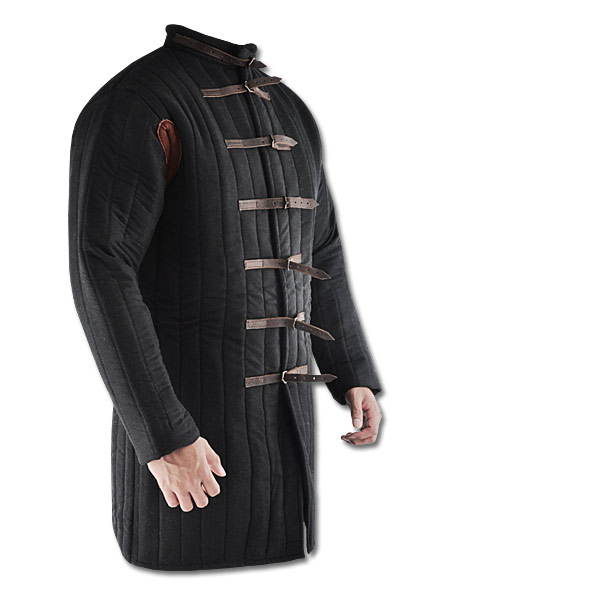
Archers continued to be the main component of the armies, a skilled archer of the time could receive equal pay to that of a knight. Many local militias were also employed which had horsemen, billmen and archers, some were even listed simply as "able with a staff". Muster rolls from the time show the required arms and equipment asked of the men. One held in Dorset in 1457 lists that all men on parade before the king were expected to have "A sallet, jack, sword, buckler and dagger." On the day of the parade, 2/3rds of men paraded with bows. Other carried spears, axes, staves, poleaxes and bills. An account of a soldiers in Buckingham in 1483 states that "There is hardly any without a helmet and none without bows and arrows. There hangs by the side of each a sword, the sword is always accompanied by an iron shield. They do not wear any metal armor, except the better sort who have breastplates and suits of armor. The common soldiery have more comfortable tunics that reach down below the loin and are stuffed with tow or some other soft material. The softer the material the better they withstand the blows of swords and arrows and besides that, in the summer they are lighter and in the winter more servicable than iron."
Men were often identified by the use of liveries, these would consist of a tunic or tabard worn over their armor in the colour of their lord and would fight under the banner of their lord. This could lead to some confusion, such as during the battle of Barnet when two friendly forces engaged due to the fact that that one lord's badge was almost the same as that of King Edward. Men would usually carry their own arms and armor, owning weapons was common and very cheap for most men due to the mass production of certain items although their equipment would be of a lower quality than a knight or man at arms. Think of it like how a lot of homeless own phones, but their phones are of a lower quality than a rich persons' phone. Men would also fight in companies, which function the same as modern military companies. The men would live and march and fight together meaning that they would know and recognise their allies in the company.
A Lord would lead some of his men but would also have Captains or knights that would lead some of his men too, tactics and leadership generally did not last for very long once the men were engaged. The loudness and poor vision of being in a melee meant that orders were not easily followed, especially when officers themselves were committed to the attack. Typically in the WOTR, the knights would fight dismounted. As an example, during the Battle of Towton in 1461, the bloodiest battle on British soil, King Edward of the Yorkists dismounted his horse and had it sent to the rear. This was a massive gesture, it showed that he would be willing to fight and die on the front lines with his men and was a great boon to the morale of the men. He was saved in the battle by a welsh retainer named Davyd ap Matthew who was promoted to standard bearer. Fighting knights did not just sit at the back of the formation.
As for how battle looked at the time?Messy. Plain and simple. Thousands of men packed into such a small space was a recipe for carnage.