I was doodling while waiting for a train last week and was thinking about how easily I (as a British person, anyway) recognise 'whoosh' lines as indicting movement of a drawn object, or 'wobble' lines as indicating vibration. I understand arrows showing straight or curved lines of movement in diagrams.
But how far back do these indications go? Are they universal? If I drew a cartoon of a ball bouncing, would the 'whoosh' lines that obviously show the bounce to me also indicate the bounce to people in the Middle Ages? The Ancient Greeks? If not, what did they use to show these things, or is it a modern concept?
Furthering the thought, I don't think I've ever seen any 'whoosh' or 'wobble' lines in Fine Art, and the only art I can think of that tries to capture or indicate movement is all fairly modern, sort of Picasso onwards. Is that right? It seems strange that a ubiquitous thing like movement wasn't drawn or painted for so long!
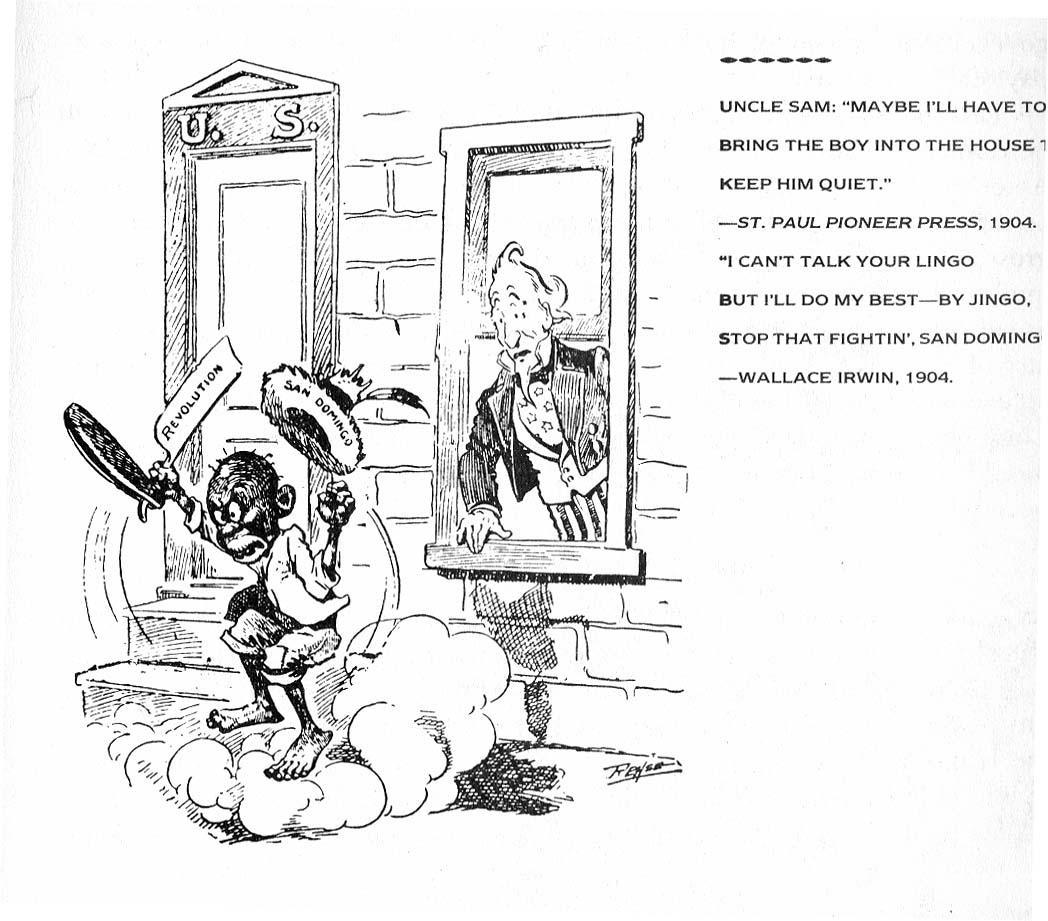
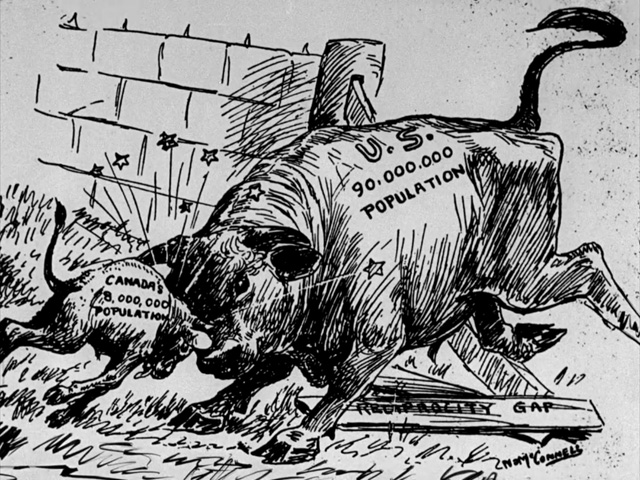
If we're talking about 'woosh' and 'wobble' lines I think these are fairly recent inventions in Western art and sequential illustration. On a quick eyeball scan through Roger Sabin's Comics, Comix and Graphic Novels: A History of Comic Art (which is laid out in relatively chronological order) the first things to use 'woosh' lines as we'd understand them today seem to be things like Comic Cuts (the book has an example from 1912). Doing a bit of digging on google image search, I found a few political cartoons (for example this and this) vaguely dated to 'the turn of the century', but I couldn't find much earlier. These sorts of lines are, as far as I know, not really used in the works of earlier cartoonists and caricaturists like Cruiskhank and Gillray, though images like This contain perhaps not unrelated visual themes. There's also hints at it in the way that some artists of the late 18th and early 19th century use clothing and smoke and so on to demonstrate movement; I'm thinking particularly of William Blake and perhaps to a lesser extent Henri Fuseli, particularly if we're talking about lines in backgrounds. In terms of non-Western art, though I'm not knowledgeable enough on anything else, I can say I don't think I've ever seen lines of this sort used in Japanese Ukiyo-e prints, and even the more dynamic later Ukiyo-e artists like Yoshitoshi seem to strongly prefer solidity of form for their foreground figures. The pick-up of swoosh lines to indicate movement wasn't universal of course, and isn't today. Both Heath Robinson and Rube Goldberg mostly depicted the movement of their complex machines using dotted lines and arrows, though Rube Goldberg appears to have adopted swooshes a little later.I know quite little about Goldberg compared to Heath Robinson, so I may be wrong in this, but I wasn't able to find any examples of Heath Robinson using movement lines of this sort in either of the Heath Robinson collections (Inventions and Absurdities) that I own.
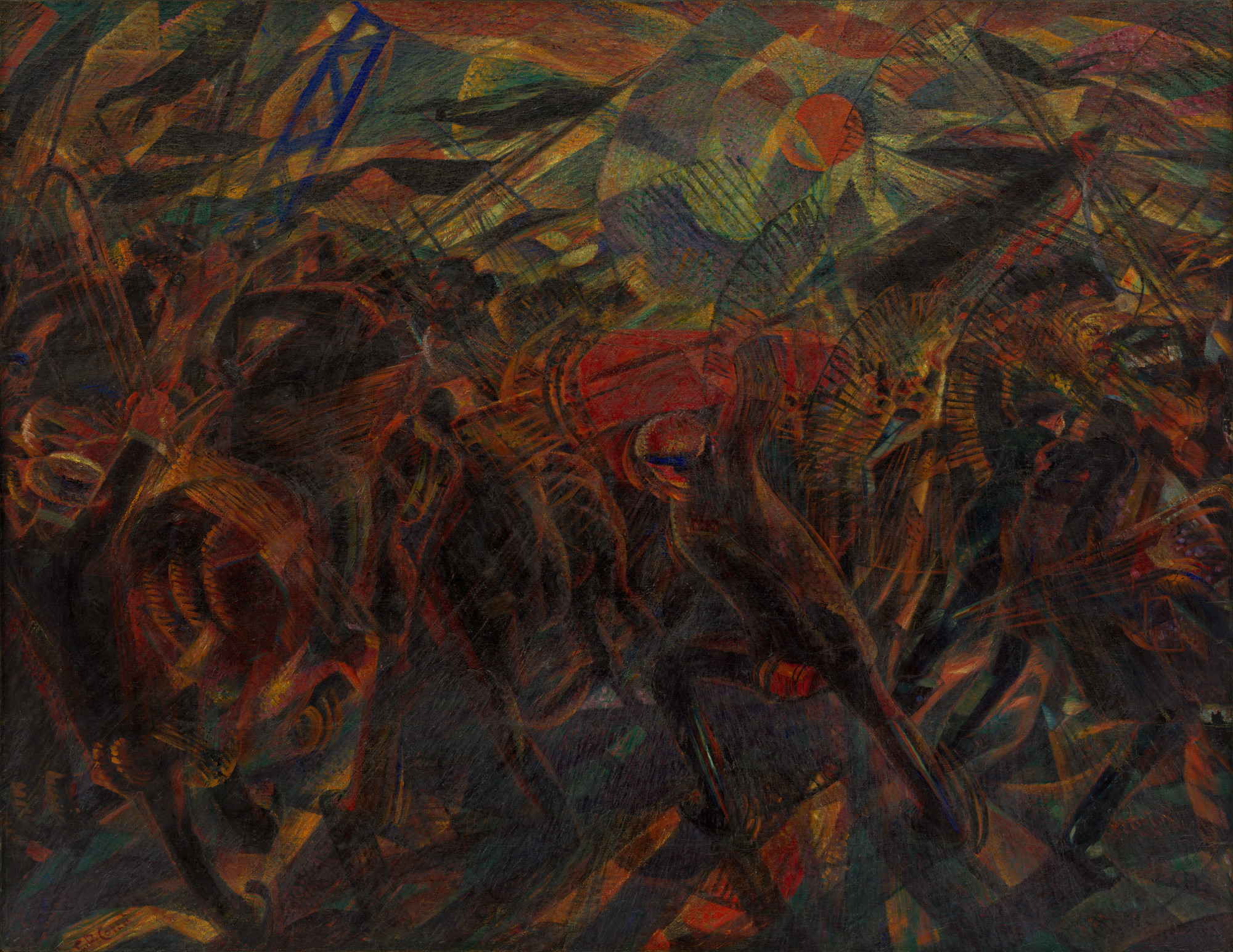
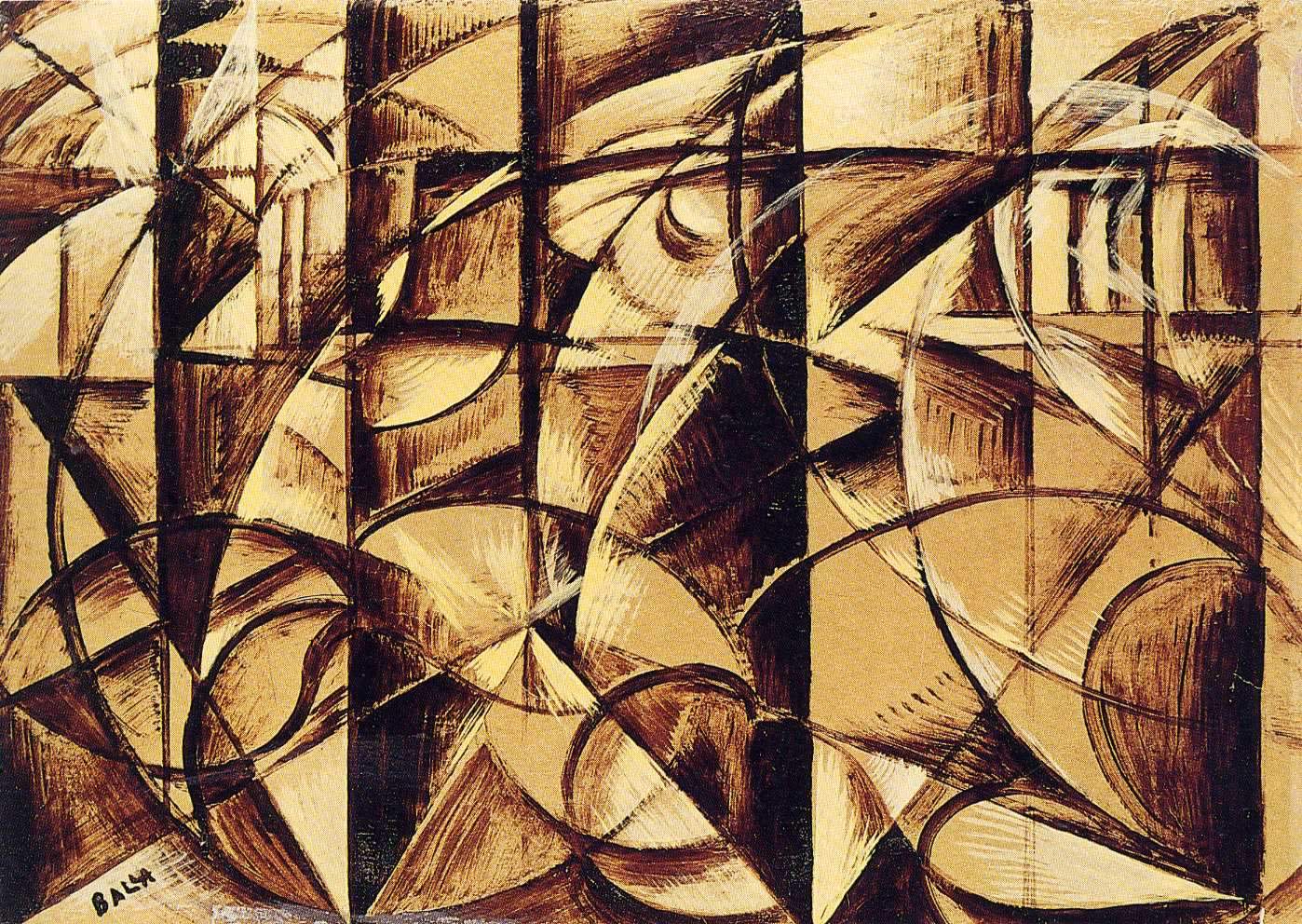
In terms of Fine Art, there are definitely signs of ideas like this emerging before the time of Picasso, though not to my knowledge that much. This 1892 drawing of a dancer by Toulouse-Lautrec, for instance, seems to hint at it a bit, but it could just be sketchiness. The first artistic movement to really make a big feature out of the depiction of movement (as well as sound) was not Picasso (Cubism is actually an attempt to show the totality of static objects by presenting multiple angles of them in a single picture plane, as much as anything) but the Futurists. Paintings like Carra's The Funeral of the Anarchist Galli (though the lines here actually represent the shouts of the crowd) and Marcel Duchamp's Nude Descending a Staircase Number 2 (which appears to show swoosh lines that actually disrupt the outline of the figure before any comics example I can find).Futurists also extended far beyond the literal, with attempts (like Giacomo Balla's Veloctity of an Automobile to actually draw the concept of speed or movement itself.
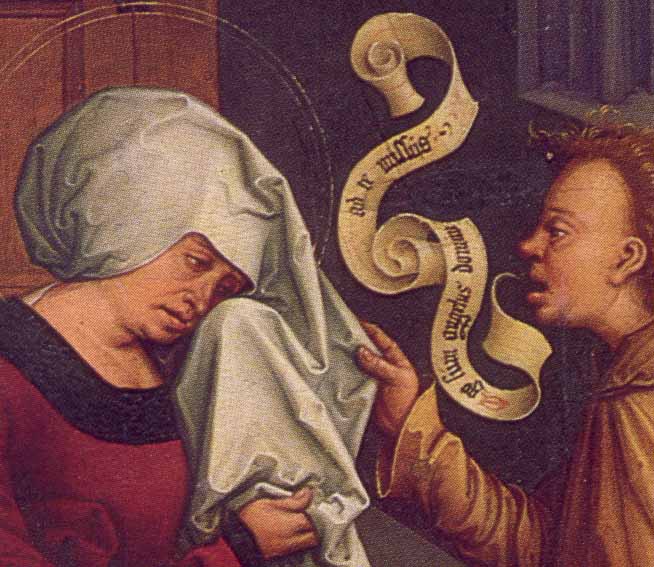
Although a lot of later visual conventions have long and perhaps surprising roots in art history (for example the ultimate origin of the speech bubble in medieval speech scrolls I am not sure I can think of anything much earlier than this. It looks like you can see the idea developing from various attempts to depict explosions, wind and so on in cartoons throughout the 19th century. I am actually very interested to see if anyone else can come up with earlier counter-examples, or if there was any use of a similiar visual convention in other cultures at any time.