It depends on the specific busts. For example, Hadrian made quite a few statues and busts of the previous emperor Trajan, but Trajan had commissioned quite a few of himself during his reign. Portraiture was a big part of imperial propaganda starting with the first princeps, Augustus, who like Alexander the Great and Pompey used a specific hairstyle on statues to help people identify that the statue was of him.
As others have mentioned, the accuracy of imperial portraits varied greatly. During the Republican period, portraits were generally true to life, even if they were unflattering. This veristic practice tied in with traditional Roman values, especially fides, or truthfulness. However, during the Principate, imperial portraits often became tools for propaganda; there was also an influx of Greek artistic influence, and the Greeks were known for idealizing their subjects.
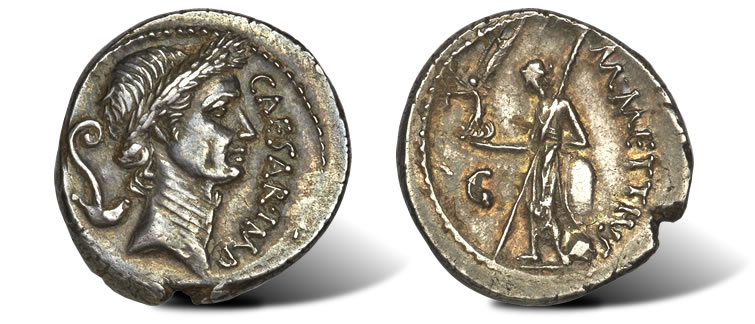
Julius Caesar was never an emperor, but his portraiture illustrates the shift of conventions. This is probably the best contemporary portrait of Caesar. "The lined forehead, pinched cheeks, large nose and ears, and jutting jaw appear to be true to life, but Caesar's new status as a god may have led the sculptor to portray him with close-cropped hair instead of as nearly bald, as the legendary second-century CE biographer Suetonius described him." (Kleiner p. 58) But we also have images of Caesar from coins which were struck in 44 BCE, which depict him with a receding hairline and wrinkled neck, much like Republican veristic portraits. Numismatics can provide very accurate information about what emperors looked like.
Augustus was the first to really break from Republican verism. He ruled for decades, dying at the ripe old age of 76, but none of his portraits show him aging at all. "That is because his portraits were not intended to be likenesses. Rather, they were carefully crafted images - not of Augustus the man but of Augustus the divi filius. His portraits were designed to present the image of a godlike leader, a superior being who, miraculously, was eternally youthful. Such a notion may seem ridiculous today, when television, the Internet, magazines, and newspapers portray world leaders as they actually appear, but in antiquity few people ever saw the emperor. Because most people knew only his official image, it could be manipulated at will" (Kleiner p. 67).
Tiberius was depicted similarly to Augustus, but the shape of his eyes, nose, mouth, and cranium all evoke portraits of his mother Livia more than his adoptive father.
Caligula was depicted with relatively full, loose hair, which is probably a fiction. According to Suetonius, Caligula started balding when he was very young.
Claudius, in contrast with the previous Julio-Claudian emperors, was usually portrayed as a man in his 50s. He wasn't quite as realistic as the Republican portraits, but was shown to have had a broad cranium, wrinkles, and bags under his eyes. This is one of his best portraits, in the guise of Jupiter. The dichotomy between his idealized nude body and his old head was a very Republican convention. Historians think that Claudius was probably crippled or disabled in some way, so his real body may have been quite different from the heroic, youthful statue of him as Jupiter.
Nero's portraits were mostly destroyed because he was so hated, but a handful have survived. Here he is depicted as a rather puffy man, with a thick neck, flowing hair, and soft features. But in later numismatic portraits he's practically obese. Nero definitely wanted to display his lifestyle of self-indulgence and luxury, but it's tough for us to sort out exactly what he looked like in person.
I could go on forever about this, but I won't get into detail on the portraiture in later dynasties. Emperors were depicted with beards or clean-shaven, as old or young, and as tough or pampered, all depending on what kind of image they wanted to project. Their portraits were based in reality, but it's impossible for Art Historians to judge exactly to what extent their features were exaggerated or idealized. If you want to learn more about it I definitely recommend Kleiner's book, A History of Roman Art. It has comprehensive entries on all the surviving imperial portraiture.
source: A History of Roman Art by Fred S. Kleiner, International Edition.
This depends on the particular emperor's tastes, their feelings about certain physical traits, and the values of the era or how the emperor wanted to market himself. For instance, we know that Julius Caesar was balding from numerous written sources, but busts and coins both show him with a healthy head of hair. Augustus remained permanently youthful in his sculptures, and while we read that he was skinny and sickly, he is never visually represented that way. However, emperors who wanted to represent themselves as returning to the values of the Republic era would make a point of showing off their aged faces and balding heads in their sculptures.
The book I'm thinking of is Kleiner's History of Roman Art, I think. It is packed in a box under many other boxes right now. I got rid of a lot of text books to prepare for a move, but that is one worth keeping.
hi! you'll find some additional responses in these posts
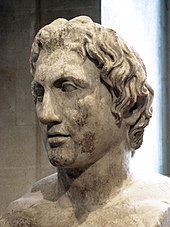
The only one I know which best captured the likeness in a bust was Plutarch saying Alex the Greats bust by Lysippus was the most accurate. Note that the picture is a recreation of the original work